Commercial Roof Drains and Scuppers in Peoria, AZ
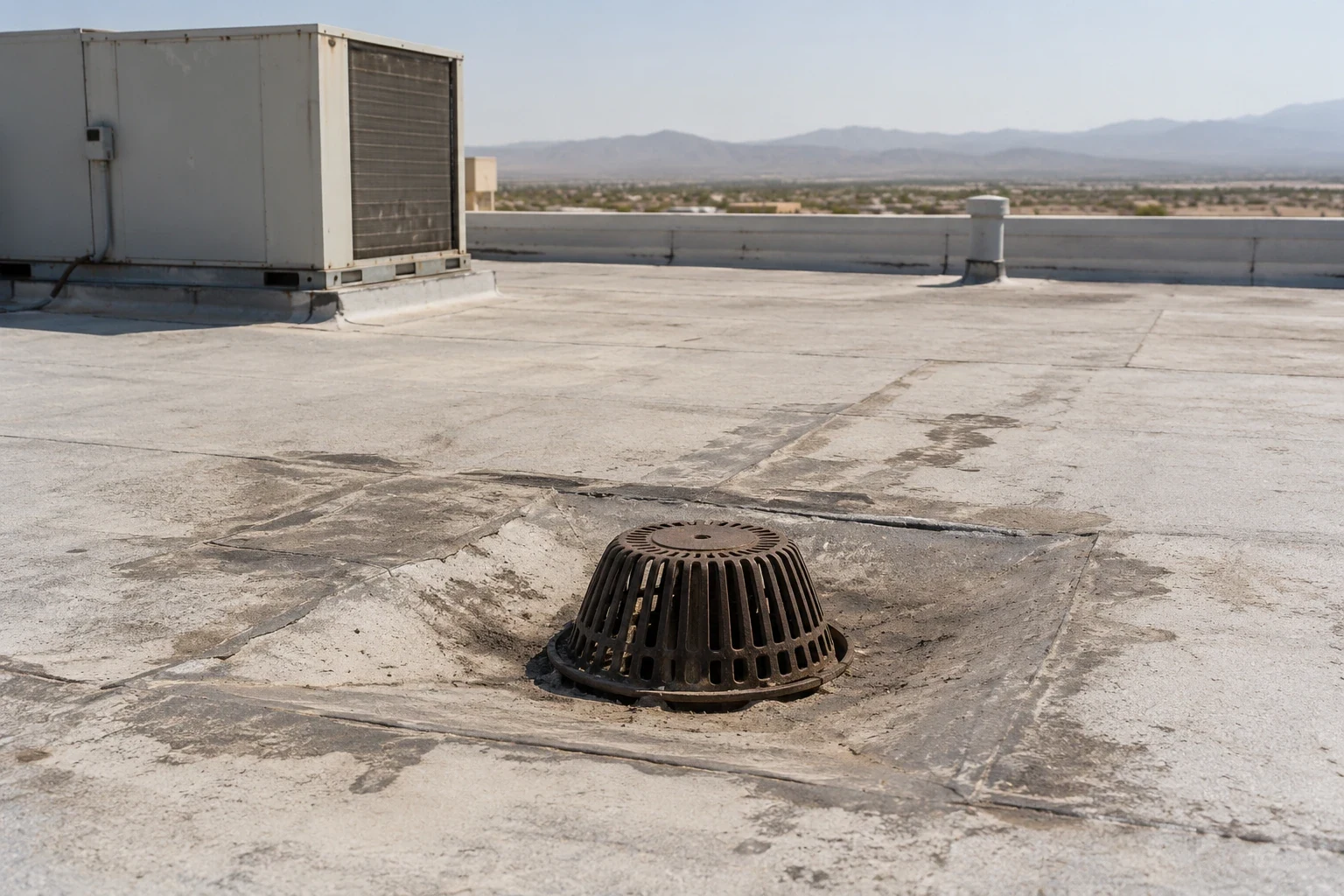
Water that remains on a roof after the storm can point to a blocked outlet, a low area, or a drainage path that no longer works as designed. In Peoria, AZ, short heavy rain and monsoon bursts can put those details under pressure quickly. We inspect drain bowls, strainers, scuppers, overflows, crickets, and nearby membrane before deciding whether the fix is clearing, repair, or slope correction. The work starts with how water moves across this roof, not with a generic drain service. A roof inspection can connect the drainage finding to the rest of the assembly and the owner’s repair history.
Trace where water should leave the roof
We follow the roof slope toward each primary drain and overflow, noting ponding, debris, damaged strainers, and changes around the bowl. Scuppers are checked for obstruction and secure flashing. A cricket or tapered area should direct water toward an outlet without creating a new pocket behind equipment or at a wall. We compare the observed path with the roof plan when one is available. If water cannot reach the outlet, clearing the bowl may not solve the low point; the owner needs to know whether insulation slope or deck conditions should be examined.
Peoria’s Loop 303 planning includes commercial and business or industrial land uses across a broad corridor. Those buildings may present different roof sizes and equipment layouts, but we verify each property’s actual drain arrangement. Where a roof supports frequent service activity, we coordinate access around mechanical equipment and keep cleared debris from entering the drain. Our maintenance visit can record a recurring blockage and compare it with prior observations.
Repair the outlet and flashing together
A drain repair is more than removing leaves or sediment. We inspect the clamping ring or attachment, bowl, membrane termination, and surrounding surface for openings or movement. A scupper needs a secure throat and a watertight transition through the wall. If overflow protection is present, we verify that the opening is not covered by debris or repair material. We document what was cleared, what was rebuilt, and whether the assembly around the outlet remains sound. If a drain body is damaged or the flashing has failed, the repair should restore the entire connection to the roof membrane.
Near Park West, retail and dining operations may require a visit window that keeps service routes and customer access in use. Its position beside Loop 101 at Northern Avenue shapes how deliveries and roof access are coordinated. We keep the work area contained and verify that debris is removed safely. If the outlet repair affects adjoining edge metal or coping, we can coordinate perimeter correction as part of the same work sequence.
Separate a clog from a slope problem
Standing water can follow a clogged drain, but it may also reveal a low area, deflected deck, insulation settlement, or a blocked route. We note where water remains and compare the depth and shape with the roof geometry. Clearing a drain addresses an obstruction; it does not change slope. If ponding persists, we may recommend a moisture check or a measured review of the roof planes before proposing tapered insulation. A ponding water assessment can identify the condition behind the water pattern and separate service from correction.
Peoria’s adopted Camino a Lago plan places its planned commercial core near Lake Pleasant Parkway and Deer Valley Road within a larger planning area. That location context does not establish drainage conditions on any specific building, so our decision comes from field observations. We record whether the outlet is clear, whether water drains after rain, and what further test would alter the scope. If a recover or coating is being considered, the drainage map should be settled before another layer is added.
Keep overflow paths open through storms
Primary drains need a dependable route, and overflow openings provide another path when water rises beyond the primary level. We inspect their height, flashing, screens, and visible outlet condition. Debris, sealant, or a poorly placed repair can obstruct an opening. We also verify that discharge does not create a separate building or walkway issue. Where roof sections share a drainage network, we identify how the flow connects and what portion the work addresses, rather than assuming one outlet controls the whole surface.
NWS guidance describes Arizona monsoon storms as capable of bringing damaging winds and heavy rain, with flash flooding among possible regional impacts. We do not assume every local storm creates a roof problem, but after a reported event we can inspect whether drains, scuppers, or membrane transitions changed. A storm roof review can document damage around an outlet, while a repair scope restores the identified detail.
Plan slope correction with the assembly
If drainage geometry is the issue, we evaluate how a correction would affect insulation, curbs, door thresholds, parapets, and existing drains. Tapered insulation can direct water toward an outlet, but the design must account for the building’s elevations and structural conditions. We identify whether drain height or a sump is part of the solution and coordinate with the design team when calculations or permit review are required. The scope should show the area being corrected and how new transitions will remain watertight.
Peoria adopts the 2018 International Building Code with local amendments, and energy-efficient design falls under the International Energy Conservation Code. For an insulation or reroof change, the project team checks the governing edition with the city. At a property near the Peoria Innovation Core, planned employment and commercial uses may make staging important, but the actual roof design and current operations determine the correction. We provide a tapered insulation review where slope work and thermal layers are being coordinated.
Keep the water path in the roof file
After repair, we record outlet locations, clearing or replacement work, slope conditions, and any area that still needs observation. Photos show the drain or scupper before and after. The facility team can then check these points during scheduled service without treating a recurring clog as an unexplained leak. If ponding returns, the record helps determine whether debris, roof geometry, or a new membrane detail caused the change. The closeout also identifies what was not inspected and whether another access method is needed.
For properties in Peoria and Surprise, each drainage map stays tied to its building. Surprise City Center’s district plan identifies commercial service, healthcare, retail, and employment uses across multiple blocks, but it does not describe the drain system on a specific roof. We coordinate the maintenance interval with actual conditions and operating schedules. A condition record can carry the drainage findings into a later repair or replacement decision.
Commercial Roofing Questions
Will cleaning the drain stop ponding?
It will when obstruction is the cause and the roof has a working path to the outlet. If water remains after the drain is clear, we review slope, deflection, insulation, and nearby transitions. The next step may be a measured drainage correction rather than repeated clearing.
Should scuppers and overflows be checked together?
Yes, because both are part of the roof’s water path. We inspect their openings and flashing, check for obstructions, and note whether discharge is directed safely. A primary drain that works does not remove the need to keep overflow paths available.
Can tapered insulation be added to fix a low area?
It may be an option when roof elevations, curbs, drains, structure, and code requirements support the design. We first measure the existing geometry and identify how the added slope meets each transition. The correction should guide water to a functioning outlet without creating a new blockage.
What if ponding appears only after monsoon rain?
We inspect when the roof is safe and compare the water pattern with drains, overflow openings, and low areas. Regional storm conditions help explain the timing, but the roof layout determines the remedy. We record whether the water cleared and whether moisture testing is needed.
Do you replace damaged roof drains?
We can repair or replace a drain when its body, attachment, or membrane connection is compromised. We identify the compatible detail, protect the opening during work, and restore the surrounding membrane. If the drain is sound and simply obstructed, clearing and maintenance may be enough.