
Storm Damage Roof Repair in Peoria, AZ
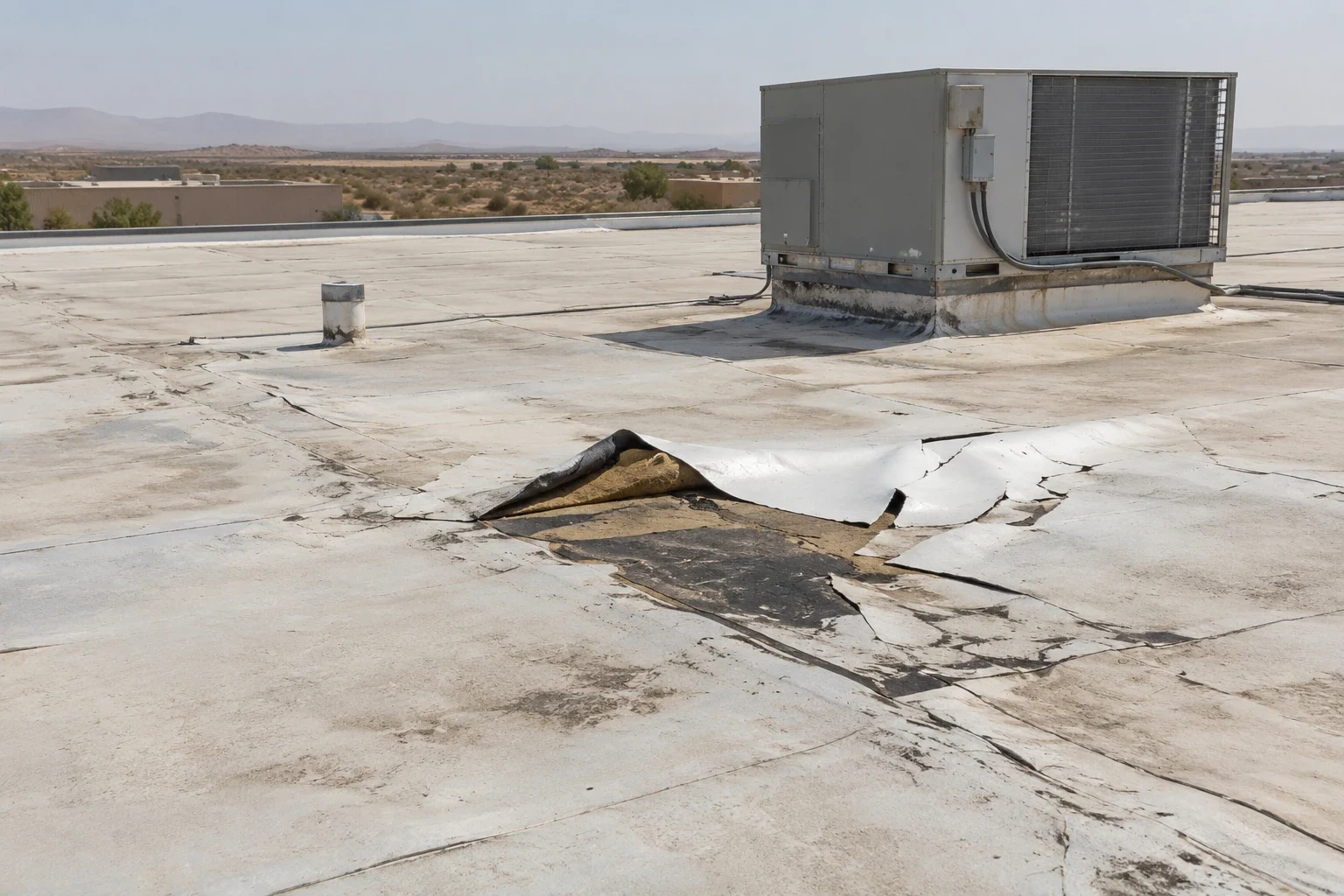
After a storm, the first visible problem may be only one part of the roof story. In Peoria, AZ, monsoon outflows can bring damaging wind, hail, and short bursts of heavy rain; the affected areas still need to be verified building by building. We inspect roof edges, seams, penetrations, drainage, and interior reports, then document what changed. If water is entering, we can stabilize the area while planning a permanent repair. The owner receives a map of observed damage, suspected conditions, and access limits, with a clear line between immediate protection and the completed scope.
Start with the event and the roof record
We ask when the weather occurred, what part of the building was affected, and whether leaks or service calls began afterward. Prior roof photos and repair records help identify changes, but they do not prove what the storm damaged. On the roof we inspect visible seams, perimeter attachment, edge metal, curbs, skylights, drains, and equipment supports. We compare each finding with the reported direction and timing of the event. If access is unsafe or conditions remain active, we protect the building first and return for a closer examination.
Microbursts and straight-line gusts are part of how monsoon storms reach the low desert. That helps decide where to look first, though it settles nothing about a specific property. Near Loop 303, a large commercial roof may include several sections and equipment clusters, so we mark findings by area. The inspection can be paired with a hands-on condition review before repair limits are approved.
Inspect edges and details after wind
Wind can disturb edge metal, lift a membrane termination, pull at a flashing corner, or move rooftop items. We look for loose fasteners, displaced components, open seams, and new water paths. A missing piece may be visible from the ground, but smaller separations need a roof-level check. We document where attachment changed and whether the surrounding membrane remains sound. If an item is simply displaced and can be reset safely, the scope differs from a torn membrane or failed substrate. The owner should see which parts are confirmed and which require testing.
Peoria’s Loop 303 planning area spans planned commercial, business, and industrial uses. That corridor context can help facility teams coordinate roof access with loading and production activity, but the actual repair follows the roof details we find. We can complete a focused wind damage assessment and coordinate edge correction through coping and perimeter work when both are part of the event scope.
Separate impact marks from functional damage
Hail can leave surface marks, fracture brittle components, damage exposed metal, or puncture a membrane. The appearance depends on system type, impact location, and the condition before the storm. We inspect vulnerable details and compare the surface with interior reports or moisture findings. A mark alone does not show whether the roof lost function, while a small puncture can admit water without a dramatic visual pattern. We record what is visible and identify whether a close test or repair is warranted.
Hail has hit the Phoenix area hard before, notably in an October 2010 outbreak, but that history says nothing about a Peoria roof today. Our report ties findings to the date and roof area we actually inspect. For a building near P83 or Park West, access and customer operations may affect the inspection window, but the roof condition determines the recommendation. A hail-focused review can distinguish observed impact from confirmed assembly damage.
Check drainage and concealed moisture
Storm debris can block a drain or scupper, while heavy rain may reveal an existing low point. We check bowls, strainers, overflows, and visible slope paths, then note whether water remains after the event. Clearing a blockage can restore flow, but it will not correct a deflected deck or insufficient slope. If the leak continues, we trace the entry path and assess whether moisture has reached insulation or deck. Infrared screening can help locate suspected wet areas, with selective core cuts used when confirmation changes the repair boundary.
Regional monsoon guidance includes flash flooding and heavy rain among possible impacts. We do not infer a property-level flood condition from that guidance. Instead, we compare drainage observations with the building’s roof layout and interior reports. For a confirmed obstruction or damaged outlet, a drainage repair can be scoped with the membrane work. If moisture extends beyond the visible opening, an infrared moisture survey helps define the affected area before materials are replaced.
Move from protection to permanent repair
Temporary dry-in may be needed when an opening remains exposed or weather prevents permanent work. We identify the protected area, how water is being directed, and what needs to be revisited. When safe conditions return, we prepare the repair using material compatible with the roof system. A seam, curb flashing, puncture, or perimeter separation each needs a detail that restores continuity beyond the visible edge. If the storm exposed widespread failure, the owner may compare repair with a broader repair scope or planned replacement.
Work sequencing depends on access, weather, materials, and building operations. We coordinate rooftop equipment service, tenant areas, deliveries, and any shutdown that the repair requires. Near Park West, retail activity can make ground-level access part of the work plan. In the north Peoria planning corridor, future land-use descriptions do not substitute for verifying the active property’s current use. The field scope stays tied to the roof under repair, not the larger planning map.
Keep the damage record tied to the work
The final record lists the observed condition, roof area, temporary protection, permanent repair, and any unresolved test or access limit. Photos show the opening and the restored detail. If the owner is coordinating an insurance claim, we can provide a clear scope and repair description without deciding coverage. A written report can separate storm-related findings from pre-existing wear where the evidence supports that distinction, while avoiding a conclusion that the inspection cannot establish.
For facilities spanning Peoria and Surprise, we keep incident records attached to the specific building. A claim documentation visit can organize photos, repair notes, and observed scope for the owner’s adjuster. Later maintenance can compare the same roof areas to the post-event baseline. That sequence supports a future repair decision without treating one storm as a complete condition assessment.
Commercial Roofing Questions
Should we wait for the roof to dry before inspection?
We can assess safely accessible areas as soon as conditions allow. Wet surfaces, lightning, active wind, or unstable access may require a delay. If water is entering, we can focus first on interior protection and temporary stabilization, then complete the roof examination when access is safe.
Does a hail mark mean the membrane must be replaced?
Not by itself. We inspect for punctures, splits, seam changes, metal damage, and moisture, then compare findings with the roof system. A visible mark may warrant monitoring, while a functional opening needs repair. The report identifies what the surface shows and what testing would clarify.
Can you separate storm damage from older wear?
We compare current observations with available inspection photos, repair history, and conditions across the roof. That can help distinguish a recent change from a pre-existing defect. If records or concealed conditions are missing, we identify the limit rather than assign an unsupported cause.
What if the building is still leaking after temporary dry-in?
We return to inspect the temporary protection and trace any remaining entry path. Water may be traveling from another detail or remaining within the assembly. We document the area, adjust protection when safe, and define the permanent repair or testing needed.
Can your report determine insurance coverage?
No. We document roof conditions and repair scope; the insurer determines coverage under the policy. We can organize photographs, dates provided by the owner, and observed work so the claim file has a clear technical record.