
Roof Systems in Peoria, AZ
Every roof system fails at a particular detail first, and knowing which detail is the real basis for comparing systems. A thermoplastic sheet gives up at a weld or a flashing turn, a bitumen roof at a lap or a blistered ply, a metal roof at a fastener or a seam. In Peoria, AZ, heat cycles and monsoon exposure press on those details every year, so the system choice should answer the failure pattern the building will actually see, not the one in a brochure. We lay the options side by side with the curb cluster, the edge condition and the drainage in view, then state the replacement horizon each one implies.
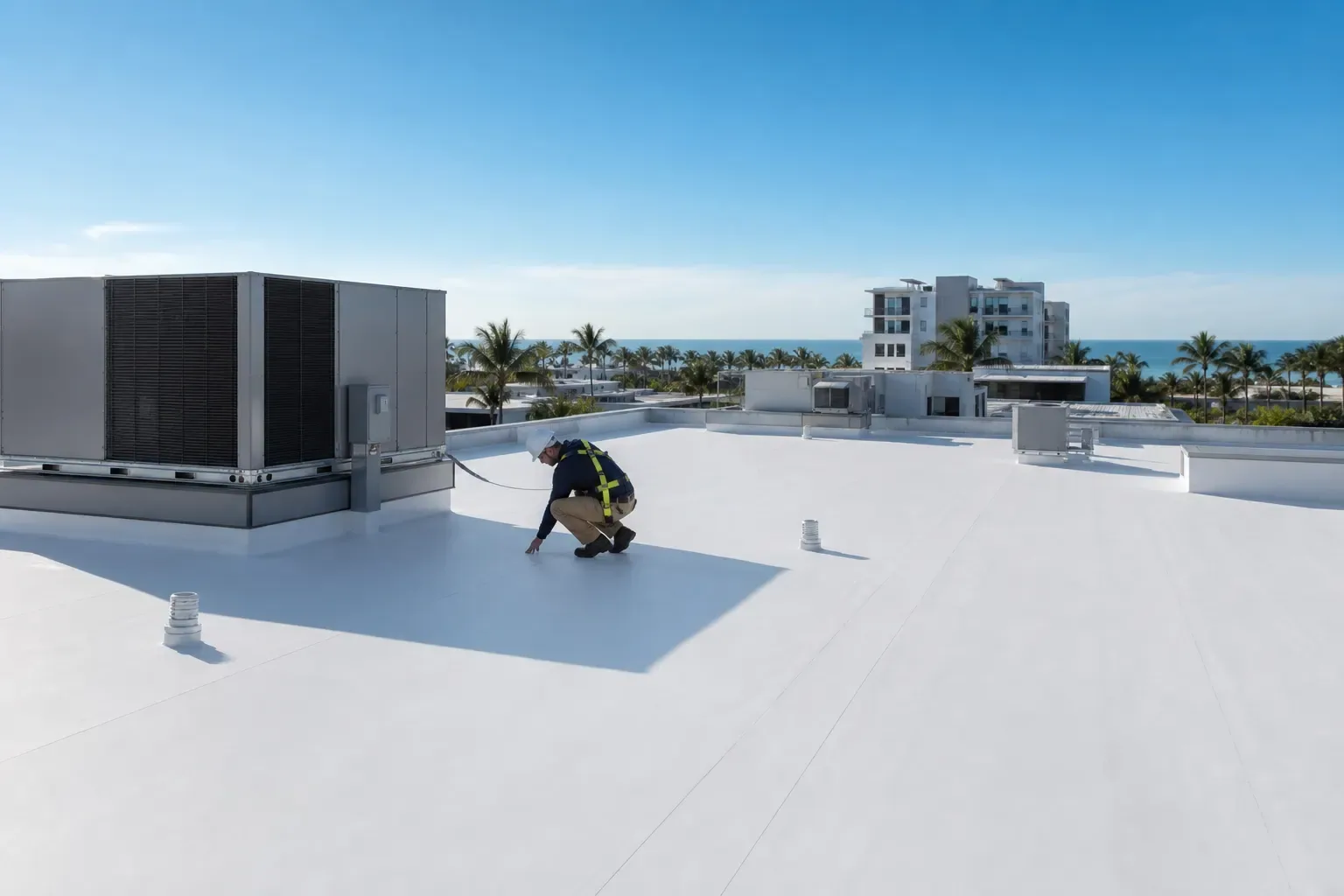
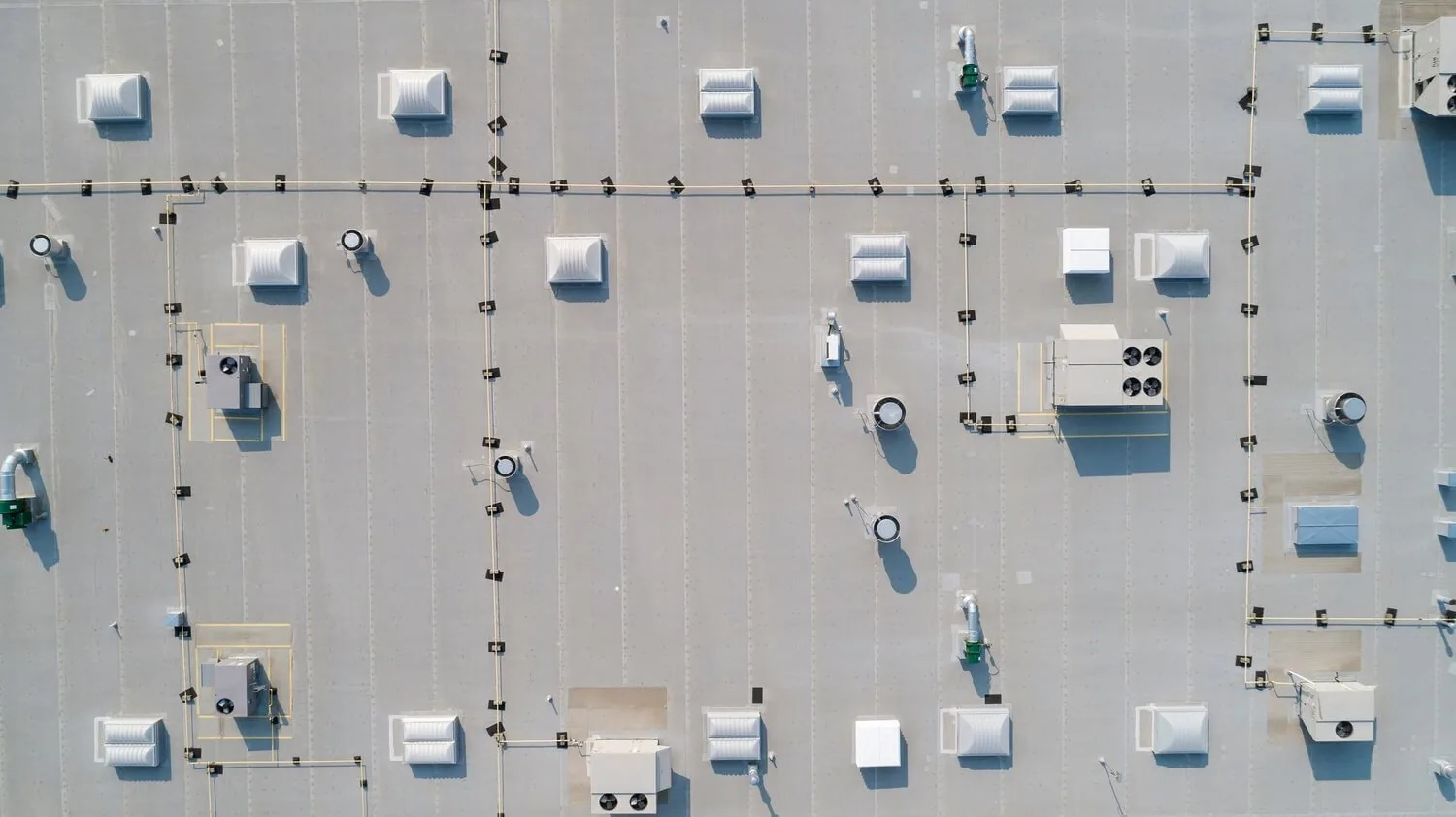
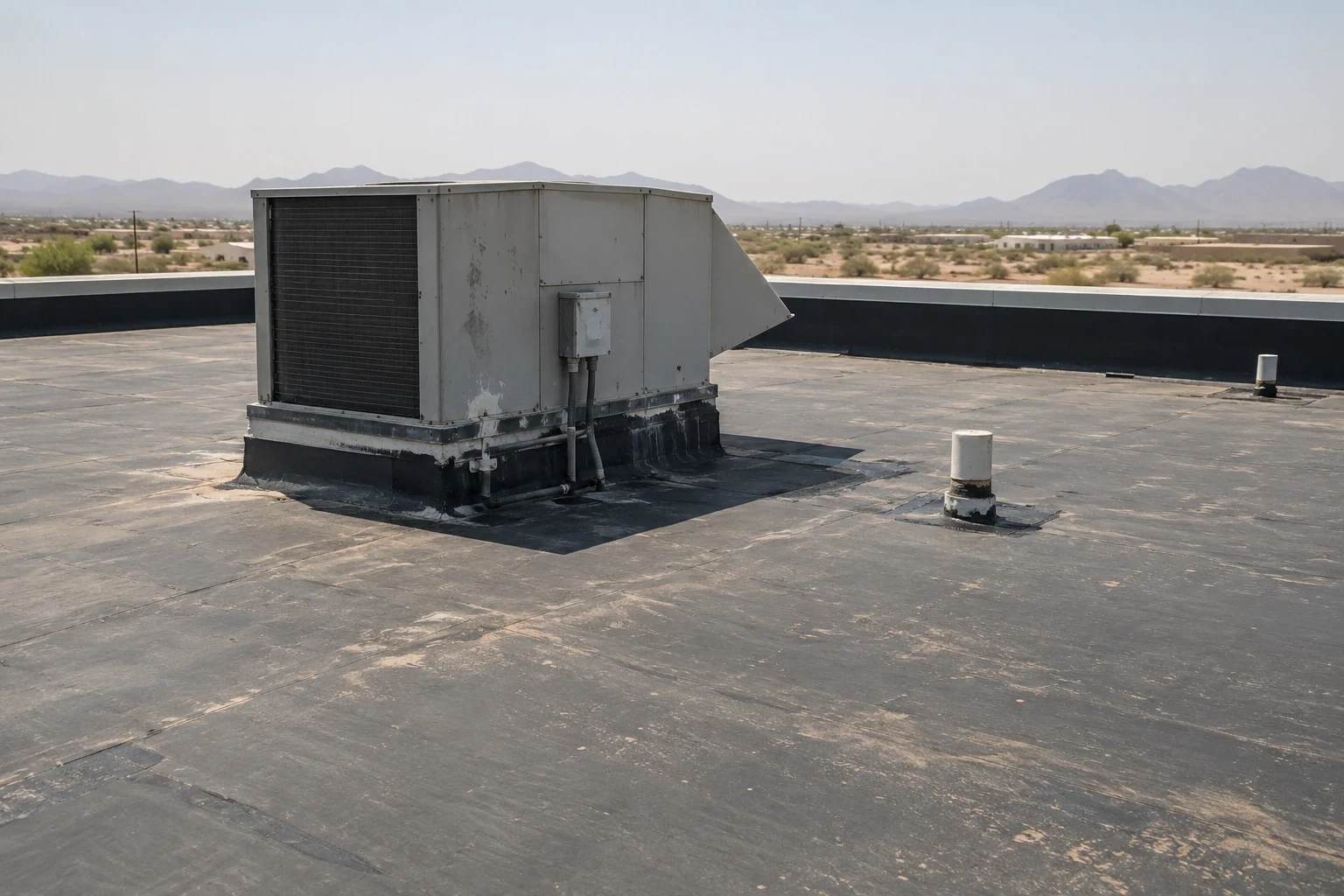
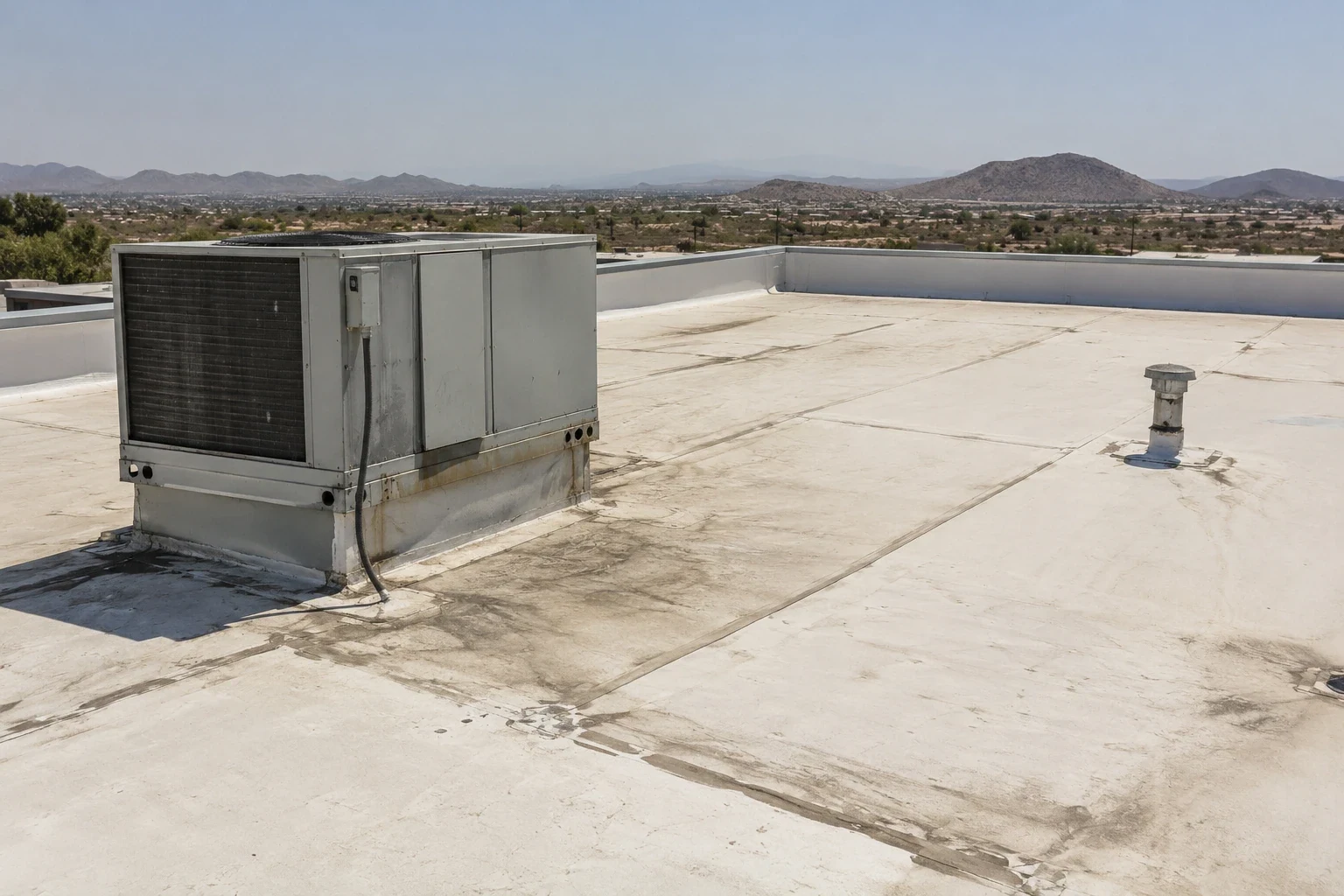
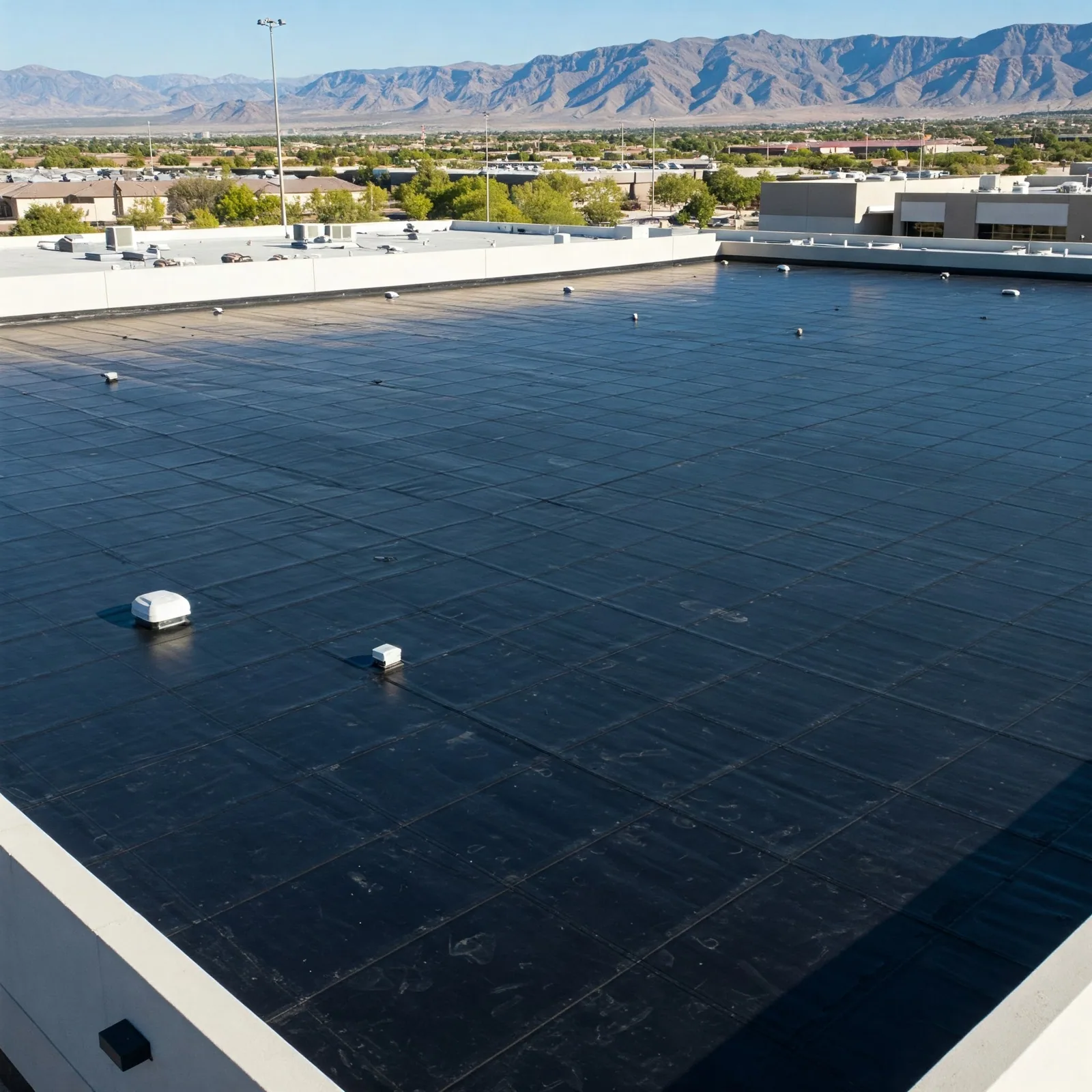
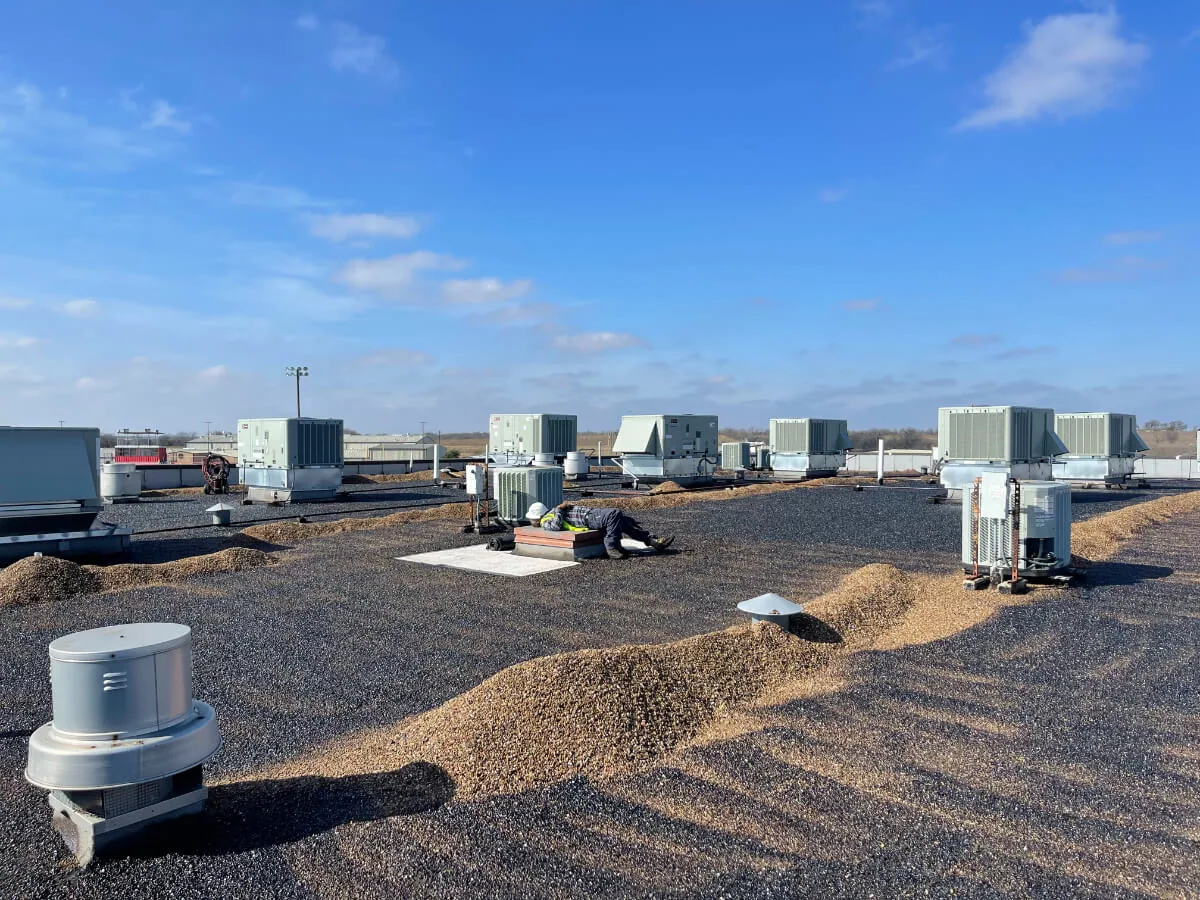
Compare single-ply membranes by their seams and flashings
TPO and PVC are heat-welded sheets whose strength sits in the weld and the detail work around curbs and drains. KEE is a PVC-alloy variant used where chemical or grease exposure is a concern. EPDM is a rubber sheet joined by tape or adhesive, so the splices and the flashing bonds carry the risk. Each is reviewed against the roof history, because the same membrane behaves differently on a clean roof and on one with years of patches.
Weigh bitumen and spray foam by what lies beneath the surface
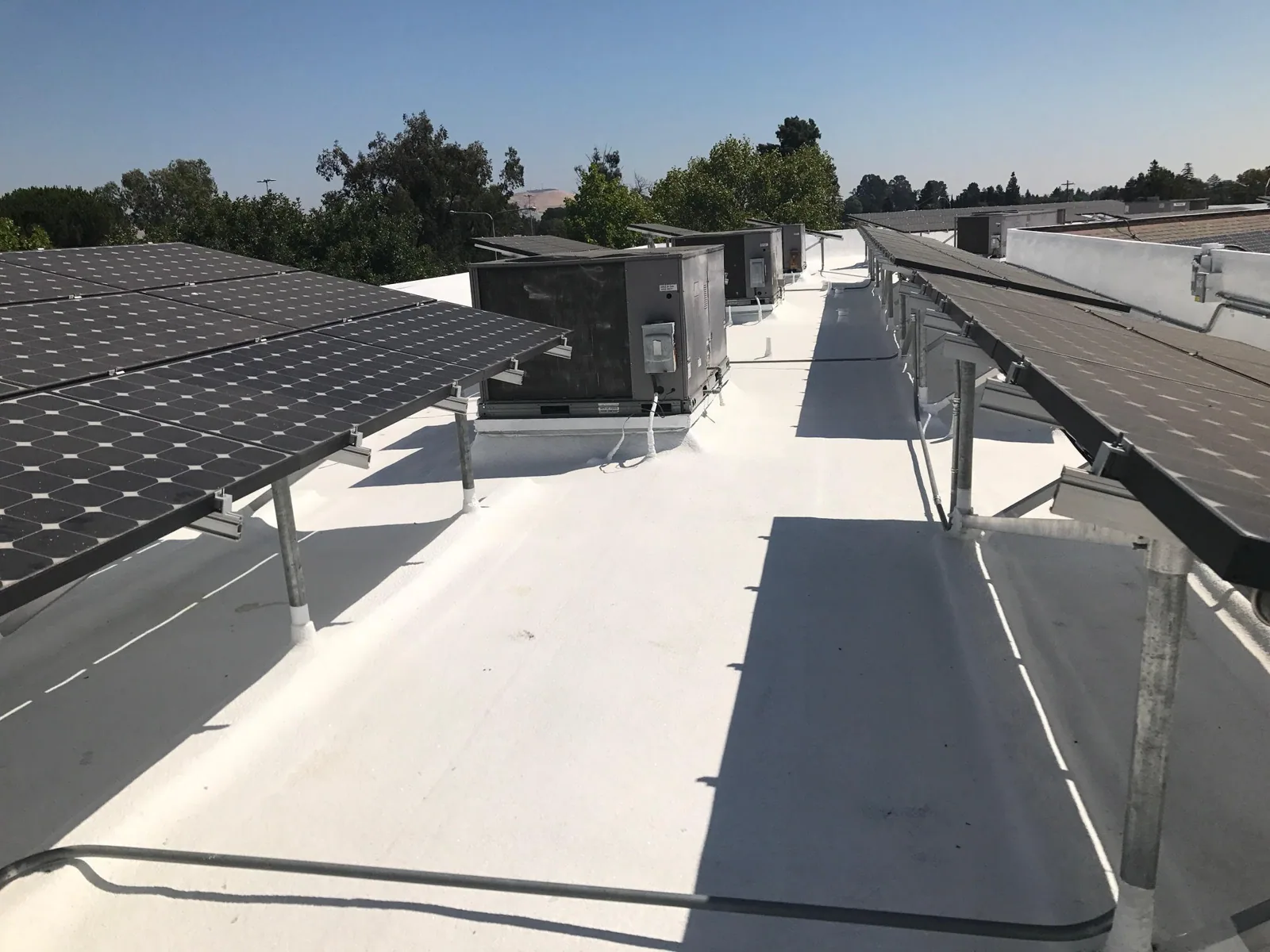
Modified bitumen and built-up roofing are layered systems, so the number of plies and the condition of the lower layers set the repair boundary. Spray polyurethane foam adds insulation and a continuous surface, but its coating is the layer that wears, and a moisture check on the foam decides whether a recoat is possible.
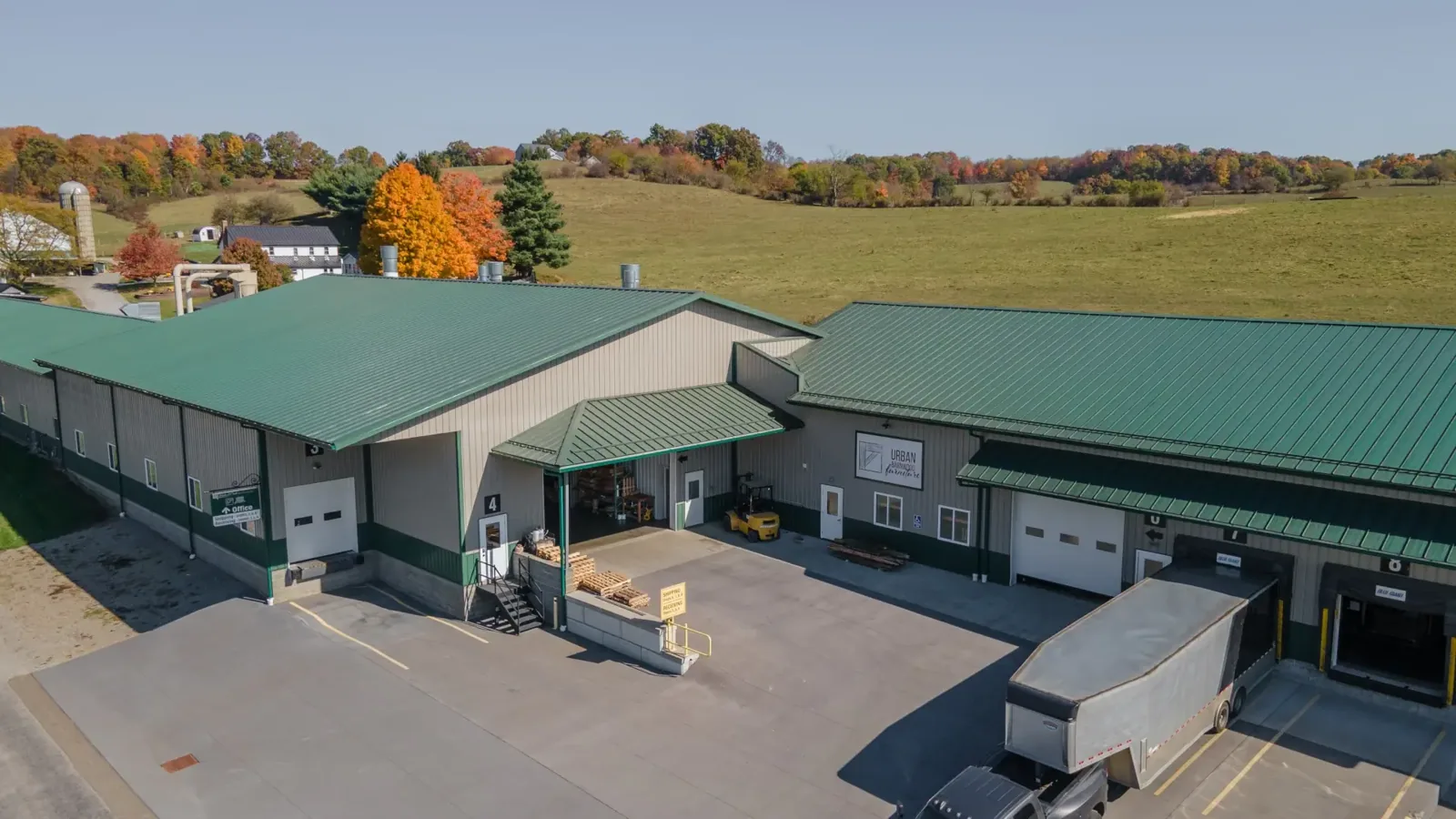
Treat metal roofs as moving assemblies
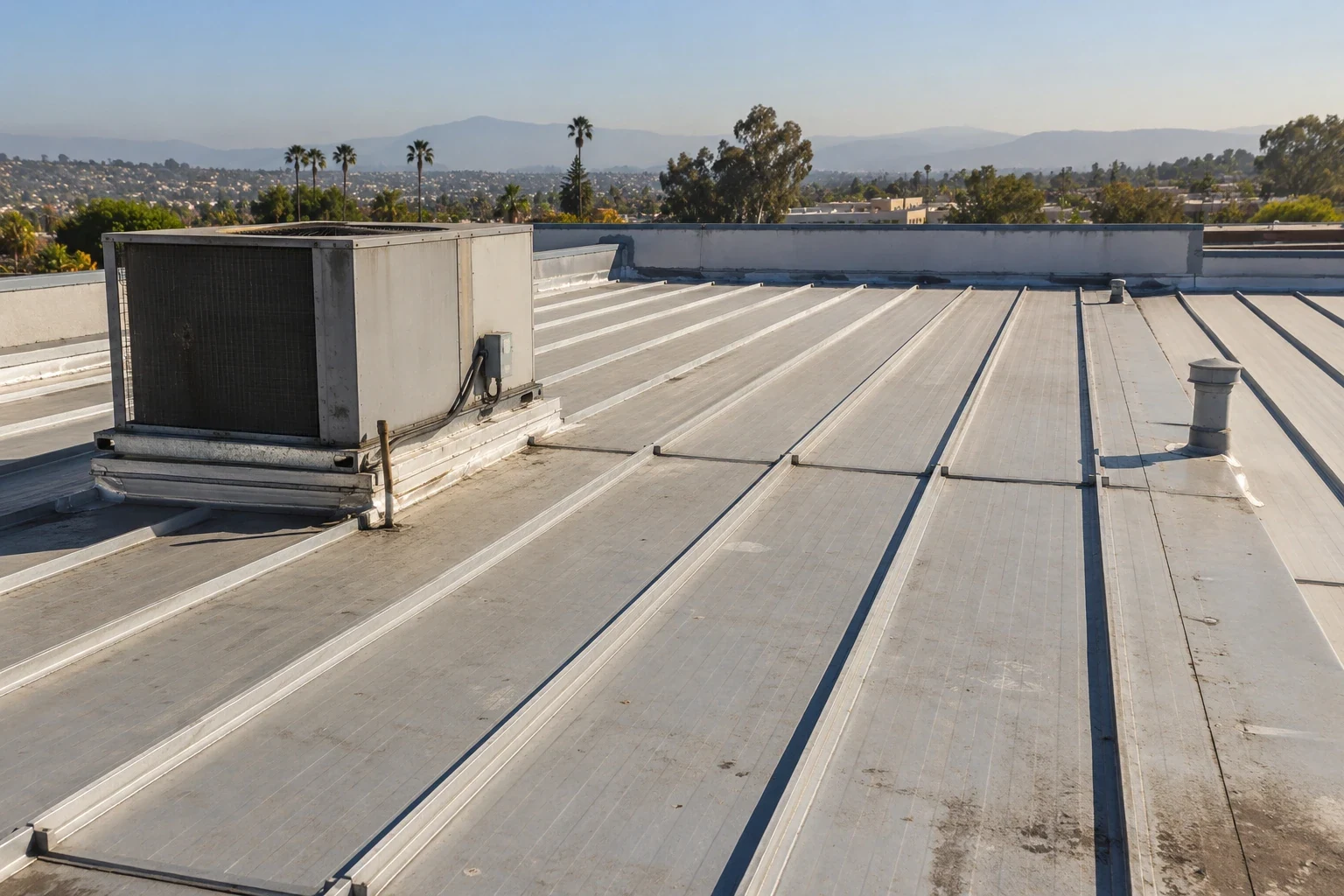
Standing seam metal depends on clips that allow panel movement through every heat cycle. Metal roof retrofit work addresses exposed-fastener roofs, where washers, laps and screw holes decide how much life remains. Phoenix climate records average roughly 94 days a year at or above 100°F, which is regional context for why expansion and fastener movement deserve attention on any metal roof in the area.
Use coatings when the surface is sound and dry
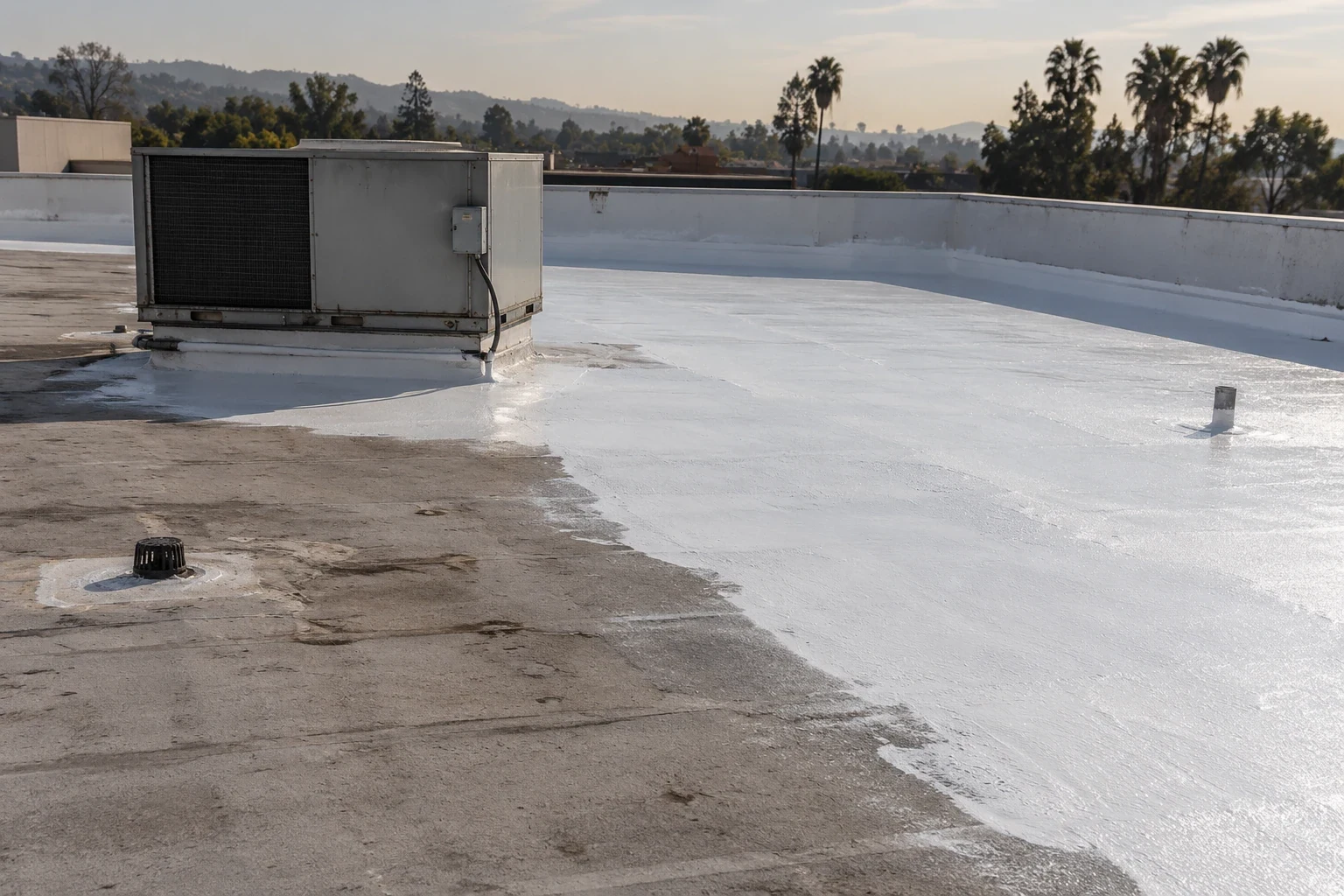
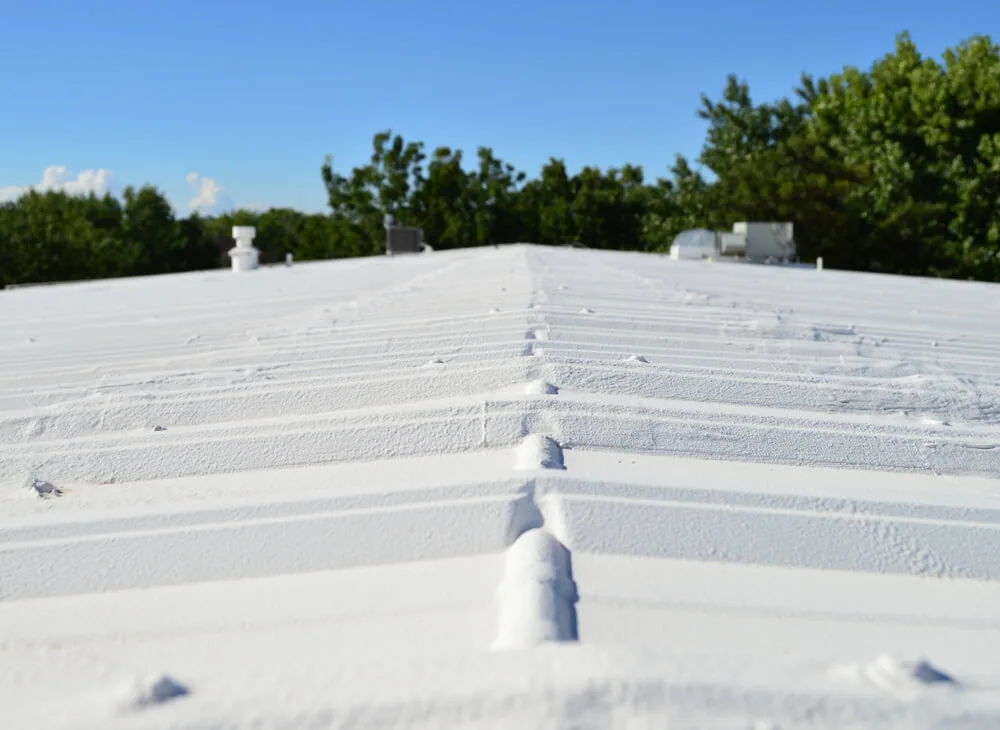
Silicone and acrylic coatings restore a roof that can still bond a film. They do not repair a failed seam or dry out wet insulation, so a moisture survey and an adhesion test come first. Where the test fails, the scope moves to repair or replacement, and the reason goes into the warranty file.
Commercial Roofing Questions
Which roof system lasts longest in Peoria heat?
Service life depends on installation quality, drainage, maintenance and exposure as much as on the material. We compare the system with the roof history and the building use before recommending one.
Can I switch systems when the roof is replaced?
Often yes. The deck, insulation and attachment decide which systems are compatible, and a change may require a cover board or a separation layer.
How does monsoon wind affect system choice?
Wind uplift at the edges and corners drives attachment design and edge metal. National Weather Service guidance describes damaging winds with Arizona monsoon storms, so perimeter details get extra review.
When is a coating the wrong answer?
When insulation is wet, seams are open or the surface will not bond. We run the moisture and adhesion checks before pricing the coating, and say so if the roof fails them.