
Commercial Roofing for Health Systems in Peoria, AZ
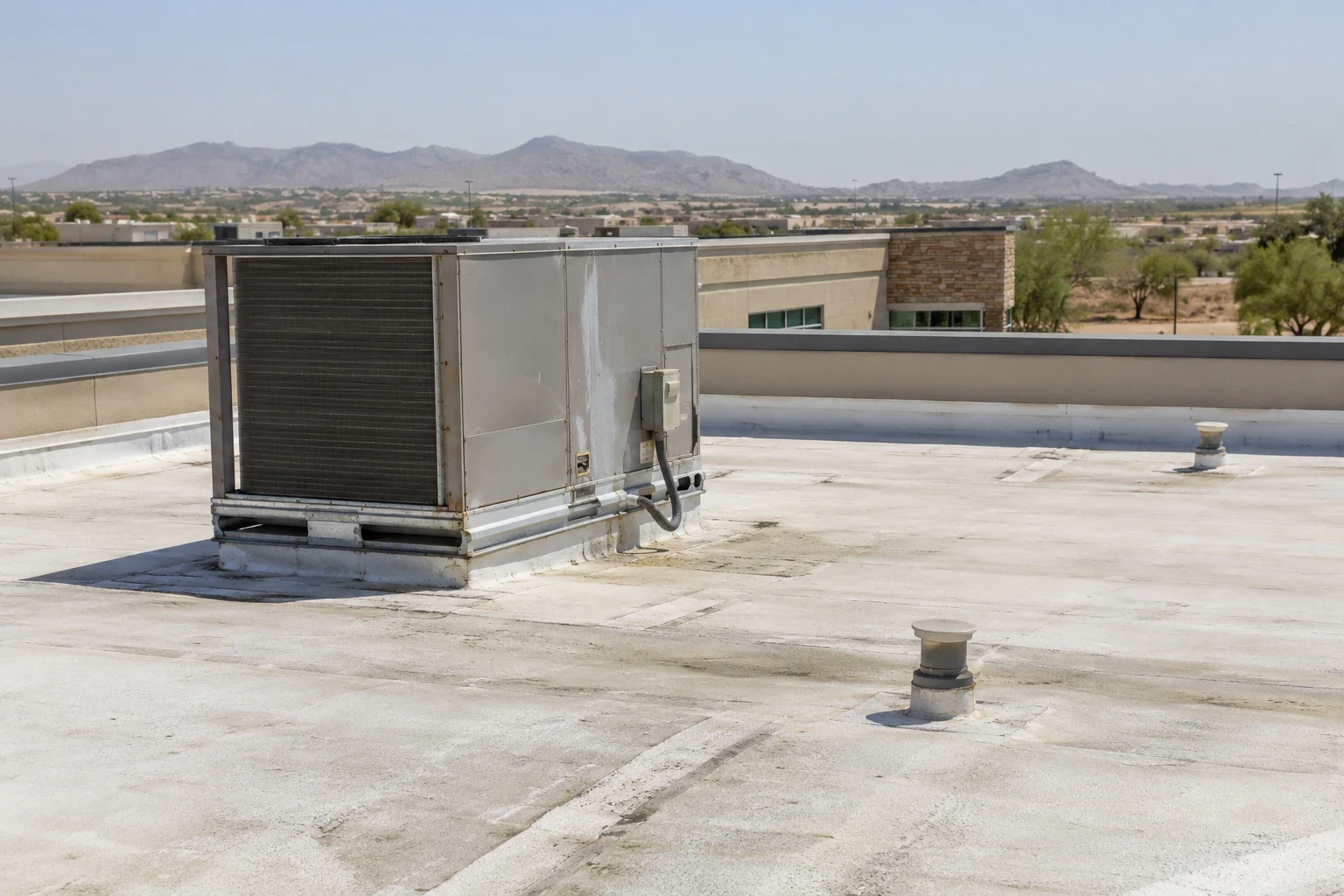
A roof leak over a treatment room changes the work plan before it changes the building record. Water control, patient movement, equipment protection, and the repair boundary all need to be understood together. In Peoria, AZ, long hot periods work on exposed sealants and roof transitions, while monsoon storms can bring damaging wind, hail, and short-burst rain. We inspect the roof above the reported area, trace the likely water path, and document what can be repaired without treating every building in a health system as the same asset.
Protect clinical operations while the roof is open
A medical building may keep appointments through roof work, but access and sequencing must be planned around its actual schedule. We coordinate the roof entry route, delivery timing, noisy work, equipment shutdowns, and any temporary protection needed below the work area. If a repair crosses an air intake, exhaust curb, or medical equipment zone, we identify that interaction before the crew opens the assembly. The facility team can then coordinate the work with the departments affected.
For a larger scope, we divide the roof into sections that can be dried in and secured at the end of each shift. A reroof on an occupied building needs clear communication about daily work limits and temporary conditions. We document any condition that changes the schedule, then leave the roof in a known state for the next shift. That record helps the facilities lead answer questions without relying on a verbal update from the roof.
Trace the leak beyond the room below
The ceiling location is a starting point, not the repair boundary. Water can move along a deck, insulation joint, or conduit before reaching an interior surface. We check the nearest drains, seams, parapets, penetrations, and previous patches, then compare those observations with the leak history. Where moisture may extend beyond the visible damage, an infrared moisture survey can map areas for confirmation with core samples or meter readings.
After the field review, we mark which conditions need immediate control and which can be scheduled. One separated curb failure may call for a targeted commercial roof repair. Wet insulation across more than one area or repeated failures at separate transitions can require a broader scope. For an active leak, the first call should establish where water is appearing, whether it is still moving, and which occupied areas need protection while the roof is assessed.
Keep a record by building and roof area
Health systems need records that follow the property through staff changes and budget cycles. We identify the assembly where it can be verified, map findings to roof areas, and include photographs of seams, drains, flashings, curbs, and prior repairs. A system-wide summary can rank priorities, but each building retains its own condition and repair history. That prevents a good roof at one clinic from masking a failing detail at another.
Peoria recorded $1.351 billion in 2022 health-care and social-assistance receipts, a citywide measure of a building-intensive service sector. It does not describe any one facility, but it underscores why roof records should be usable by operations and finance together. A condition report sets out findings and next actions; a roof asset record carries them forward. The facilities team can share that record with the property managers responsible for lease and maintenance coordination.
Check the details before the monsoon window
Ahead of the summer storm period, we look closely at curbs, perimeter edges, drains, and exposed seams serving occupied care areas. Wind, hail, and intense runoff can stress those details; the inspection records what is open or displaced so facilities staff can plan protection. Heat exposure also shapes work timing, but the recommendation follows the observed membrane, weld, or sealant condition on that roof.
A baseline inspection gives the facility team a way to compare conditions after a storm. If the roof is struck by hail or wind, a storm damage review can separate observed new damage from conditions already in the record. If a claim is appropriate, our insurance-restoration coordination keeps photographs and repair scope aligned with the health system’s reporting needs. We do not assign damage based on the weather report alone.
Use local context without assuming every roof is alike
Peoria’s roughly 7,000-acre northern plan area lies between Lake Pleasant Parkway and State Route 74, with employment and open space alongside commercial and residential possibilities. For a health system evaluating future access or growth, that is market context only. Each clinic or care building still needs its own roof history and field findings before anyone sets a maintenance or capital priority.
Near the Peoria Innovation Core, a new or expanding clinic still needs its own roof inspection, access plan, and warranty file. In Downtown and Old Town Peoria, compact mixed-use zoning includes civic, historic, residential, commercial, and employment functions, so scheduling can require closer coordination with neighboring occupants. We check the building itself and coordinate with the facility contact; the district name never substitutes for a field finding.
Give facilities and finance the same decision
A maintenance budget works better when it distinguishes a repair from an approaching replacement. We rate the roof area from observed seam, flashing, drainage, and moisture conditions, then state what scope those findings support. If the assembly is dry and the defect is isolated, a coating restoration may be considered after substrate and adhesion checks. If moisture or repeated failures cross separate areas, a replacement window may move forward. We state the evidence and cost drivers behind the recommendation.
The result should tell finance what may be deferred, facilities what must be watched, and operations what the work will affect. A capital plan should define what would justify another inspection, such as recurring moisture at a penetration or damp insulation outside a documented repair limit. When a health system adds or changes a site, the same method can be used without carrying one building’s condition over to another. The owner receives a scope decision and a record that can be checked later.
Commercial Roofing Questions
Can roof repairs be completed while a clinic remains open?
Often, when the scope can be divided into controlled areas and the work sequence is coordinated with the facility schedule. We confirm access, noise limits, equipment interactions, and interior protection needs before setting the work period. Weather, roof condition, and the amount of assembly that must be opened can change the plan, so we state the daily limits and dry-in steps in advance.
What information should facilities send with a leak call?
Send the room or department affected, when the water appeared, whether it is active, any photos, and the last known roof repair in that area. We use that to choose an access plan, then inspect the roof above and around the reported location. The interior stain alone cannot establish where water entered, so the report ties the repair to the roof detail we find.
How can a health system prioritize several roofs?
Rank by active water entry, repeat failures, confirmed moisture, and the consequence of delaying work, then keep each building’s evidence separate. A common scorecard helps compare urgency; it should not make roofs appear identical. We provide a portfolio view with an individual condition record, scope, and review trigger for each property.
Does a storm report prove that a particular clinic roof was damaged?
No. The roof must be inspected for impact marks, displaced components, openings, or other conditions that can be tied to the assembly. We compare current findings with earlier photographs and repair records, then document what is visible and what needs testing. Weather context helps set the inspection priority, while the roof evidence supports the repair decision.
What should happen before approving a replacement?
The owner should have a condition report that shows the affected areas, moisture findings, repeated repair points, and the alternatives considered. We check whether localized repairs or restoration remain viable, then identify the conditions that make replacement the stronger scope. If access, infection-control needs, or equipment sequencing affect the schedule, those constraints belong in the project plan before approval.