
Commercial Roofing in Peoria, AZ
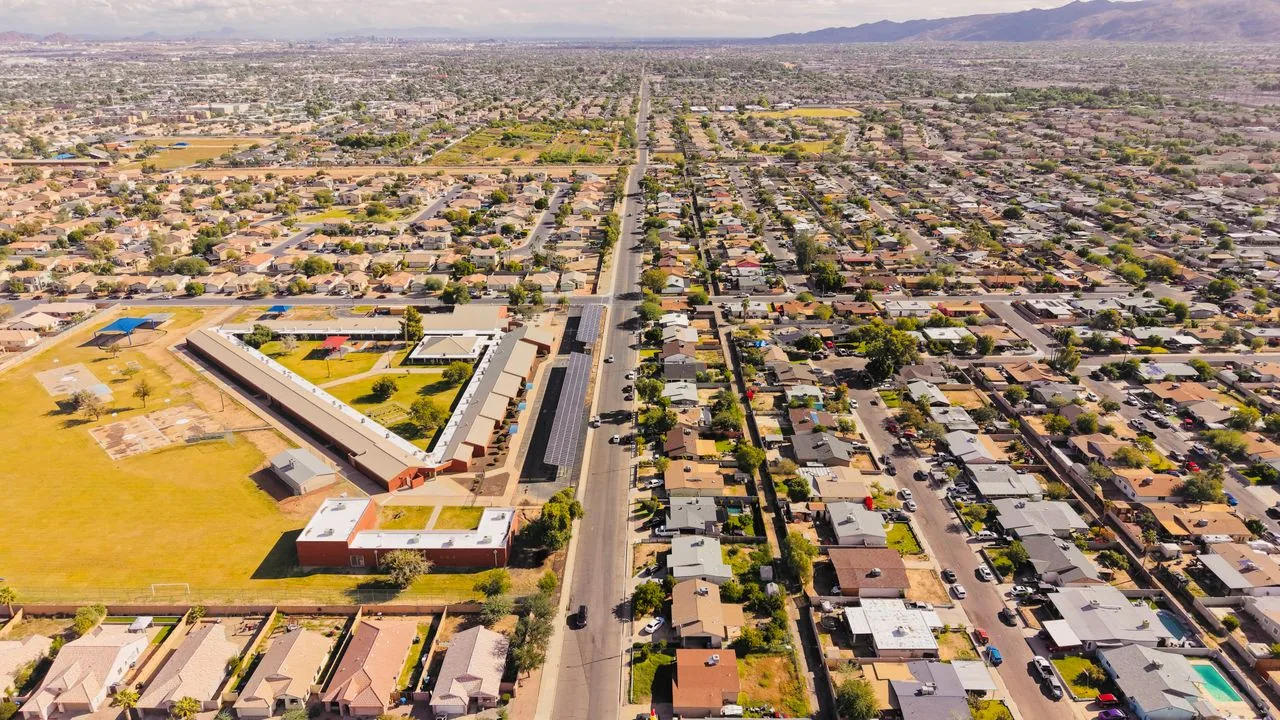
Across 176.7 square miles of land, Peoria does not have one roof problem; it has several, and they do not share a timetable. The Census Gazetteer gives the city that land area, and the city's own planning documents describe Loop 101 retail and dining districts, a downtown mixed-use area, business and industrial land along Loop 303, and a large north-end planning area. A roof owner in one of those places faces a different set of details than an owner in another. We start by sorting each building by what the roof carries and what failed, then set a repair boundary and a capital window so the owner knows whether to defer or act. A commercial roof inspection is usually where that sorting begins.
Sort Peoria roofs by the district they sit in
The city's retail districts along Loop 101, including the P83 District and the Park West Commercial District, are the kind of retail and dining setting where we expect to check canopies, parapets, scuppers and kitchen exhaust. The north end, along Loop 303, is planned for business park, industrial, advanced manufacturing and commercial use, so we expect to see larger roof fields and denser rooftop equipment there, and we confirm it roof by roof. Downtown and Old Town are described as compact mixed-use areas with historic fabric nearby, where shared walls and tight access matter.
We use that sorting as a starting hypothesis, not a conclusion. Each roof gets walked, photographed and checked for membrane type, drain layout and curb locations before any scope is written. The district tells us which questions to ask first, and the roof tells us the answers. Owners with buildings in more than one zone get a separate finding for each, so a retail repair is never priced from an industrial assumption.
Plan around the retail and healthcare roofs a large city carries
Census QuickFacts records about $4.9 billion in 2022 retail sales for Peoria and about $1.35 billion in health-care and social-assistance receipts. Those numbers describe activity, not roofs, but they show that a lot of operating business sits under flat commercial roofs in this city. A retail roof that leaks during business hours costs sales, and a medical roof that leaks costs closures and compliance work.
For those buildings we favor planned work over emergency work. A scheduled preventive maintenance visit clears drains, checks seams and records new equipment before the monsoon season. When a repair is needed, we plan it for off-hours and protect interiors. Healthcare roofs get containment and intake protection, and retail roofs get walkway protection and clear delivery lanes.
Check industrial and logistics roofs for curb clusters and drains
Peoria recorded roughly $113.954 million in 2022 transportation and warehousing receipts, which is a regional logistics signal and not a measure of any individual roof. Where distribution or warehouse buildings do exist, their roofs tend to share the same failure points: seams near penetrations, clogged drains and metal edges that have moved. We map each curb cluster and test drains before recommending anything.
A warehouse roof that has been patched several times may be close to a recover or replacement decision, and we show the owner the evidence for that call. Infrared moisture surveys help here because they locate wet insulation across a large field without opening it, so the repair boundary is drawn on data. Our multi-site roof programs apply the same method across a portfolio.
Understand the defense and aerospace context nearby
Luke Air Force Base, home to the 56th Fighter Wing, lies about 17 miles southwest of Peoria's centroid by straight line, and the city's north planning area is designed to support aerospace and defense along with semiconductor and advanced manufacturing. Roofing on a military installation involves base access, escort and badging procedures, scheduling around mission operations and roofing details built to the Unified Facilities Criteria. We describe those requirements to owners so expectations are set before a proposal is written.
For commercial buildings in Peoria that serve this sector, the roof question is practical: equipment loads, exhaust, security access and the schedule of the operation below. Access rules shape a roof project from the first week, as military installation roofing shows, and the same planning habits help on private sites with controlled access.
Check code, heat and storm exposure on every scope
Peoria's building code is the 2018 International Building Code with local amendments by municipal ordinance, and we check scopes against it before pricing. The city also directs that the International Energy Conservation Code applies to energy-efficient design, so insulation and reflectivity decisions go through the same review.
Phoenix has roughly 94 days annually with highs of 100 degrees Fahrenheit or more, a regional air figure that is not a roof-surface measurement. Heat moves seams, edge metal and sealant. Monsoon impacts in the Weather Service's description include microbursts, destructive wind, flash flooding and hail, and large hail swept across the metro on October 5, 2010. After a storm we start with hail damage repair documentation and edge checks, then drains.
Track roof records across a city that is still growing
Peoria's estimated population reached 200,881 in 2025, up from 190,985 in the 2020 Census count, and the city continues to plan new employment and commercial land. Growth means roofs of many ages sit side by side. We keep records by building so an owner can see which roofs are new, which are mid-life and which are near the end of service.
Owners with several properties can use one format across the Loop 303 employment corridor, the retail districts and downtown Peoria. The record shows repair frequency, moisture findings and the next decision window, which helps a portfolio budget roof spending in order of risk.
Commercial Roofing Questions
Which Peoria roofs should an owner inspect first after a major storm?
Start with roofs that have shown leaks before, then those with older seams or visible edge metal movement, then any with large rooftop equipment. Photograph damage and call us before cleanup. We document the roof with dated images and recommend temporary protection where openings exist, so the permanent repair is scoped from facts.
How does a roof in a retail district differ from one in a business park?
Retail roofs concentrate risk at the edges, canopies and scuppers, and they are constrained by customer hours. Business park roofs often have larger fields, denser rooftop equipment and longer drain runs. The repair method may be the same membrane craft, but the inspection list and work window differ, and we adjust both.
What does the city's adopted code mean for my reroof scope?
Peoria adopts the 2018 International Building Code with local amendments, so a reroof or recover must comply with that edition and the city's changes. We review the scope against it, including fastening, insulation and any required permits. If a code question affects cost, we say so in the proposal.
Can you service several Peoria buildings under one schedule?
Yes, and it often reduces cost per visit. We combine inspections, drain clearing and sealant checks into one rhythm and issue a report for each building. The same schedule can flag buildings whose roofs are reaching a capital decision, so repair funds go where they matter most, and the owner can see the order of risk before approving any spend.
What records help most when I buy a building in Peoria?
The membrane type and install date, warranty documents, repair invoices and any prior moisture survey. When those are missing, we perform a hands-on inspection and a moisture scan to build current evidence. The result is an estimate of remaining service life that can be priced into the purchase.