
Commercial Roofing in Glendale, AZ
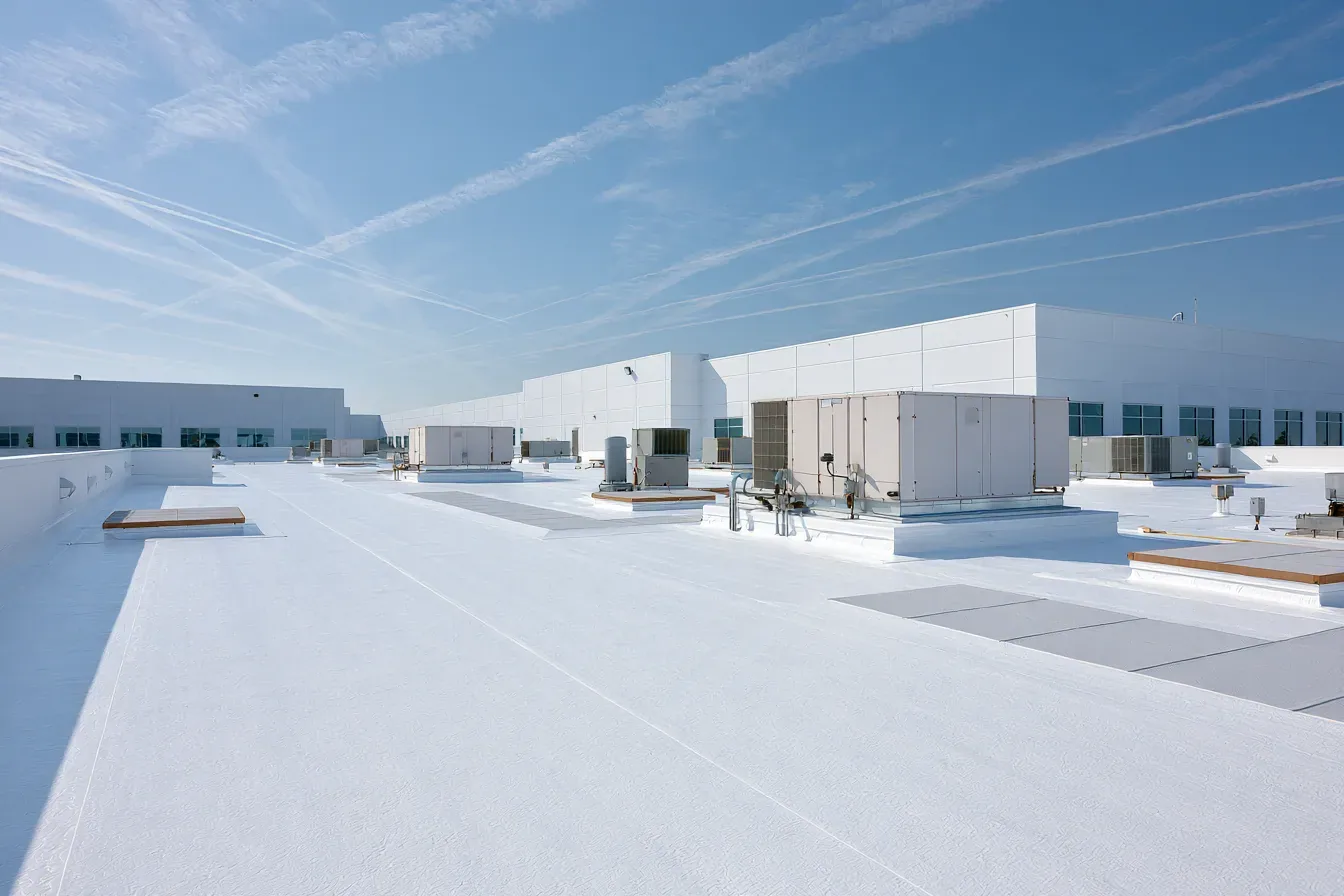
A city with this much commercial activity on 67 square miles of land has little spare roof. The 2024 Census Gazetteer gives Glendale 67.247 square miles, and Census QuickFacts records about $5.5 billion in 2022 retail sales there, more than Peoria's figure, plus about $2.47 billion in health-care and social-assistance receipts. Figures like these measure business activity, not roofs, but they point to a lot of operating buildings in a compact area, and a leak in any of them interrupts something that earns. Glendale lies about 18.8 miles from Peoria, AZ by straight line. We begin each building with the roof history and a hands-on walk, then set a repair boundary that tells the owner whether to defer or act, starting with a commercial roof inspection.
Inspect retail roofs for edge, canopy and drain failure first
Retail buildings concentrate their risk at the roof edge. Parapet caps, canopy flashing, storefront returns and scuppers open under heat and wind long before a field membrane fails. On a first walk we check each of those, then follow water from the field to every outlet and note where it lingers after rain. Standing water near a scupper tells us whether the outlet is blocked, undersized for the area it serves or placed at the wrong elevation. We also check the wall below an outlet for staining, because a scupper that discharges against a wall can drive water into the masonry joint and cause interior damage that looks like a roof leak.
Retail owners also ask what a repair will do to trading hours. We schedule noisy work early, keep lifts and dumpsters out of customer lanes and protect entries from overhead debris. For a larger center, a shopping center roof program can phase repairs across buildings so a single block is never fully closed.
Protect care environments through the whole roof project
Glendale's 2022 health-care and social-assistance receipts ran well above Peoria's, which tells an owner that care buildings are a major part of the local economy. Care environments have rules about air, noise and moisture that we must respect. We start by learning which rooms sit under which roof sections, which air intakes and exhausts need protection and where infection-control containment is required.
Work proceeds in small sections that are closed daily, with the schedule agreed with the facility team. Fume-producing materials are chosen and staged with intake locations in mind. A medical office roof that has leaked into an exam area gets documented first, since the interior team may need the record for its own reporting. If the leak reached a supply closet, an electrical room or a records area, we flag that to the facility manager at once, since those spaces change the urgency of the response. After that, the roof repair or replacement follows the path the evidence supports.
Plan emergency response across an 18.8-mile reach
Water entry does not wait for a business day. Our emergency response runs through nights, weekends and holidays, and the first goal is to stop active entry and protect the interior with temporary measures such as tarping, sealing a failed seam or diverting water from a drain. Temporary work is recorded separately from the permanent scope, so an owner can see what was done to protect the building and what remains to be built, along with the date, the weather and the person who authorized each step.
We plan crew routes from Peoria so that a call from Glendale reaches a roof as quickly as traffic allows, and we ask the caller for the building access point and any gate code. Our emergency roof repair response ends with a written note on the cause, the temporary fix and the recommended permanent repair, so the next decision starts from evidence.
Read Phoenix heat and storm records as context, not a verdict
In Phoenix, about 94 days each year hit 100 degrees Fahrenheit or higher. That is regional air context, not a roof-surface reading for any Glendale building, but the mechanism of repeated expansion and contraction applies across the Valley. It works on seams, sealants, metal edges and fasteners, so those are the first details we test on any roof. A probe along a seam edge, a pull test on a sealant bead and a check of fastener heads on metal trim take little time and show whether movement has already opened a path.
Monsoon storms can bring microbursts, wind that damages buildings, flash flooding and hail, per the Weather Service, and supercells left large hail across the metro on October 5, 2010. Once a storm passes, we document marks with dated photographs, separate fresh impact from age wear and prepare a record that supports insurance claim assistance. We also verify drains and overflows, because short heavy rain exposes drainage weakness fast.
Set the replacement horizon from evidence, not age alone
Roof age is a poor predictor by itself. A newer roof with a drainage flaw can fail before an older one with good slope and sound seams. We combine age, repair frequency, moisture findings and visible condition into an estimate of remaining service life, then price a repair, a coating or recover if suitable, and a replacement side by side.
That comparison matters for owners planning around a lease, a sale or a budget cycle, because each of those events puts a date on the roof decision. Where the evidence supports deferral, we say so and set a review date, along with the specific change, such as a new leak location or a failed repair, that would move the date forward. Where it does not, the owner sees why. The same record format works across Peoria, Surprise and Glendale, which helps a multi-city portfolio rank roofs by risk and plan roof capital planning as one program.
Commercial Roofing Questions
What should I do first when water is coming through a ceiling in a Glendale retail space?
Protect people and contents, move inventory, place containers and call us with the location of the stain. We respond to stop the entry, tarp or seal the opening and photograph the roof area. The temporary work is recorded separately, and we then recommend the permanent repair based on what the roof shows.
Does a larger retail total mean roofs here wear out faster?
No. Sales figures describe business activity, not roof condition. Roof wear follows exposure, traffic, drainage and installation quality. What the figure does tell an owner is that a leak interrupts revenue, which is a reason to inspect before a failure rather than after one.
How do you keep a clinic running during roof repair?
We coordinate with the facility team on zones, intakes and noise, then work in small sections closed each day. Containment is set where needed and adhesives and fumes are managed to stay out of the building. Any interior leak is documented so the clinic has a record of the event.
Can I phase a replacement over two budget years?
Often, yes. We divide the roof into sections by condition, protect the worst areas first and scope the remainder with a stated condition and review date. The boundary between phases is detailed in the plan so the second phase is not a surprise. Phasing makes the most sense when moisture is limited to certain sections.
Which records should I gather before asking for a proposal?
Collect warranty paperwork, past repair invoices, the roof plan if one exists and a note of where leaks have appeared. If you have no records, we build a working file from the roof itself. A proposal is more accurate when it starts from what has already been tried.