
TPO Commercial Roofing in Peoria, AZ
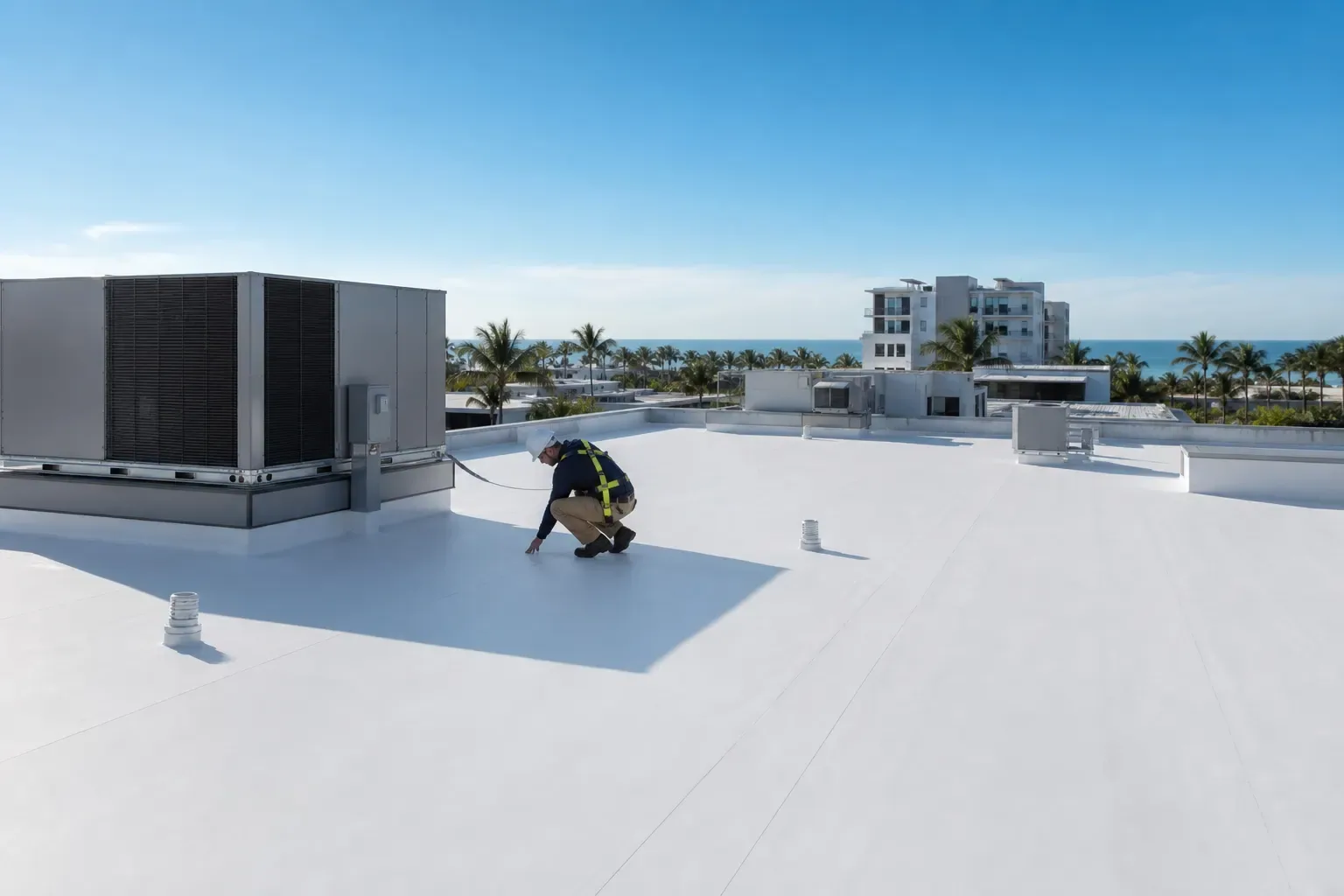
A TPO seam can look closed while a corner or termination is already opening. In Peoria, AZ, repeated heat exposure and monsoon wind put attention on welds, perimeter metal, curbs, and drain details before the owner chooses repair or replacement. We inspect the membrane surface, test suspect seams, review prior patches, and check whether insulation below remains sound. A roof inspection should map the condition by area rather than treat every white membrane as one uniform assembly. The next step follows the evidence: repair a limited failure, test concealed areas, or plan a larger scope when conditions repeat.
Test the weld before pricing repair
Heat-welded TPO sheets rely on a continuous bond at laps and patches. We probe accessible seams, inspect corners and cross-seams, and note dirt, fishmouths, wrinkles, or areas where a previous repair changed the surface. A seam defect may be isolated, but its length and surrounding membrane condition determine how far the repair must extend. We clean and prepare the surface, make a compatible weld, then verify the completed edge. Sealant placed over a failed lap may hide the opening without restoring a fused connection.
Where repair history is missing, we compare each finding with the leak map and roof layout. Our condition report records which welds were tested, what failed, and where follow-up testing could alter the scope. The owner can separate a small repair boundary from a field-wide problem before approving another patch.
Follow the membrane through each transition
A TPO corner patch is only as reliable as the weld sequence that closes it. At a curb, we check whether a prefabricated corner lies flat before the field sheet turns up the wall. At a pipe boot, we inspect the flange where the hot-air seam meets the penetration. If the membrane has been cut back unevenly, the patch needs a clean landing that does not create a new pocket at the inside corner. We also mark where a support pad or service route crosses the sheet, since that contact can abrade the surface without opening the primary lap.
Peoria identifies P83 as an approximately 600-acre district near Loop 101 and Bell Road, with commercial, hospitality, employment, and residential uses. An owner planning work in that broad area can map rooftop equipment access before a repair crew closes a corner or boot. A curb and support review records which interfaces require coordination.
Sort out patch overlaps and insulation attachment
A TPO patch that crosses an older patch can leave three sheet edges competing for one weld. We remove unstable material until the field sheet gives a clean, continuous landing, then check lap direction, corner pieces, cover-strip width, and the order of each weld. The operator completes a sample weld and lets it cool before checking the bond. If heat or travel speed is wrong, the test must be reset before production work begins. Our repair record marks the overlap and test result so a later service visit can distinguish the original seam from a newer repair.
Peoria's adopted Camino a Lago plan places its commercial core near Lake Pleasant Parkway and Deer Valley Road. That plan gives an owner a land-use frame for long-range decisions, but it says nothing about a particular roof's attachment. For a building under review, we document the installed plate pattern and note the insulation change that would alter it. The Camino a Lago area connects to a roof-layer assessment when a proposed board thickness affects fastener length or spacing.
Read Arizona exposure without guessing at the roof
The October 2010 Phoenix-area supercells brought large hail across the metro region. That history is useful when an owner is sorting an older impact concern from a recent membrane defect, but it does not identify damage on a specific roof. We photograph current punctures, scuffs, displaced edge metal, and open welds, then compare them with repair records. TPO can be hot-air welded at compatible seams, so a repair review should test the actual field sheet and the patch boundary rather than treat every mark as a membrane failure.
North Peoria growth planning follows Loop 303 toward State Route 74, while commercial activity also reaches the Park West district. Different properties carry different access and operating windows. A wind-damage review can document storm-related conditions, and drainage repair can address a separate outlet or flow problem.
Compare repair, recover, and replacement
A localized seam repair may be reasonable when the surrounding membrane is attached and the insulation is dry. A recover can extend the existing roof only when the substrate, drainage, and added attachment support another layer. Widespread seam failure, repeated wet insulation, or unstable edges can move the decision toward removal. We document each option with the condition that supports it and identify any test needed before pricing. A recover review should explain what stays below the new work and what must be corrected first.
For replacement, the owner compares removal, insulation, deck repairs, and schedule with the value of retaining a repairable assembly. A PVC membrane and an EPDM membrane use different seam methods and repair materials. The product submittal and project requirements govern selection, while the condition map sets the work boundary. The chosen assembly should fit the building's operating needs as well as its substrate.
Keep the TPO history useful
Closeout photographs should show seams, patches, curbs, drains, and perimeter details before access changes. We note test locations, repairs, material transitions, and areas that remain unverified. If a manufacturer or owner warranty applies, we preserve the relevant submittals and service record without promising a term or outcome. The next inspection can then compare the same roof areas and determine whether a repair held or a new condition appeared.
For a property in Peoria's Park West commercial district, the local context does not replace a property-specific record. We leave the owner with a repair boundary, the reason for the recommendation, and a next review point. If the evidence supports continued service, the roof can remain in the maintenance plan; if failures repeat, the file explains why the capital decision changed.
Commercial Roofing Questions
How can you tell whether a TPO seam has failed?
We probe the lap, inspect the sheet edges, and compare the detail with nearby repairs and leak reports. A weak or open weld may be limited to one area, but the surrounding attachment and insulation still matter. We mark the tested boundary and confirm the repair after preparation and welding.
Can a TPO roof be repaired after a monsoon storm?
We inspect when access is safe and separate newly displaced material from older wear. Wind can expose a weak edge or penetration, while water may travel before appearing inside. We document the affected zone, provide temporary protection if needed, and set a permanent repair after the surface is ready.
Does a white membrane mean the roof is performing well?
Color alone says little about seam integrity, insulation moisture, drainage, or attachment. We inspect welds and transitions, review interior reports, and test areas that remain uncertain. The condition record should support the repair or replacement choice rather than rely on appearance from the ground.
When should an owner consider replacing TPO instead of patching it?
Repeated failures across separate areas, wet insulation, poor attachment, or unstable perimeter details may justify a broader scope. We identify which findings are confirmed and what testing could change the recommendation. A limited defect with sound surrounding material may still support repair.
What should a TPO repair record include?
Keep the roof map, test locations, photographs, repair materials, and areas left unverified together. Record how the repair ties into the installed membrane and whether adjacent drains or curbs need follow-up. That file gives a later inspection a useful baseline and makes repeat conditions easier to compare.