
Commercial Roof Maintenance in Peoria, AZ
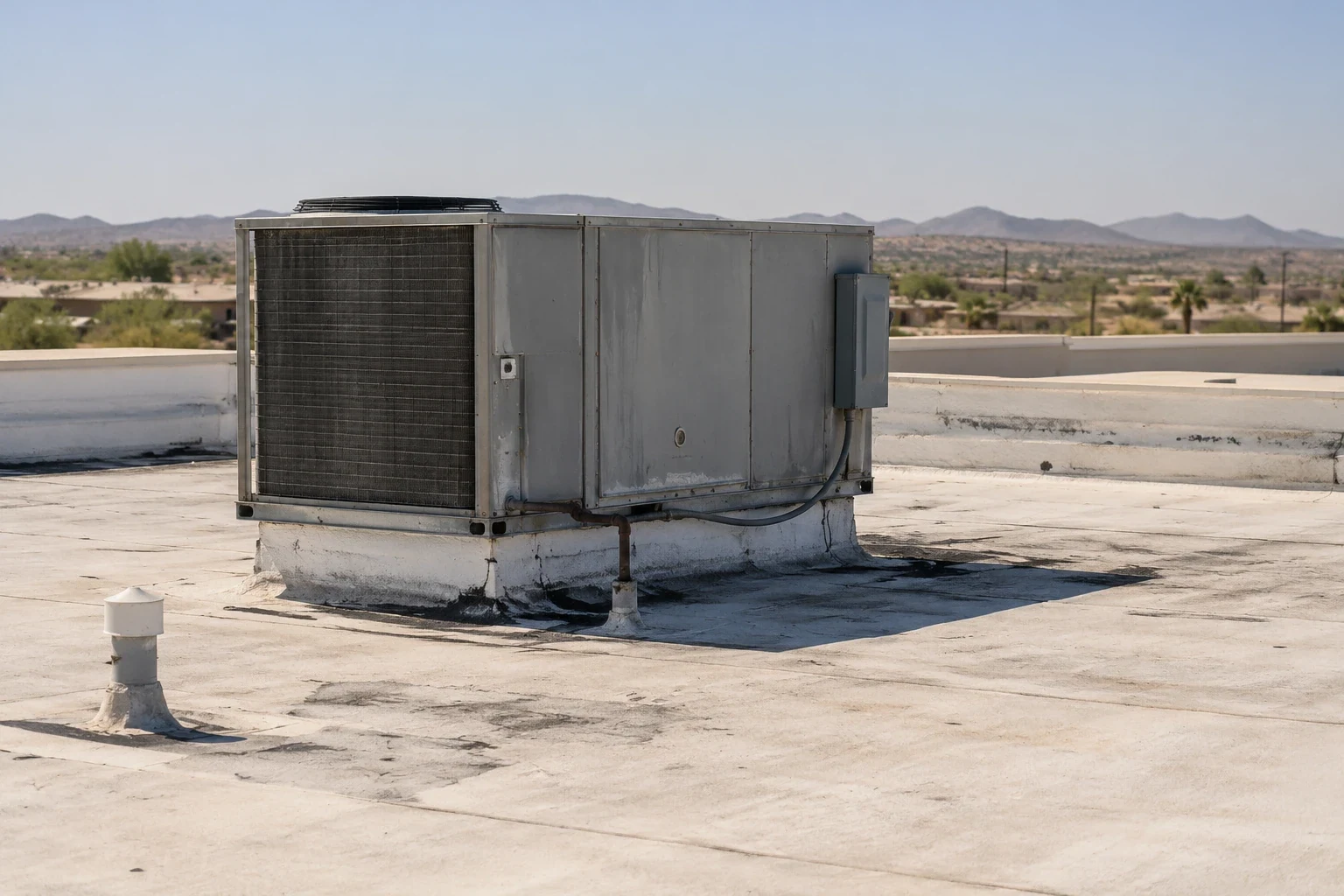
Maintenance has value when it catches a change before water reaches the building. In Peoria, AZ, long hot periods expose seams, penetrations, and edge details, while monsoon wind, hail, and short heavy rain can quickly test weak points. We set a maintenance visit around the roof’s system, repair history, and operating schedule, then record what changed since the last inspection. The file becomes more useful each visit because findings stay tied to roof areas instead of fading into a general service note.
Build a visit around exposure and condition
A useful roof visit covers the field and the details that interrupt it. We inspect membrane seams, flashings, curb transitions, edge metal, drains, scuppers, and visible rooftop supports. Debris or blocked drainage is cleared when safe and appropriate. We check repairs from earlier visits and note whether they remain secure. If a defect has expanded, we mark its boundary and recommend work before a small opening becomes a larger interior problem. The visit is not a routine checklist detached from the roof; the inspection path follows the known trouble areas and the assembly in service.
Summer afternoons here run well past 100°F, and roof surfaces run hotter than the air. That heat informs scheduling and attention to exposed transitions. We also consider the timing of monsoon exposure when planning a closer review of edges and drainage. For buildings near Loop 303 employment areas, equipment density and loading schedules may affect roof access. We coordinate with the facility contact and record any areas that could not be reached.
Keep water moving off the assembly
Drainage maintenance starts with the route water should take. We check bowls, strainers, scuppers, overflows, and visible slope paths for debris, obstruction, or damage. Standing water can expose a low area, but maintenance clearing will not correct a design or deflection problem. We note whether the condition cleared, remained, or needs a slope review. If drains are blocked by roof material or equipment work, we document the cause and keep runoff paths open. The owner can then see whether this is a service item or a broader drainage decision.
Peoria planning describes the Loop 303 corridor as a mix of business or industrial and community commercial land. That mix can include roofs with different drain layouts and maintenance access. We inspect each building’s actual drainage details rather than apply one route to all sites in the corridor. Where a drain or scupper is damaged, our drainage correction work can be scoped with the adjacent membrane and overflow details. A clear before-and-after record helps the next visit distinguish a recurring obstruction from a new roof condition.
Track details that move or open
Perimeter metal, wall flashing, curb corners, pipe penetrations, and support bases experience movement and service activity. We inspect them for separation, loose fasteners, cracked sealant, open seams, and changes around equipment. A maintenance visit should identify the material and system before recommending a repair. Sealant is not a substitute for rebuilding a transition that has lost its flashing or attachment. We note whether the detail needs monitoring, preparation, or a defined repair, and include photographs that help the property team locate it again.
Near Park West, retail and restaurant uses make deliveries and customer access part of the maintenance schedule. We can plan roof access before busy operating periods and keep material movement away from customer routes. Park West sits beside Loop 101 at Northern Avenue, which helps the property contact plan how a crew reaches the building. When a roof edge needs more than routine attention, the coping and edge scope can address attachment and drainage together instead of applying another surface bead.
Make the repair log usable
We keep each finding tied to a roof section, photo, observed condition, and action. A repair entry notes what material was prepared and what detail was restored. A monitor entry explains what change should prompt a return. If a leak report appears later, the roof file can show whether that area was inspected, repaired, or left for testing. This is especially useful when facility responsibilities shift or more than one building competes for the same maintenance budget. The log should support a decision, not simply record that a crew visited.
Peoria’s north planning area is being considered for employment, manufacturing, commercial, residential, and open-space uses, while the area’s development timing remains tied to its planning process. For a property owner with changing site operations, maintenance timing can adapt without assuming future construction has occurred. We document the existing assembly and access limits on the visit date. The warranty file and condition report can retain those facts for later repair or replacement decisions.
Maintain the system you actually have
Different roof systems need different maintenance. A single-ply roof requires attention to seams and welded or bonded transitions. A metal assembly needs a look at fasteners, panel movement, and penetrations. A coating needs review for adhesion, wear, and water flow. We identify the assembly before setting the work method and avoid mixing incompatible repair materials. If an inspection finds wet insulation, repeated seam failure, or an unstable deck, maintenance alone is not an adequate response. We explain whether the next step is testing, repair, or replacement.
Monsoon guidance for Arizona includes damaging winds and microbursts, with hail and flash flooding among possible impacts. That does not mean every seasonal storm damages a particular roof. We inspect after reported weather when it is safe, compare the finding with prior photos, and update the maintenance plan from observed conditions. A wind damage review can address a reported event, while targeted repair handles a confirmed defect.
Set intervals by roof risk
Inspection timing should reflect roof condition, exposure, repair history, and the consequence of an interruption. A roof with recurring leaks or vulnerable equipment transitions may merit closer attention than a stable assembly with a clear record. We can plan a visit before the season or after a known event, then adjust based on what the roof shows. The maintenance schedule should not promise that defects cannot occur. Its purpose is to find and address developing conditions early enough to preserve options.
For a portfolio spanning Peoria and Surprise, we keep the schedule consistent while noting each building’s distinct condition and access requirements. Surprise City Center’s planned district includes multiple blocks and commercial, service, healthcare, retail, and employment categories, but those uses do not identify the roof type of any one property. We use the local context to plan contact and staging, then make maintenance decisions from inspection. A roof asset review can turn those records into a capital sequence.
Commercial Roofing Questions
What is included in a maintenance visit?
We inspect accessible roof areas, seams, flashings, edges, drains, penetrations, and visible repairs. We clear appropriate debris, document conditions, and identify work that needs a separate scope. If a section cannot be reached safely, we record the limit and explain whether another access method is warranted.
Can maintenance stop leaks from occurring?
No inspection schedule can rule out future damage. The work can catch developing openings, blocked drainage, and changes at details before they create a larger interior issue. We report what was observed and what remains uncertain so the owner can decide whether to repair, test, or monitor.
How often should our roof be checked?
The interval should reflect the assembly, current condition, exposure, and consequence of a failure. A roof with active repair needs may call for closer follow-up than a stable surface. We recommend a schedule from the inspection findings and adjust it as the roof history develops.
Will you repair small defects during the visit?
When access, weather, material compatibility, and authorization allow, we can complete limited maintenance repairs. We identify the work and record it separately from conditions that need a larger repair scope. A hidden moisture or deck issue should be evaluated before a surface patch closes the area.
What records should we keep between visits?
Keep inspection photos, repair descriptions, leak dates, warranty documents, and any access restrictions with the roof-area map. Those details help us compare changes at the next visit. A clear file also supports a capital decision when repairs begin to repeat across separate sections.