
Commercial Roof Recover in Peoria, AZ
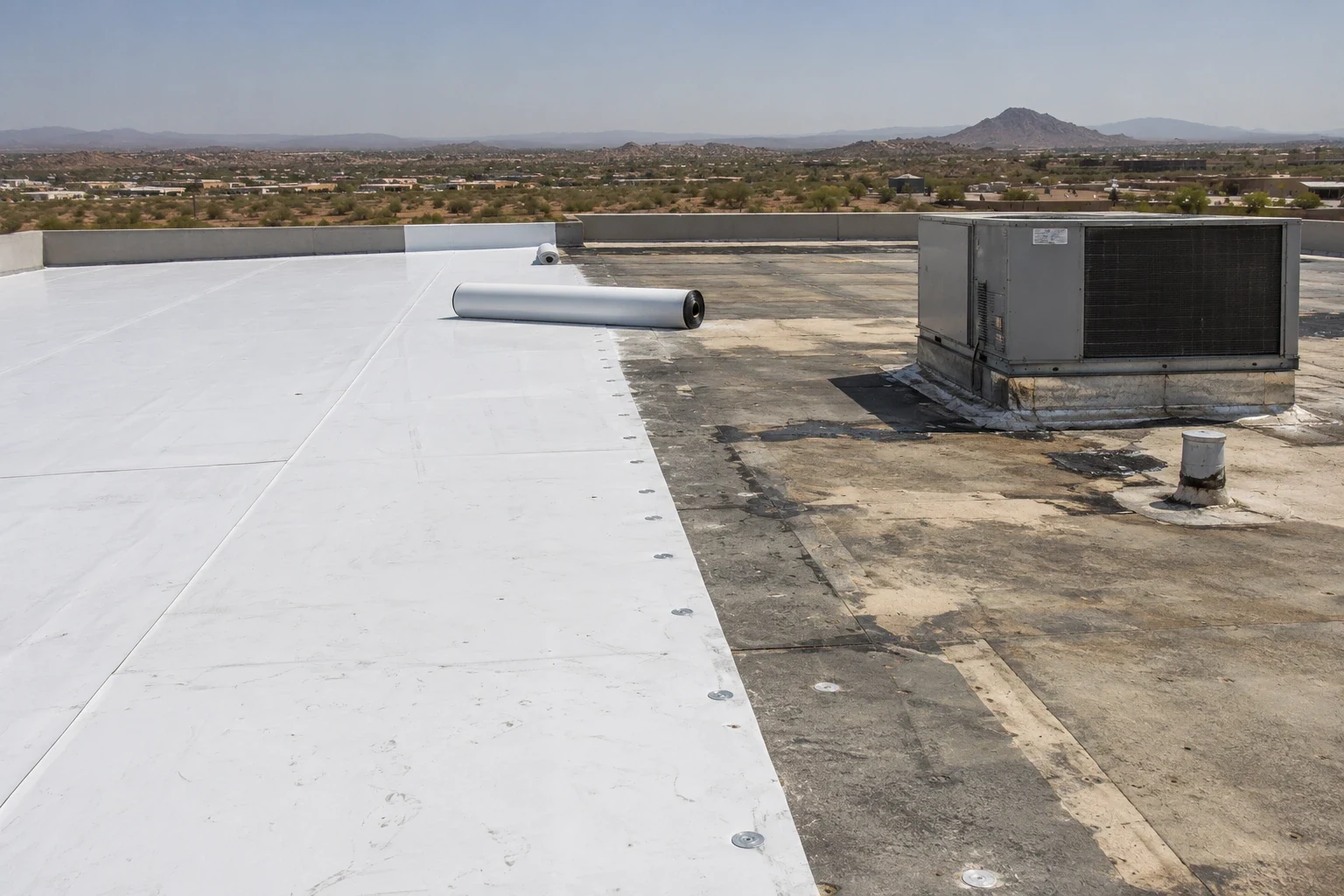
A second roof layer only helps when the assembly below it can carry the decision. In Peoria, AZ, heat cycling and monsoon exposure make the condition at seams, drains, and curbs worth verifying before a recover is priced. We inspect the existing roof, check for trapped moisture, and identify whether fastening, drainage, and edge conditions can support another layer. The work can reduce tear-off disruption, but it is not a shortcut around wet insulation or an unstable deck. We compare those findings with a hands-on roof inspection and give the owner a clear repair, recover, or removal boundary.
Check what the existing roof can support
A recover starts with the assembly already on the building. We identify the visible membrane or surface, note patches and coatings, inspect seams and transitions, and review available roof records. Then we look for signs that water has entered the insulation or reached the deck. Infrared readings can guide investigation, while selective core cuts may confirm what lies below. A clean-looking surface does not establish that the layers beneath it are dry, and one isolated reading does not describe the whole field.
We also check attachment and perimeter security. A new membrane adds material and wind load to an existing assembly, so the underlying roof must be stable and the proposed fastening pattern must suit the substrate. Edge metal, curb heights, parapet transitions, and drain elevations can change when a second layer is added. If those details cannot be raised or rebuilt cleanly, a recover may create a new drainage or flashing problem. The roof record should identify each condition before a price is tied to the assumption that the old assembly can remain.
Map moisture before covering the field
Wet insulation beneath a recover can hold moisture in place and weaken the roof over time. We mark suspected areas, compare instrument readings with surface observations, and use core cuts where confirmation will change the recommendation. The owner receives a map of what can stay and what needs removal. Localized wet sections may be cut out and replaced before the new system is installed, if the remaining assembly is suitable. Broad moisture, deteriorated deck, or uncertain attachment can shift the choice toward tear-off because a second layer would conceal the conditions that need correction.
In Peoria’s hot climate, surface temperature can be much higher than the regional air reading; we do not use an air-temperature statistic as a roof measurement. We base the recover decision on the actual roof, then coordinate the work window with the property’s use.
Reset drainage and perimeter details
Adding a layer changes the height of the roof surface. We verify drain bowls, scuppers, overflows, and slope paths so the new membrane does not leave water standing at a low point. Where the existing roof has ponding, the recover scope should address why it happens before covering the area. Tapered insulation or localized corrections may be appropriate, depending on the assembly and design. We also measure the effect at doors, curbs, parapets, and edge metal. If flashing height or termination space is inadequate, the perimeter detail must be rebuilt as part of the recover rather than treated as a minor finishing item.
Peoria’s Loop 303 planning connects employment and commercial areas through major arterials, while P83 has a different mix of commercial, entertainment, hospitality, and employment uses. If a curb or support needs a new transition, we include that in the detail schedule. An owner can compare the drainage correction scope and perimeter-metal work with the recover assembly.
Confirm code and system compatibility
Peoria adopts the 2018 International Building Code as amended by city ordinance. The International Energy Conservation Code also applies through the city, and the edition in force is confirmed with the permitting office before a recover is priced. The recover plan also needs to account for existing layers, attachment, fire classification, insulation, drainage, and manufacturer requirements. We document those checks so the owner can see why a recover is acceptable, what must be removed first, and what condition would stop the work once the surface is opened.
System choice follows the substrate and exposure. A mechanically attached single-ply roof, an adhered assembly, or a coating over a suitable existing roof each has different preparation and detail requirements. We inspect compatibility instead of assuming any new material can be placed over the old one. Phoenix-area monsoon storms can bring damaging winds, hail, and short-duration heavy rain, so secure edge termination and dependable dry-in matter during installation. The selected assembly must be detailed at curbs and drains, not just across the field. A TPO option or modified-bitumen assembly can be evaluated where the existing conditions support it.
Keep the occupied building protected
Recover work generally avoids removing the full existing roof, yet it still needs a controlled sequence. We stage materials where loading and access permit, protect doors and equipment, and define a daily limit for exposed or unfinished work. If the crew finds wet insulation or damaged deck, that area is opened, documented, and addressed before it is concealed. A planned stop point keeps weather protection clear if monsoon conditions develop while a section is underway.
Retail and dining operators near Park West may need pedestrian access and deliveries maintained; office or industrial properties can have different loading and equipment windows. We coordinate those limits before work begins, then keep the open area small enough to secure at the end of the shift. For a nearby Surprise property, we make the same distinction between the local district context and the actual roof condition on the building.
Choose the scope that protects the next cycle
A recover can preserve a serviceable substrate and reduce tear-off, hauling, and exposure time. Full removal can be the sounder choice when moisture is widespread, layers are incompatible, attachment is unreliable, or deck condition needs direct correction. Repair may remain the right answer for a limited failure on an otherwise stable roof. We compare the alternatives with the roof map, photos, test results, and the owner’s planning horizon. That record lets facilities and finance teams see which conditions support the recommendation rather than treating the lowest initial disruption as the only measure.
Closeout should document the installed system, transitions rebuilt, drains addressed, and any sections that remain on a future watch list. The maintenance plan can then track whether repaired areas stay dry and whether perimeter details hold through seasonal exposure. We can also align a capital plan with replacement timing across more than one building.
Commercial Roofing Questions
How do you know whether the old insulation is dry?
We combine roof observations with moisture readings and, when the result changes the scope, selective core cuts. Readings need interpretation against the assembly and recent weather. The final map marks confirmed removals, areas suitable to remain, and any unresolved condition that should prevent a recover until it is checked.
Can a recover fix ponding water?
A new layer alone does not correct a low spot. We trace the drainage path, check drain and overflow elevations, and determine whether slope correction or localized insulation work belongs in the scope. The recover should leave the roof draining as designed, with transitions and flashings reset for the new surface height.
What if the roof has been coated before?
We identify the coating where possible and test whether it remains bonded and compatible with the proposed assembly. Loose, blistered, or moisture-affected material may need removal. We do not cover an unknown layer solely because it appears continuous from the roof hatch.
Will adding another layer affect the warranty?
Existing warranty terms and the proposed system requirements need review before work is approved. We record the current documents, identify conditions that may affect coverage, and plan details to the selected manufacturer’s requirements. No warranty length is assumed in the scope.
When should we choose tear-off instead?
Broad wet insulation, poor attachment, incompatible layers, or a deck concern can make removal the clearer path. We show the evidence and compare the disruption with the risk of concealing the condition. If the existing assembly is stable and dry, a recover may remain a reasonable option.