
KEE Commercial Roofing in Peoria, AZ
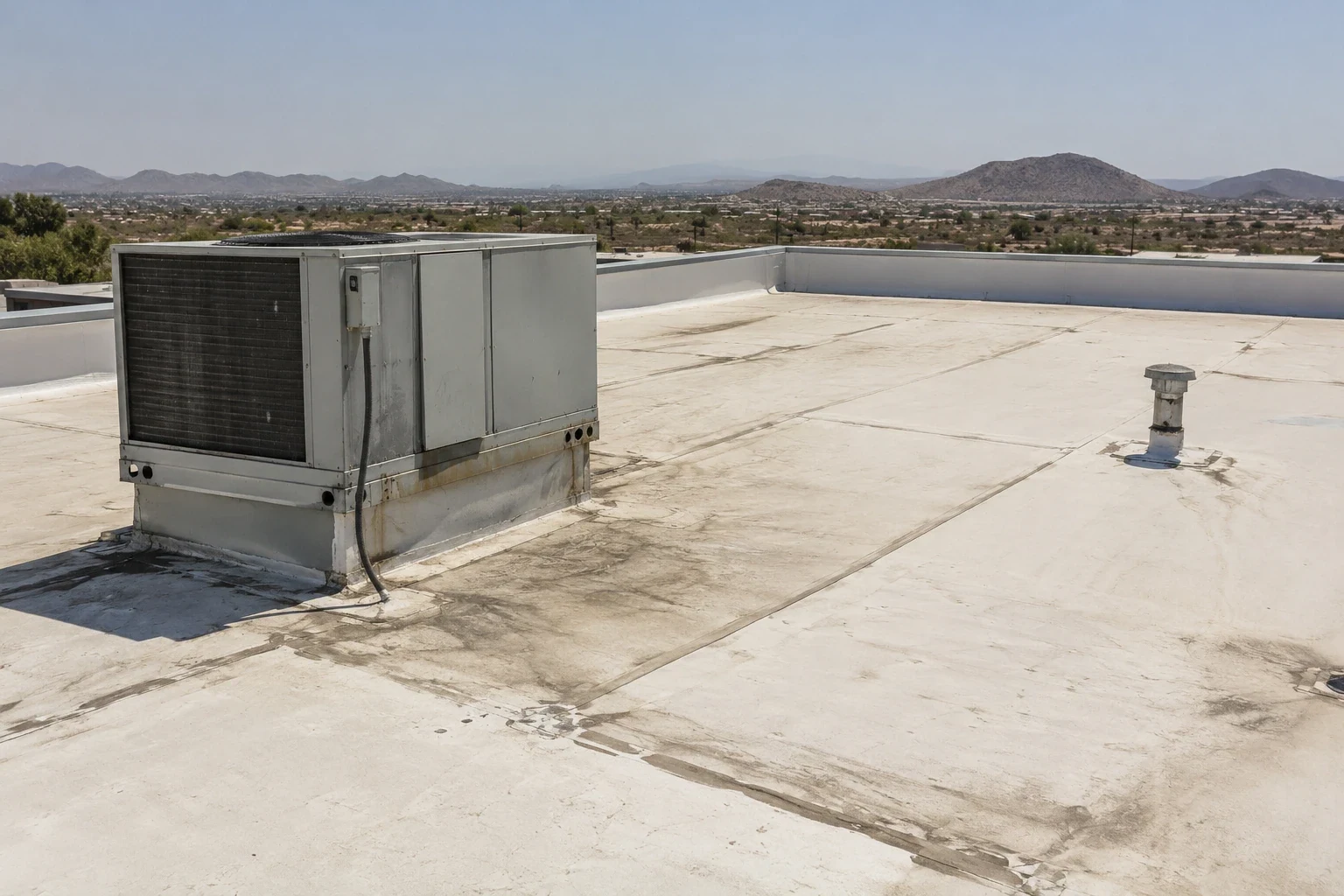
A KEE membrane is a PVC alloy, but the name on a product label does not tell an owner whether the installed roof is ready for another repair. In Peoria, AZ, heat exposure, equipment traffic, and monsoon weather put the field seams and flashing transitions on the inspection list. We confirm the membrane, review prior repairs, and check how the system is attached before choosing a repair or replacement scope. A roof inspection should leave a map of welds, penetrations, drains, and areas that need testing, so the next decision follows the condition rather than a general claim about the material.
Identify the membrane before touching a seam
KEE and standard PVC are related thermoplastic systems, yet the exact formulation and approved accessories depend on the manufacturer and product. We review labels, submittals, repair records, and representative field details before selecting a patch material. If documentation is missing, a small test area can help determine whether a repair procedure is compatible. Mixing products because both names include PVC can create a weak bond. The scope records what membrane was identified and what preparation is required before welding.
Peoria's Arrowhead business and commerce park records identify multiple commercial properties in the city. That does not establish which membrane any building uses. We inspect each roof individually and keep the system record tied to its own area. A warranty-file review can also preserve product submittals and approved repair details for later maintenance.
Test the weld at the repair boundary
KEE is a PVC alloy, but that name alone does not identify every sheet or accessory already installed. We review labels, closeout records, repair materials, and any markings still visible before selecting a heat setting or flashing product. The technician then checks a representative weld for continuity and confirms that the exposed membrane can accept compatible work. If the sheet has a coating, residue, or a prior patch of uncertain composition, we isolate that condition rather than bury it beneath another layer.
Peoria's Loop 303 corridor plan identifies employment and commercial land uses as its main growth spine through north Peoria. A roof at an operating property may have several generations of curb and penetration work. We map the KEE field separately from those transitions, then use a PVC system review when the asset record points to a related but distinct membrane.
Check corners, curbs, and perimeter terminations
A curb repair has two interfaces: the membrane-to-flashing weld and the rigid curb-to-roof connection. We examine corner patches, weld width, flashing height, termination bars, and whether equipment movement has stressed the detail. Where a new support or service route has been added, we check for cut sheet, unsupported edges, and metal that bears directly on the membrane. The repair plan should identify which trade moves or protects equipment and who restores the curb detail afterward.
Surprise City Center is mapped into blocks for healthcare, retail, hotel, commercial-service, employment, and residential uses. Those uses have different access constraints, but each KEE detail gets a roof-specific inspection. Our curb and support work can define the required interface without assuming anything about an individual building.
Keep drainage and flashing in the same scope
After hail or wind, an owner should separate physical impact from a seam that had already begun to release. The October 2010 supercells produced extensive hail damage across the Phoenix Metropolitan Area, a regional record rather than a finding about a particular roof. We document current punctures, lifted corners, water entry, and the locations of earlier patches. A service file with dated photographs can show which conditions appeared after an event and which repair areas were already under observation.
The roof's actual water path still controls the scope. We inspect low points and outlets and note whether the drainage scope must be completed before a weld is closed. A separate wind damage review can record event-related metal or edge concerns.
Compare repair with a new assembly
A localized repair can extend a KEE roof when the surrounding membrane remains bonded and the substrate is sound. Widespread seam separation, repeated wet insulation, or unstable attachment may point to a larger scope. A recover requires dry, stable layers and compatible attachment; it should not conceal failed seams or blocked drainage. We document what can remain, what must be removed, and the test that would change the estimate. A recover assessment should include perimeter height and penetration details along with the field area.
If replacement is selected, a TPO membrane may be compared with KEE based on the building use, exposure, repair history, and product requirements. The chosen system needs matching flashing, drains, and approved repair procedures. A coating restoration is another decision only when the existing surface and assembly support that treatment.
Carry the system identity into future service
Closeout photographs should show the welds tested, the transitions repaired, and the membrane label or documentation used to identify the system. We list materials installed, preparation, test points, and any excluded area. If a repair material was selected from a product submittal, that file remains with the roof record. A later visit can then compare the same seam or penetration and determine whether the repair held or a new condition has formed.
Peoria planning along Loop 303 includes employment and commercial uses among other land designations. This broad corridor is not a catalog of completed buildings, so we keep every roof recommendation tied to field observations. The owner should leave with a repair boundary, the reason for choosing it, and a clear follow-up point in the maintenance plan. The next inspector can use the same roof map to check whether the exposed seam is stable.
We preserve the KEE designation in the closeout file and keep product identification tied to the labels or records reviewed. A future service visit can then distinguish the installed alloy from a later PVC patch, note the tested weld, and direct the next inspection to the same roof zones. That record protects the scope decision when multiple membrane types meet at a transition.
Commercial Roofing Questions
Is KEE roofing different from standard PVC?
KEE is a PVC alloy, while product formulation and approved accessories vary by manufacturer. We confirm the installed membrane from labels, records, or a compatible field test before selecting a repair material. The repair procedure must match the product rather than rely on the shared thermoplastic category.
Can a KEE roof be patched with any PVC flashing?
No. We verify the membrane and product requirements, then prepare a test area if records do not resolve compatibility. A patch must weld to clean, sound material and extend beyond the failed edge. If the surface is contaminated or coated, preparation may need to change before repair.
What should happen before a recover is considered?
The existing system, insulation, drainage, and attachment need review. We test suspected moisture, check welds and perimeter conditions, and identify whether another layer can be secured without hiding a failure. The proposal should explain what remains beneath the new membrane and what must be corrected first.
Does a monsoon event require a full membrane replacement?
A storm may expose one loose transition or reveal a broader attachment problem. We inspect when access is safe, compare the affected area with prior records, and separate fresh damage from older wear. Replacement follows the distribution and depth of confirmed conditions, not the storm report alone.
What details belong in the KEE roof file?
Keep the membrane identification, product submittal, repair materials, test locations, seam photographs, and any excluded area together. Record whether drainage or equipment coordination remains open. That lets the next service visit use the correct weld method and compare the same roof locations.