
Built-Up Roofing in Peoria, AZ
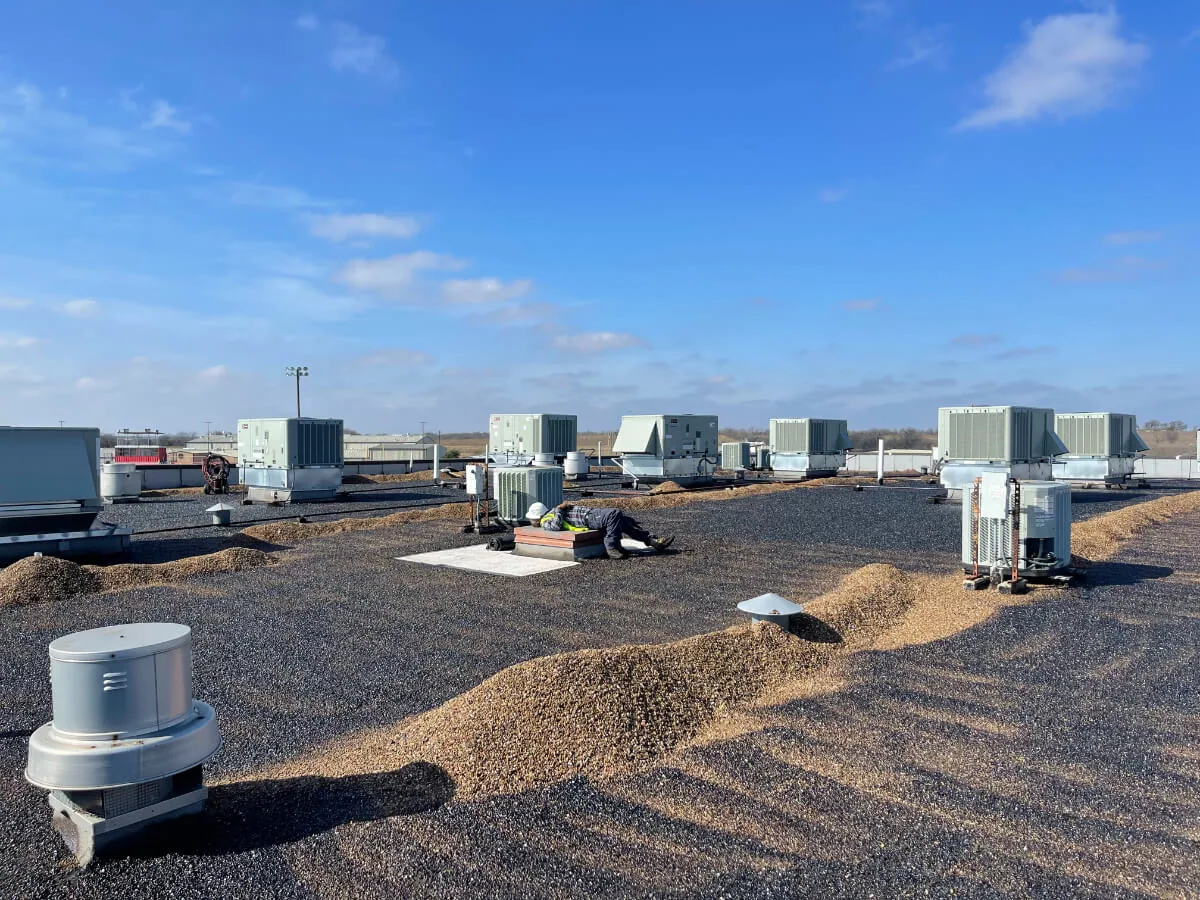
A blister in a built-up roof can hold heat and moisture while the surrounding cap still appears intact. In Peoria, AZ, the decision turns on how far that condition extends through the plies, not on the surface appearance alone. We inspect the cap, laps, penetrations, drainage, and edge restraint, then map the repair boundary against the building's roof history. The result helps an owner decide whether a contained repair can protect the assembly or whether recurring failures have crossed into a capital project.
Open the assembly at the right evidence point
Built-up roofing uses multiple layers, so a surface defect does not show the condition of every ply. We identify the visible cap material, look for blisters, splits, exposed reinforcement, open laps, and patches that have separated, then choose test areas where the condition changes. A small cut or probe should answer a specific question and be closed correctly. Random openings add damage without improving the scope decision. The inspection record distinguishes what was observed from what remains concealed, which matters when a roof has several repair generations.
Our roof inspection records the field condition, transitions, and test locations. That record can be compared with roof condition report to track whether an isolated defect is becoming a broader pattern.
Separate cap wear from ply separation
Granule loss, surface checking, and weathering deserve attention, but they do not all mean the same thing. A cap sheet can show age while lower plies still hold; a small opening can also expose reinforcement and admit water below the surface. We trace each condition across seams, patches, curbs, and wall flashings. If asphalt has softened or a blister has trapped moisture, the repair method must address the affected layer instead of covering the symptom with another coating.
Where a built-up assembly meets a different membrane, the tie-in needs a compatible detail and a sound termination. A comparison with a modified bitumen assembly and a TPO system review helps identify whether the existing multi-ply roof can be repaired in kind or whether a different assembly better fits the building's future use.
Read heat and storm marks separately
Hail inspection on a built-up assembly starts with the cap and continues through any area where the impact has opened surfacing or exposed reinforcement. The NWS documented extensive hail damage from October 2010 supercells crossing the Phoenix Metropolitan Area. That regional event does not date a mark on today's roof, so we compare current observations with maintenance records and previous photos. A cap puncture, crushed reinforcement, or split at a lap may allow water between plies even when the surrounding surface remains in place.
The Loop 303 employment corridor's planning record includes business-park, industrial, and community-commercial land uses. A building in that broad area may need to remain operational while the roof is evaluated by zone. We mark test locations and distinguish the inspected plies from layers that remain concealed, then sequence repairs around the confirmed damage.
Follow water to the low point
Built-up roofs can carry water along the surface or within a compromised layer before it appears indoors. We map slope, drains, scuppers, overflow paths, and low areas, then compare them with ceiling marks and previous repairs. A drain bowl that has separated from the membrane can undermine an otherwise localized patch. The same is true where debris holds water against a curb or where a termination leaves the surfacing exposed.
Park West is an open-air retail and dining center with multiple businesses. Access windows and customer paths can affect staging at properties beside that district, while the roof condition still determines the technical scope. A focused drainage inspection can show whether the drain, flashing, or field ply is the controlling issue. We keep water-management work in the proposal when it is necessary to protect the repaired area.
Price the repair boundary before adding a ply
A local blister or open lap may support a repair when adjacent plies remain bonded, the insulation is dry, and the substrate is stable. A recover adds a new assembly over the existing roof only when attachment, moisture, drainage, height, and compatibility allow it. Multiple wet zones, repeated leaks, broad cap failure, or loose edge conditions can make replacement the better capital decision. We explain which finding changes the scope, rather than treating a recover as a default middle option.
A recover review focuses on the existing layers and attachment. If insulation replacement is part of the plan, insulation and cover board scope lets the owner compare thermal and substrate needs with the selected system. We also identify work that can be sequenced by zone so operations remain protected during a larger project.
Keep each layer in the asset record
Closeout photographs should show the repaired plies, cap tie-ins, drain work, penetrations, and edge details before access changes. We list the materials installed, areas left unverified, and any condition that may require a later decision. That gives a property manager a useful baseline for future inspections instead of a vague note that a roof was patched. It also helps the next budget review distinguish an isolated repair from a system approaching its replacement horizon.
When the roof surface needs a compatible restoration rather than another ply, roof coating restoration can be compared against the observed assembly and manufacturer requirements. We review the roof history, repair boundary, and capital window together. A short inspection call can turn those records into a clear defer-or-act recommendation.
For an owner comparing several roof zones, the condition record should preserve the assembly differences instead of assigning one label to the entire property. One area may have a newer cap, another may retain older plies, and a third may contain a prior repair that changed the water path. We mark those boundaries on the inspection notes and describe what each test opening showed. That level of separation helps the capital plan account for phased work, limits unnecessary removal, and keeps a later budget review tied to the same physical areas rather than to a broad description of age.
Commercial Roofing Questions
Can another ply go over the built-up roof?
A recover is possible only when the existing assembly is dry enough, attached, and compatible with the proposed system. We check moisture, deck condition, drainage, added height, edge metal, and penetrations before pricing it. If wet insulation or unstable layers remain, covering them can carry the failure forward.
Does a blister mean the whole roof has failed?
Not by itself. We inspect the blister and surrounding plies to see whether it is isolated, moisture-filled, or part of broader bond loss. The repair boundary follows those findings. A repeated pattern or wet substrate can change a local repair into a larger capital scope.
How do storms affect a multi-ply roof?
Wind, hail, and intense rain can expose weak laps, puncture surfacing, or drive water through a detail that was already vulnerable. We document fresh impacts separately from older wear, then trace water below the surface. That distinction supports an accurate repair and any insurance documentation.
Can a coating solve worn cap surfacing?
A coating may fit only when the cap is sound, dry, and compatible with the selected material. Open laps, wet insulation, loose surfacing, or failed flashing need correction first. We test the substrate and detail condition before recommending a restoration.
What should the owner receive after a built-up repair?
The closeout should identify each repaired area, the layer work performed, photos, test locations, drainage corrections, and conditions left unresolved. We include materials and follow-up priorities so the next review can compare the same roof zones.