
Commercial Roofing in the Peoria Innovation Core, Peoria, AZ
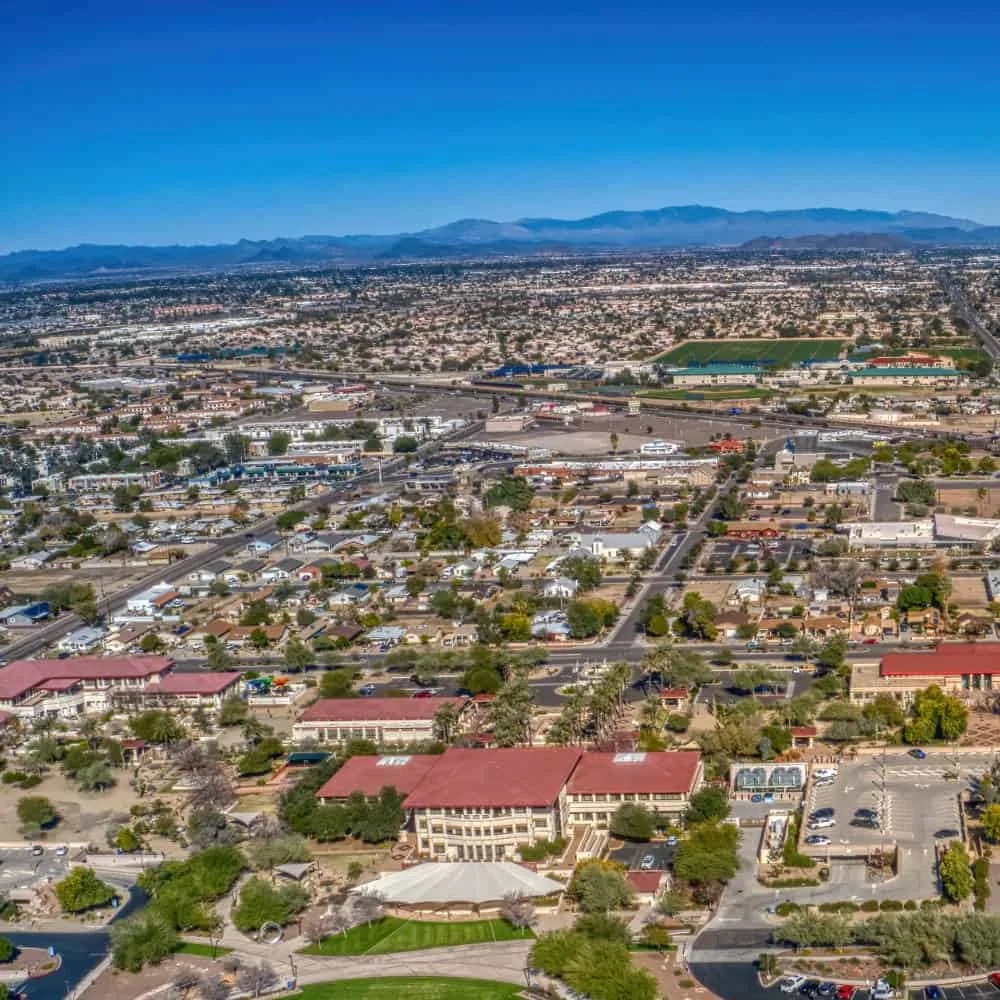
New roofs raise a capital question that older roofs do not: what condition do you want to be able to prove ten years from now? The Peoria Innovation Core is a planning area of about 7,000 acres, roughly 10.5 square miles, that follows Loop 303 between Lake Pleasant Parkway and State Route 74, and the city describes an employment mix of semiconductor supply chain, aerospace and defense, advanced manufacturing, hospitality and retail. For buildings that arrive under that kind of plan, we work on the roof record from the first day: the membrane, the curbs, the drains and the warranty file that a later owner will rely on. When water finds a weak detail, a commercial roof inspection against that record shows quickly whether the problem is local.
Separate the plan from the roof in front of you
A planning area is not a list of finished buildings. Peoria and the Arizona State Land Department are working through the acreage, and the city reported winning 834.5 acres near Loop 303 and Lake Pleasant Parkway at the August 2025 State Land auction. That tells an owner or developer where activity is concentrating, not what roof types stand there today. What matters on the roof is what we check on whichever building you own, lease or are about to acquire, and that list does not change with the acreage.
For a building still in design, the most useful roof conversation is about drainage, equipment placement and access before steel goes up. For a building in service, it is a condition survey. For one in due diligence, it is a clear read of remaining service life. The questions differ, but each ends in a documented scope decision rather than a general opinion about the roof. Timing is the other variable: an owner waiting on a lease-up or an equipment order can often defer a replacement, provided the repair boundary is drawn so that a deferral does not let wet insulation spread.
Plan roof loads and exhaust paths for advanced manufacturing
Semiconductor and microelectronics supply chains, aerospace work and advanced manufacturing all tend to put heavy mechanical equipment on the roof. Make-up air units, exhaust fans, chillers and piping runs create curb clusters, and every curb is a place where membrane and flashing must move together without opening. We map the clusters, check that supports are independent of the membrane, and look at how often service crews walk the same routes across the roof.
Where exhaust discharges onto the membrane, chemistry matters more than age. Some membranes tolerate oils and fumes better than others, and a roof that is fine in the open field can fail early beside a discharge point. We note staining and softening near exhaust, compare it with the system on the roof, and tell the owner when a manufacturing plant roof needs a different membrane or protective walkway layout before the next capital cycle.
Treat hospitality and retail edges as their own scope
The same planning mix includes hospitality and commercial uses, and those roofs behave differently from an industrial field. A hotel roof tends to combine a low-slope main area with mechanical wells, rooftop amenities and tight parapet details. Retail buildings add canopies, storefront returns and scuppers that discharge near customers. We look at transitions between roof levels first, because that is where movement and water concentrate.
Access also changes the plan. A hotel with guests below wants noisy work scheduled in set windows and debris routed away from entries, and a shopping area needs delivery lanes left open. The work is the same membrane and flashing craft, but the sequence belongs to the use below it. Our hotel roofing approach reflects that, and a retail owner can compare it with the approach for a shopping center roof when both uses sit near each other.
Read heat cycles and hail risk against a young roof
A young roof still has to survive Valley weather. Roughly 94 days a year reach 100 degrees Fahrenheit or more in Phoenix's records, which speaks to regional air and not to the surface of any roof in this planning area. Over time, that heat works on seams, sealant and perimeter metal, and a baseline survey lets us tell normal aging from early movement.
Monsoon and hail exposure deserve equal attention. Monsoon weather here can mean microbursts, gusts that damage buildings, flash flooding and hail, and the large hail that crossed the metro on October 5, 2010 left extensive damage. For a new building, the question is whether the specified membrane, cover board and edge metal match that exposure. For an existing one, it is whether the last storm left bruising we should document for a claim. Our hail damage repair work starts with that dated record.
Close out a new roof with a record that holds up
The first year of a roof is the best time to find installation defects, before weather and traffic make them harder to attribute. We recommend a walk after the first season of heat and storms to look at seam edges, flashing terminations and drain performance. Findings go into the warranty file with photographs, so a claim or a later purchaser has dated evidence.
From there a preventive maintenance program keeps the water path open and logs every repair, and a portfolio view lets an owner with buildings elsewhere along Loop 303 compare them on one format. The Loop 303 corridor and the Camino a Lago commercial core both lie in north Peoria, and a shared record keeps decisions consistent between them.
Commercial Roofing Questions
What should a developer or owner ask about the roof before a building is occupied?
Confirm that drains and overflows are placed where water will reach them, that equipment curbs have their own supports, and that the membrane specification fits the exposure and the equipment. We review drawings or walk the finished roof and mark the details most likely to fail early. The deliverable is a short list of corrections and a baseline photograph set for the warranty file.
How does exhaust from process equipment change the membrane choice?
Oils, fumes and chemical residue can soften or degrade some membranes near discharge points. Before recommending a system we find out what the equipment emits and where it lands on the roof. Sometimes a more resistant membrane near the exhaust is the answer, and sometimes a protective pad or relocated discharge solves it. The choice should be made once, before a repair history builds up.
Do I need an inspection on a roof that is only a few years old?
A baseline inspection in the first full cycle of heat and storms is worth more than one on an aging roof, because it separates installation issues from weather wear while the evidence is clean. We document seams, terminations, drains and penetrations with photographs. If everything is sound, the record becomes the reference for each later visit.
Can you work on a hospitality or retail roof without disturbing the people below?
Usually, with planning. We schedule noisy tear-off or fastening for set windows, route debris and material away from entrances, and close each roof area before the end of the day. If guests or customers are close to the work, we put protection over openings and coordinate with the property manager on lanes and parking. Exact sequencing depends on the roof layout and use below.
Which records help most if I buy a building in this planning area?
Ask for the membrane type and install date, any warranty paperwork, past repair invoices and a drain map. If those are thin, an infrared moisture survey and a hands-on inspection fill the gaps with current evidence. We turn the findings into an estimate of remaining service life so you can price the roof into the purchase.