
Ponding Water Roof Repair in Peoria, AZ
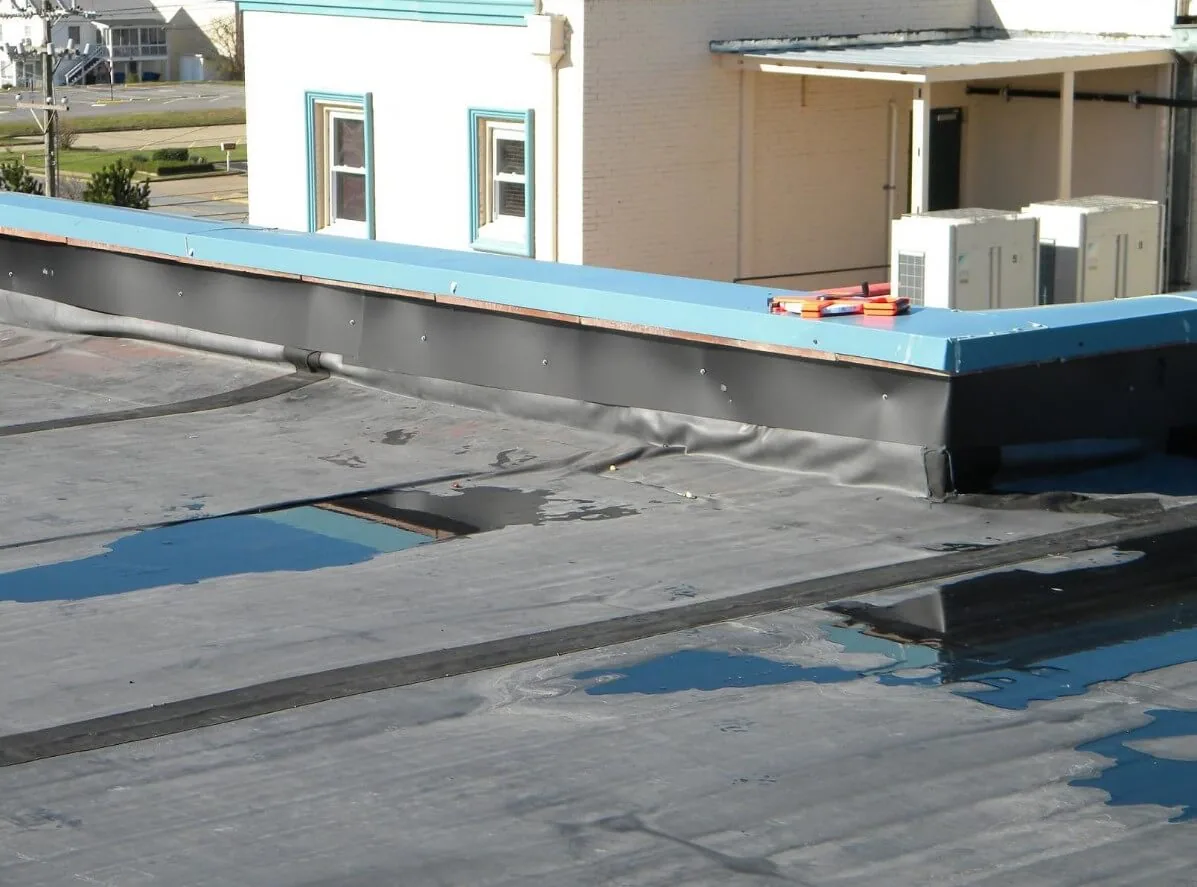
A shallow basin can turn an ordinary drain delay into a recurring roof decision. In Peoria, AZ, short bursts of monsoon rain may load a low area before a building team can see whether the outlet is clear. Arizona monsoon storms can bring flash flooding, hail, and damaging winds to the Phoenix metro. That regional pattern does not diagnose a roof, but it makes drainage capacity worth checking after a storm. We measure how long water remains, identify the path to an outlet, and check what is wet below the membrane before discussing repair.
Find why the water stays
Standing water can come from more than one cause. A blocked drain, crushed strainer, settled insulation, deflected deck, or undersized overflow route can leave a pool in the same place for different reasons. We photograph its outline after rainfall when practical, note the depth and persistence, and compare the roof elevation with outlets and scuppers. A single visit on a dry day may show the depression but not explain whether the cause is debris or a change in the assembly.
Water at an outlet also needs a boundary. We check the bowl, clamping ring, membrane termination, and adjoining seams. If a drain body has shifted or a strainer is missing, clearing the opening may help flow but will not correct a failed flashing. Work on roof drains and scuppers addresses the connection as well as the visible obstruction. The findings can be paired with a commercial roof inspection when the owner needs an assembly-wide condition record.
Peoria's Loop 303 employment corridor links several north-south and east-west interchanges, including Lake Pleasant Parkway. That access context can matter when materials or a lift need staging, but the drainage conclusion comes from the roof itself. We keep roadway context separate from observations about slope, outlets, and wet insulation.
Check the membrane at the water line
Water that remains can work on seams, laps, and exposed fasteners, especially where repairs have created several material transitions. We look for soft or lifted membrane, open laps, fishmouths, blisters, and sealant that has separated from metal. A coating over a low spot will not correct a blocked drain or reverse deck movement. The repair must match the condition beneath the surface, not simply cover the darkest water mark.
Moisture mapping helps when the visible pool and interior leak do not line up. Infrared readings can identify areas for closer examination, while targeted probes confirm whether insulation is wet. The moisture survey is most useful when results are compared with roof construction, repair history, and interior reports. A dry area may stay on a maintenance path; wet insulation can change the repair boundary and tear-out scope.
Monsoon rain can arrive with wind, so we inspect nearby parapet edges and equipment curbs as well as the low area. If a seam has opened, we separate that defect from the drainage issue rather than treating one as proof of the other. A seam failure repair may be appropriate where the sheet connection has lost bond, while ponding needs its own correction plan.
Choose a correction that reaches the cause
When debris is the only obstruction and the drain assembly is sound, cleaning and resetting the strainer may restore flow. A failed ring or deteriorated flashing calls for rebuilding the drain detail. If the deck has deflected or the insulation has settled, tapered insulation or localized replacement may be considered after we verify the assembly and outlet elevations. The choice depends on what is holding water, how wide the condition is, and whether the materials around it remain serviceable.
We avoid promises based only on a quick hose test. A dry-weather test can show whether water moves toward an outlet, but it does not duplicate storm volume or debris. The work scope states which drain or low point is being addressed, what layers are included, and what remains outside the repair boundary. Where several basins recur across the field, a capital plan can compare localized correction with a larger reroofing window.
Peoria's Camino a Lago commercial core is planned near Lake Pleasant Parkway and Deer Valley Road. Its plan allowance is not evidence of any particular roof design; it identifies a broad commercial setting where drainage and access decisions belong to each property. We measure, map, test, and price the defined work.
Use the repair record to set the next review
Repeated ponding deserves a dated record. We note the weather context, drain condition, time between rainfall and inspection, moisture readings, and repairs made. Comparing those entries over time shows whether water clears faster after correction or returns in the same footprint. If a pool widens or remains through multiple inspections, the owner has evidence to bring the slope or deck into the next scope discussion.
Water control affects building operations differently from one space to another. A leak over a storefront, records room, or mechanical area changes protection and scheduling priorities. We record the affected interior zone with the roof finding so the repair sequence protects the space that needs it most.
Cost follows access, drain count, insulation condition, deck repair, and whether removal is required. If only a ring or membrane transition has failed, the estimate should not quietly expand into unrelated field work. If multiple low areas connect to wet insulation, a larger scope may reduce repeat mobilization and produce a more reliable condition record. We show those alternatives rather than disguising the difference in a single line item.
Make the water line part of the scope decision
The owner needs to know what is fixed and what remains to watch. We identify the drainage defect, the area of affected membrane, any wet insulation confirmed, and the next inspection point. An isolated obstruction can be handled without assuming the whole roof is failing. A recurring basin over a soft deck or wet substrate may shift the decision toward a broader repair, recover, or replacement analysis.
Where water appears after a storm, capture the interior location and roof conditions before emergency work changes them. Our claim documentation support organizes photographs and repair records without predicting an insurer's outcome. For recurring damage, compare the water map with wind-related roof findings if the same storm displaced flashings or moved debris into outlets.
Peoria owners can review the Peoria service area for commercial roof support. Send the drain locations, prior repair dates, or current photographs and we will compare them with a focused roof review. The useful question is whether the next step should clear an outlet, rebuild a detail, correct a slope condition, or open a larger capital discussion.
Commercial Roofing Questions
How long can water remain on a commercial roof before it needs attention?
The time alone does not diagnose the assembly, but water that persists or returns in the same footprint deserves a check. We note rainfall timing, depth, outlet condition, and membrane condition, then compare the pattern with interior leaks and previous repairs.
Will clearing a drain solve a ponding problem?
It can help when debris is the only obstruction and the drain detail is intact. A shifted drain body, damaged flashing, low insulation, or deck movement needs a different correction. We inspect the outlet and surrounding layers before deciding what to include.
Can ponding water be covered with a coating?
A coating does not create slope or repair a loose drain connection. We first confirm the surface is compatible, dry, and sound, then address drainage and any wet insulation. Coating may be considered only after those conditions are resolved and the system supports it.
What evidence helps compare a local repair with replacement?
Use a drain map, moisture findings, repair history, and records of how long the water remains. Those items show whether the issue is one outlet or a field-wide pattern. We state the boundary of each option and which layers or deck work each assumes.
Can a roof look dry during an inspection and still have a ponding issue?
Yes. A dry visit can reveal low areas but cannot show how water moves during a storm. We combine slope and outlet observations with dated photographs or a follow-up after rainfall when conditions allow, then note what remains uncertain.