
Commercial Roof Leak Repair in Peoria, AZ
Ceiling marks arrive after water has already traveled somewhere else. In Peoria, AZ, a leak may follow insulation or deck flutes before it shows indoors, while heat and monsoon conditions put extra attention on seams, curbs, edges, and drains. We compare the reported room with roof observations above and around it, then trace the water path before sealing a surface. That gives the owner a repair point, a confirmed boundary, and a record of what still needs testing. If the entry point cannot be isolated in one visit, a roof inspection can map the surrounding assembly.
Connect the interior report to the roof
We begin with when the leak appeared, whether it followed rain or equipment work, and which rooms or assets need protection. Photos of the interior can help locate the path, but a stain does not identify the roof opening. On the roof, we check seams, penetrations, wall transitions, drain areas, and patches above the reported zone. We also look for water tracks, residue, displaced metal, and changes in membrane tension. The investigation follows the building layout and roof slope instead of treating the nearest opening as the cause.
Peoria’s Loop 303 plan spans commercial and business or industrial uses across an extensive planned corridor. We can pair tracing with targeted repair when the defect is clear and the surface is suitable. Where the point of entry remains uncertain, we document likely paths and the next observation that would narrow them.
Follow the path through laps and transitions
Water can move laterally inside a roof assembly. It may enter at a curb, travel along a seam, then appear near a wall or deck joint. Our inspection checks the visible membrane, laps, flashing, edge terminations, and nearby mechanical supports. We look for an opening that matches the direction of travel and the timing reported inside. When several possible paths exist, we mark each one rather than presenting a guess as a confirmed leak source. That distinction matters when the owner approves a permanent repair or has to explain why another interior area needs monitoring.
We ask where sensitive equipment or active customer space sits, then plan the roof and interior work area accordingly. For active water entry, we can install temporary protection while the permanent detail is prepared. Our emergency response is available outside standard work hours, with follow-up documented so the stabilization step is not confused with the final repair.
Separate wet insulation from a surface defect
A visible opening does not show how far moisture has spread. We use roof observations and, where useful, infrared readings to locate areas that may hold water. A core cut can confirm the layers and substrate at a selected point. We explain what each test can and cannot establish for that assembly, then mark any confirmed wet insulation or deck condition. If only a small area is affected and the surrounding membrane remains sound, a localized repair may be reasonable. Wider or recurring moisture changes the scope toward more testing or a broader replacement decision.
Phoenix climate records include many days when the air high reaches 100°F or more. That is regional air-temperature context, not a roof-surface reading, but it helps explain why inspection timing and surface handling need care. Monsoon guidance also identifies hail, damaging wind, and short-duration heavy rain as possible storm impacts in the Phoenix metro area. For a larger area, infrared and core-cut testing can sharpen the moisture map before repair authorization.
Protect the opening while permanent work is prepared
If water is entering during a storm, the first step is to protect the building safely. We assess roof access, wind, lightning, and surface conditions before placing temporary dry-in or a tarp. The protection needs secure attachment and a plan for runoff; a loose cover can create a new hazard or direct water toward another opening. We note the affected area, interior exposure, and the next permanent repair step. When the roof is safe to access, we move from stabilization to a prepared repair rather than allowing a temporary measure to become the assumed final scope.
Arizona monsoon storms can produce damaging outflows and microbursts as they move toward the low desert. We communicate what can be done immediately and what needs a safer window. Near Surprise City Center, retail and service operations occupy a district with multiple blocks and uses, so the property contact can help select a protected route below the work. A clear boundary lets tenants know which area is affected without overstating the roof findings.
Restore the detail that admits water
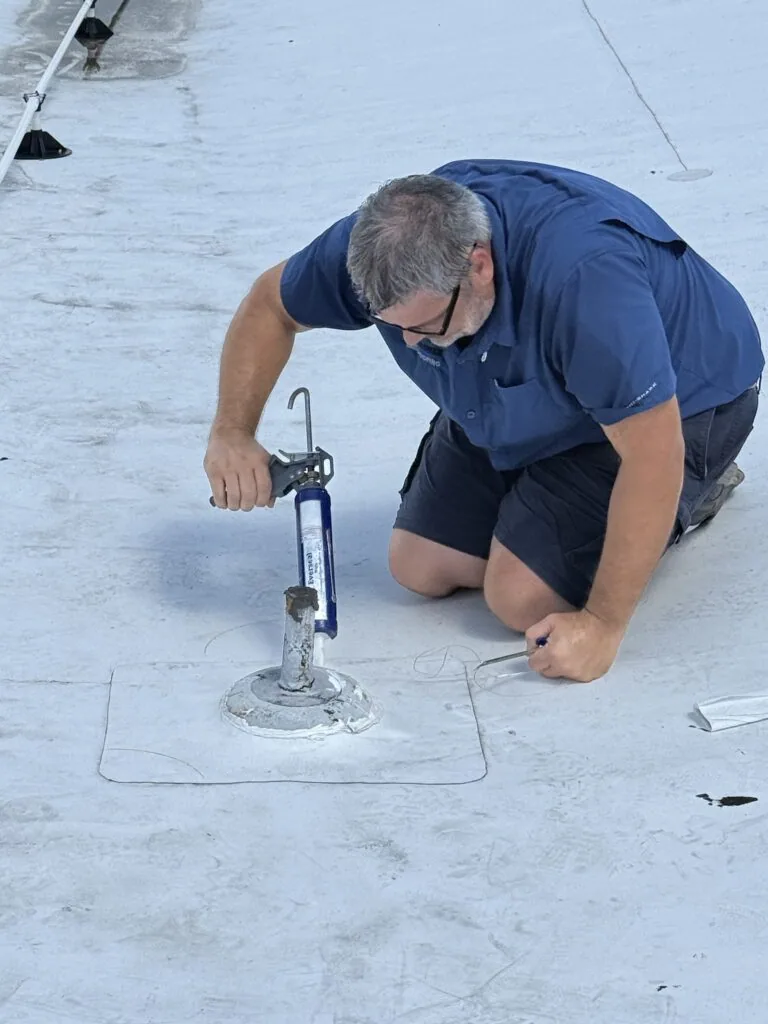
Once the entry point is established, the repair must suit the roof system. A single-ply patch needs compatible membrane, clean preparation, and sound material beyond the damaged edge. Metal transitions may need refastening or a rebuilt termination. A failed curb flashing requires a watertight vertical detail, not a larger smear over the same joint. Drainage defects need attention at the bowl, scupper, or slope path. We explain which items are included and photograph the finished work. If hidden damage changes the repair boundary, we show the opened condition before extending the scope.
In central Peoria, the downtown zoning framework allows civic, historic, residential, commercial, and employment uses in mixed-use subdistricts. We coordinate noisy work and protect occupied areas. Where an existing assembly shows multiple failure points, we can compare repair with a replacement scope and an individual flashing correction rather than assume one patch will resolve a broader pattern.
Keep the leak history useful
After repair, we record the affected roof area, the entry path found, material and detail corrected, and any limits on the conclusion. Interior follow-up can confirm whether the same weather or operating conditions produce another report. If a second leak appears, its location and timing can be compared with the original map. That helps determine whether the first repair failed, a separate opening is active, or moisture stored in the assembly is still drying. The owner can use these notes to decide whether more repair, testing, or capital planning deserves priority.
For a portfolio that includes properties in Peoria and Surprise, a consistent roof record is useful only when each entry stays tied to its own building. We separate confirmed findings from suspected paths and note where a test would change the recommendation. If several reports cluster around curbs or perimeter sections, a condition report can compare those details across the roof. That makes the next decision about what was observed, not simply where a ceiling stain appeared.
Commercial Roofing Questions
Why did the leak return after a patch?
The initial repair may have addressed the visible opening while water continued through an adjoining lap, curb, or insulation layer. We compare the new report with the earlier repair boundary and weather conditions. If the same detail failed, we inspect the preparation and surrounding membrane. A different interior location may point to another path.
Can infrared find the exact leak opening?
Infrared can help identify thermal patterns consistent with moisture, but it does not by itself locate every entry point or confirm every wet area. We interpret readings with roof construction, weather, and visual findings. A selected core cut can verify the layers at a specific location when that result will affect the repair scope.
What do you do if water is entering after hours?
We can respond around the clock to assess safe access and stabilize active entry. Temporary dry-in protects the building until a permanent repair can be prepared. We record where water is entering, what protection was installed, and what follow-up remains, so the owner can keep tenants and operations informed.
Will you need to open the roof to find the leak?
Not always. We first inspect accessible details and compare the likely water path with the interior report. If readings or concealed conditions remain uncertain, a limited core cut may be useful. We explain the location and reason before opening the assembly, then document what the sample confirms.
What information helps before a leak visit?
The room or asset affected, timing, recent rain or equipment work, prior repair notes, and any photos can narrow the first inspection. We still verify the roof directly. A service history helps us distinguish a recurring detail from a new opening and choose a repair that addresses the actual condition.