
EPDM Commercial Roofing in Peoria, AZ
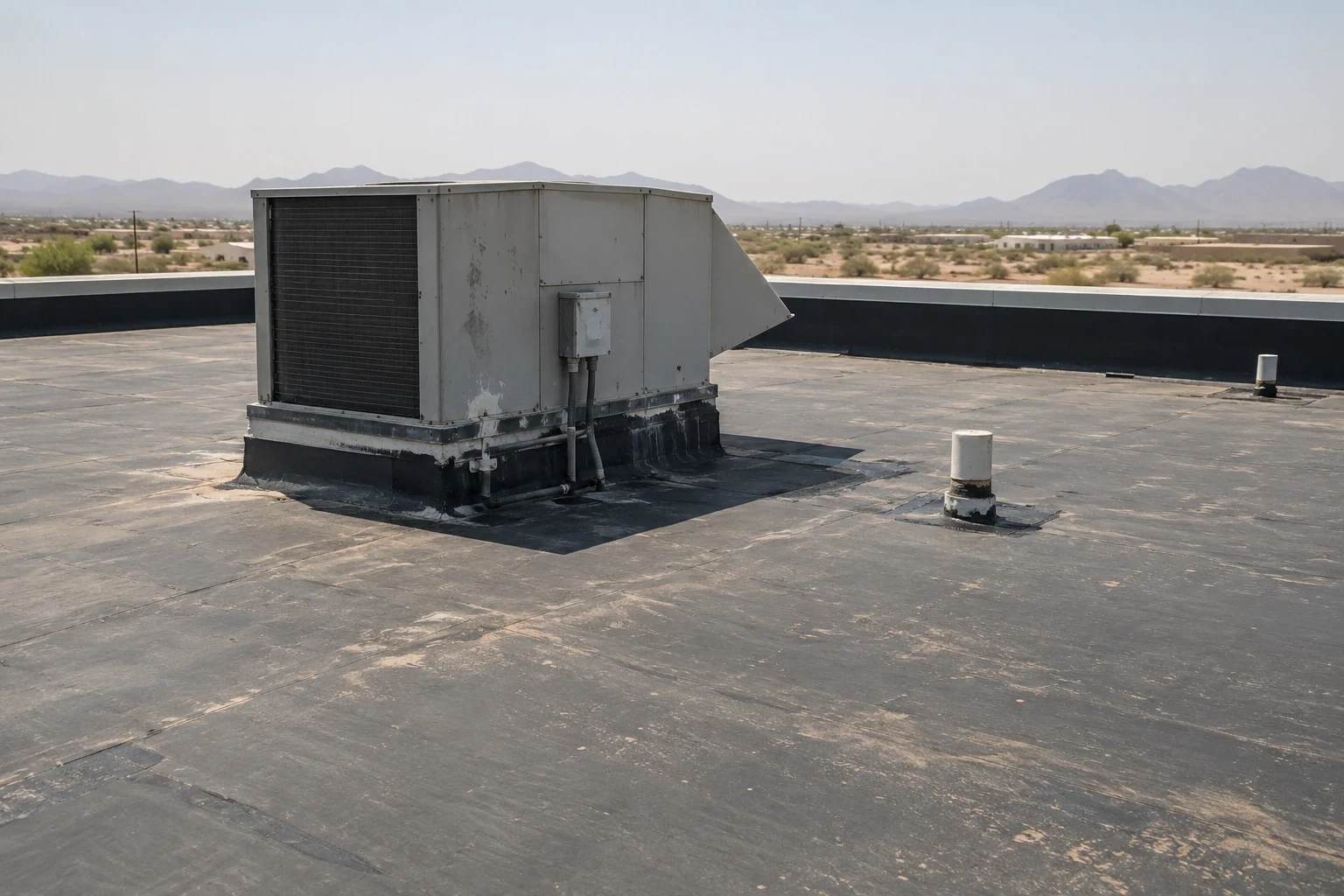
A black EPDM field may still be serviceable when a seam edge, pipe boot, or termination begins to open. In Peoria, AZ, repeated heat exposure and short monsoon storms make the repair boundary worth tracing before more material is added. We confirm the membrane, check seam tape or adhesive, and inspect how the sheet meets drains, curbs, and perimeter metal. The leak path may travel beneath insulation before reaching an interior ceiling. A commercial roof inspection can map the field condition and identify which detail needs testing before the owner chooses a repair or broader replacement.
Check the joint before applying a patch
An EPDM splice depends on a clean bonding surface and a seam tape or adhesive compatible with the sheet. We inspect the lap edge for contamination, oxidation, wrinkles, and fishmouths, then check whether the sheet remains firm outside the failed area. The repair begins with cleaning and preparation to the system requirements; a patch applied over dust or a damp surface can release at its perimeter. We mark the repair line, prepare beyond the defect, roll the seam firmly, and record the material used so a later inspection can compare like work.
Peoria's development records identify Arrowhead Business Park, Arrowhead Commerce Center, and Arrowhead Commerce Park as separate employment-area records. That local geography is not proof of an EPDM roof at any one address. We verify membrane identity and seam condition on the property under review before recommending a repair or comparing another assembly.
Follow movement at walls and penetrations
EPDM can move as the roof assembly expands and contracts. At parapets, curbs, and pipe boots, that movement concentrates at a change of plane or a rigid attachment. We check whether the flashing remains adhered, whether a termination bar is secure, and whether a metal counterflashing directs water over the membrane. A loose curb or support can keep pulling on a repaired sheet. If a mechanical contractor must reset equipment, that coordination belongs in the scope before the roof is closed.
For a roof with several penetrations, we record each opening by location and repair status. A penetration and curb review can separate a boot failure from a seam defect. If the perimeter also shows movement, edge-metal repair can restore the termination without treating the whole field as failed.
Trace water below the visible opening
The October 2010 Phoenix-area hail event is a useful reference when an EPDM owner is reviewing old photographs or an unresolved insurance file. We compare any reported impact area with current marks, punctures, seam openings, and interior evidence, then identify which observations are fresh and which belong to prior repairs. The event itself does not establish damage at a particular building. A test opening may be warranted when staining or soft insulation suggests water has moved beyond the visible sheet defect.
Peoria's downtown zoning anticipates civic, historic, residential, commercial, and employment uses in compact subdistricts, while Surprise City Center is planned as a mixed district. Different roof zones can contain different layers and service paths. A targeted insulation review identifies where concealed material changes the repair boundary.
We mark the test point on the roof sketch and label the cut material for disposal or retention. That prevents a later crew from mistaking an opened inspection area for an active leak. The same record shows where new insulation ends and existing sheet begins.
Keep drainage clear of membrane transitions
Drains, scuppers, and overflows should not leave water standing against a seam or flashing return. We inspect the bowl, clamping ring, surrounding sheet, and outlet route. If ponding comes from a blocked drain, clearing and correcting the outlet may be enough. If the slope is wrong, another membrane layer will not change the flow. The drainage assessment can identify whether the water path, low area, or membrane detail controls the next scope.
Peoria planning identifies a mixed-use downtown area alongside employment and commercial corridors planned along the freeways. That difference does not tell us what roofing system is installed on a property. We inspect the roof directly and consider the building's service access and drainage layout. For a recovery option, a recover review checks attachment, wet insulation, and added height before a second layer covers EPDM details.
Compare EPDM repair with other assemblies
A localized seam or penetration repair can extend a sound EPDM roof. Widespread bond loss, repeated wet insulation, or unstable perimeter details can move the decision toward removal. A recover may be possible when the substrate is dry, secure, and compatible with added attachment. We document each condition, the tests used, and what would change the recommendation. A condition record keeps repair, recover, and replacement options separate for the owner.
If replacement is selected, a modified bitumen roof and a built-up system have different layer and flashing details from EPDM. We compare the required substrate work, access, drainage, and operating needs before material selection. The scope should state what will be removed, what can remain, and how each edge or penetration will be restored.
Keep the next EPDM inspection comparable
The service file should show seam repairs, surface preparation, material used, test locations, and any area left unverified. We photograph terminations and drains after the work and record which conditions remain open. That lets the next inspection compare the same roof zones instead of relying on a general note that the roof was patched. If the assembly is maintained over time, a clear history can also show whether failures are isolated or spreading across separate sections.
Surprise City Center is identified as a one-square-mile downtown development area with multiple blocks assigned commercial service, healthcare, retail, employment, hotel, mixed-use, and residential categories. The district profile does not establish an EPDM roof at any building. In Surprise and Peoria, we tie the recommendation to the inspected assembly, not to the surrounding land-use pattern. That makes the file usable when an owner later compares this roof with another property in the portfolio.
Commercial Roofing Questions
Can an EPDM seam be repaired without replacing the whole field?
Yes, when the defect is limited and the surrounding membrane remains attached and compatible with a repair. We inspect the seam length, surface condition, and insulation beneath it. A patch needs clean, dry material beyond the opening. If failures repeat across roof areas, testing may be needed before another repair is approved.
Why does EPDM tape lift at one edge?
A lifted edge can follow poor preparation, contamination, moisture, movement, or an incompatible earlier repair. We remove failed material to a sound boundary, prepare the surface, and apply the specified detail. If movement continues at a curb or wall, that connection also needs correction.
Can you coat an EPDM roof instead of replacing it?
Some restoration systems may be compatible, but the membrane condition, existing surface, moisture, and adhesion determine feasibility. We test representative areas and address repairs or drainage first. If the EPDM is deteriorated or the insulation is wet, coating would not correct the underlying condition.
How do you find the source when the stain is far from the roof defect?
We trace the likely water path across seams, insulation, deck flutes, curbs, and low areas. A moisture survey or core sample may narrow the location, with each test tied to an approved point. The final repair follows the confirmed entry detail rather than the ceiling mark alone.
What makes an EPDM recover a poor choice?
Wet or unstable insulation, widespread seam separation, poor attachment, or drainage that remains unresolved can make another layer unsuitable. We inspect the assembly, identify test needs, and confirm the edge and penetration details can accept added height. If those conditions fail, removal may offer a clearer repair boundary.