
Commercial Roofing in the Park West Commercial District, Peoria, AZ
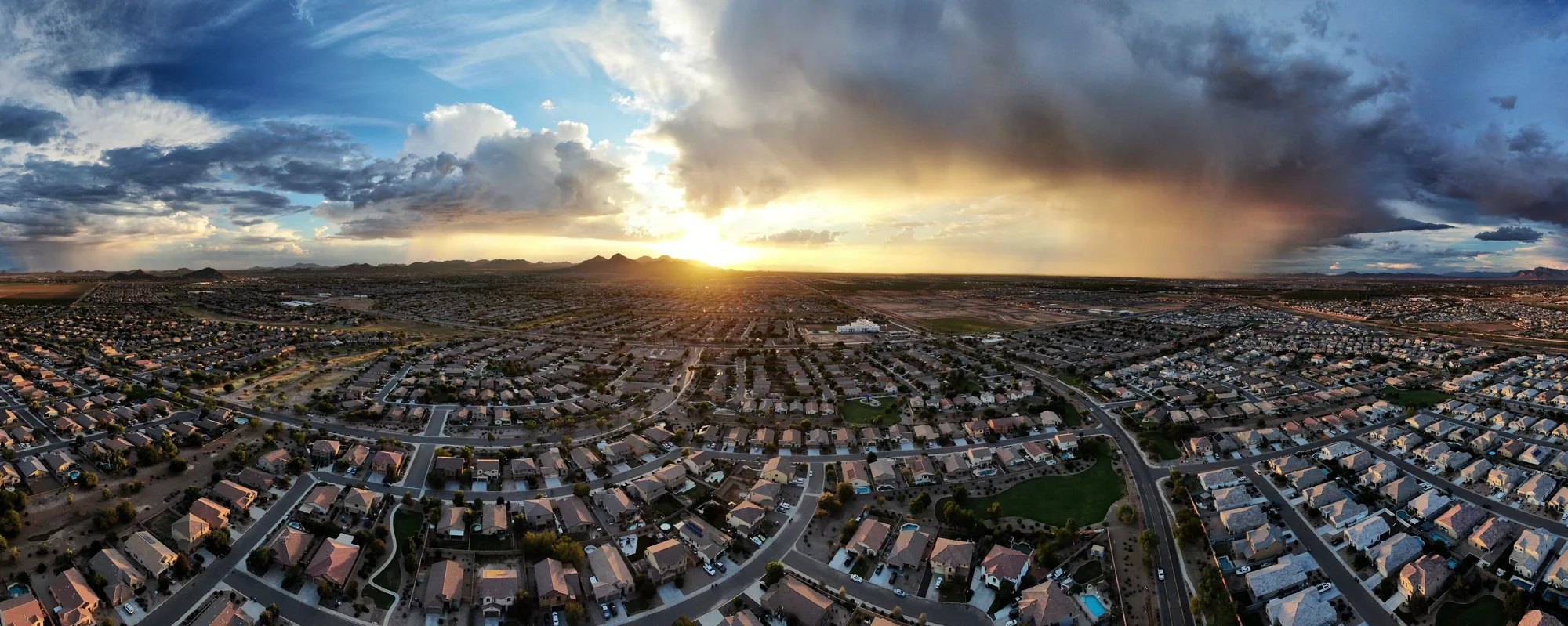
One leak in an open-air center usually belongs to three parties before anyone finds the cause: the landlord, the tenant below and whoever last touched the rooftop unit. Along Loop 101 at Northern Avenue stands Park West, which Peoria presents as retail and dining under open sky, spread across many businesses and not one venue. That arrangement makes roof records and responsibility lines as important as the membrane itself. We start by finding where the water entered, then separate shared roof from tenant equipment so the owner can decide who repairs what and when to act. For a property in Peoria, AZ, a clear commercial roof leak repair record saves more time than the repair does.
Separate the shared roof from the tenant equipment
In a retail and dining center, the roof field belongs to the property while many of the things sitting on it belong to tenants: kitchen fans, packaged air conditioners, refrigeration lines and signage supports. Each of those creates a penetration, and tenant improvements over the years can add curbs or cut openings that never appear on the original roof plan. We walk the roof with a sketch and mark every opening, noting which look original and which look added.
The distinction drives the repair. If a leak traces to a tenant-added equipment curb, the repair and its cost follow that curb. If it traces to a shared seam or drain, it falls to the property. We document the location with photographs and measurements so the discussion between landlord and tenant starts from evidence rather than from competing accounts. Where wet insulation sits below a tenant curb, we also say how far it extends, since the repair boundary decides whether a patch is enough or a section of insulation must come out with it.
Inspect canopies, parapets and storefront returns together
Open-air centers put more roof edge in front of customers than an enclosed building does. Canopies, parapet caps, storefront returns and decorative screens each create a joint that water can enter. We look for open caps, sealant that has pulled away, flashing that no longer laps the wall and gutters that discharge onto walking surfaces.
Edge metal also moves with heat. A coping joint that sat tight when installed can open with seasonal cycles, and loose metal in a monsoon wind becomes a falling hazard over a walkway. We correct fasteners, replace sealant and reset flashing, and we match metal gauge and profile to what is already there so the repaired edge reads as one line, and where the metal has failed we rebuild the transition through edge metal, coping and gutter work so water leaves in a controlled path.
Work around customers, deliveries and dining hours
Roof work at a dining and retail center has to respect the busiest hours of the tenants below. We schedule noisy sections early, keep material staging away from entries and customer parking, and route debris chutes and lifts away from foot traffic. Where a kitchen vent runs through the roof, we coordinate shutdowns so smoke and fumes do not drift into dining areas, and we protect open penetrations before the crew leaves. Any walkway below the work area needs its own protection from falling debris, so we confirm which areas must be cordoned off and who will watch the barriers before the first day.
Deliveries and trash service run on their own cycle, and a roof crew that blocks a service lane causes problems that the roofing price does not cover. We confirm lane use with the property manager before mobilizing. A property management team that handles many tenants can use one schedule for all roof access, which reduces the number of times a crew needs to visit.
Plan for monsoon wind and hail on exposed fronts
The Weather Service lists damaging wind, microbursts, flash flooding and hail among what Arizona monsoon storms can deliver to the Phoenix area. Exposed roof edges and tall parapets catch wind, so we examine caps and flashings first. Rooftop units are next, since a displaced panel or loose screen can leave a membrane torn.
On October 5, 2010, supercells put large hail on roofs across the metro and caused extensive damage. Hail on a retail roof can bruise membrane around curbs and crack coating on a surface that looks intact from the ground. We document each mark with dated photographs, separate functional damage from cosmetic wear, and help the owner prepare the record for a claim. For repairs after wind, our wind damage roof repair focuses on edges and unit attachments before the field.
Set a maintenance rhythm that fits a multi-business center
Peoria recorded about $4.9 billion in retail sales in 2022, which shows how much commercial activity depends on retail buildings staying open through the weather. A center with many businesses cannot afford a closure from a roof leak, so we recommend a planned visit before the monsoon season and another after the first major storm. Each visit clears drains and scuppers, looks for new openings left by tenant work, checks sealants at curbs and records any new equipment.
A preventive maintenance program also helps with budgeting. Small items found early stay small, and the log shows when a section is nearing the end of its service life. Owners who also hold property in the P83 District or in downtown Peoria can use the same log format across sites.
Commercial Roofing Questions
Who pays when a tenant's rooftop unit causes a leak in a shared roof?
Lease terms decide the cost, but the roof evidence decides the cause. We trace the water to its entry point, photograph the curb or penetration and document whether the opening is original or added. That record lets the landlord and tenant resolve responsibility without arguing about where the water came from. We then repair the opening so the roof returns to a sound condition.
How do you handle a leak that shows up in several storefronts at once?
Several leaks in a row often indicate a shared defect, such as a failed seam run, a clogged drain line or an open parapet joint. We map each reported location on a roof plan and look for a common path. A single combined repair is usually cheaper than treating each storefront separately, and it prevents the same water from reappearing in the next unit.
What risk do decorative screens and signage create on the roof?
Supports for screens and signs are penetrations, and wind loads them. We check that the base flashing is intact, that fasteners have not backed out and that the structure is attached to something other than the membrane. Loose supports should be corrected before monsoon season, since a moving post can cut the membrane around it.
Can roof repairs happen while restaurants stay open below?
Generally yes, with coordination. We avoid work directly over seating during peak hours, protect penetrations from debris and agree on a shutdown window for any vent that must be opened. If a repair needs a longer window, we schedule it for a slow day and tell the manager the cost difference before starting.
How often should drains be cleared at an open-air center?
Often enough that no storm meets a blocked outlet. Landscaping, trash and windblown debris can fill a strainer within weeks. We recommend a pre-monsoon clearing and a visit after the first heavy storm, then adjust the interval from what the log shows. A drain that clogs repeatedly may have a slope or screening issue worth correcting.