
Commercial Roof Repair in Peoria, AZ
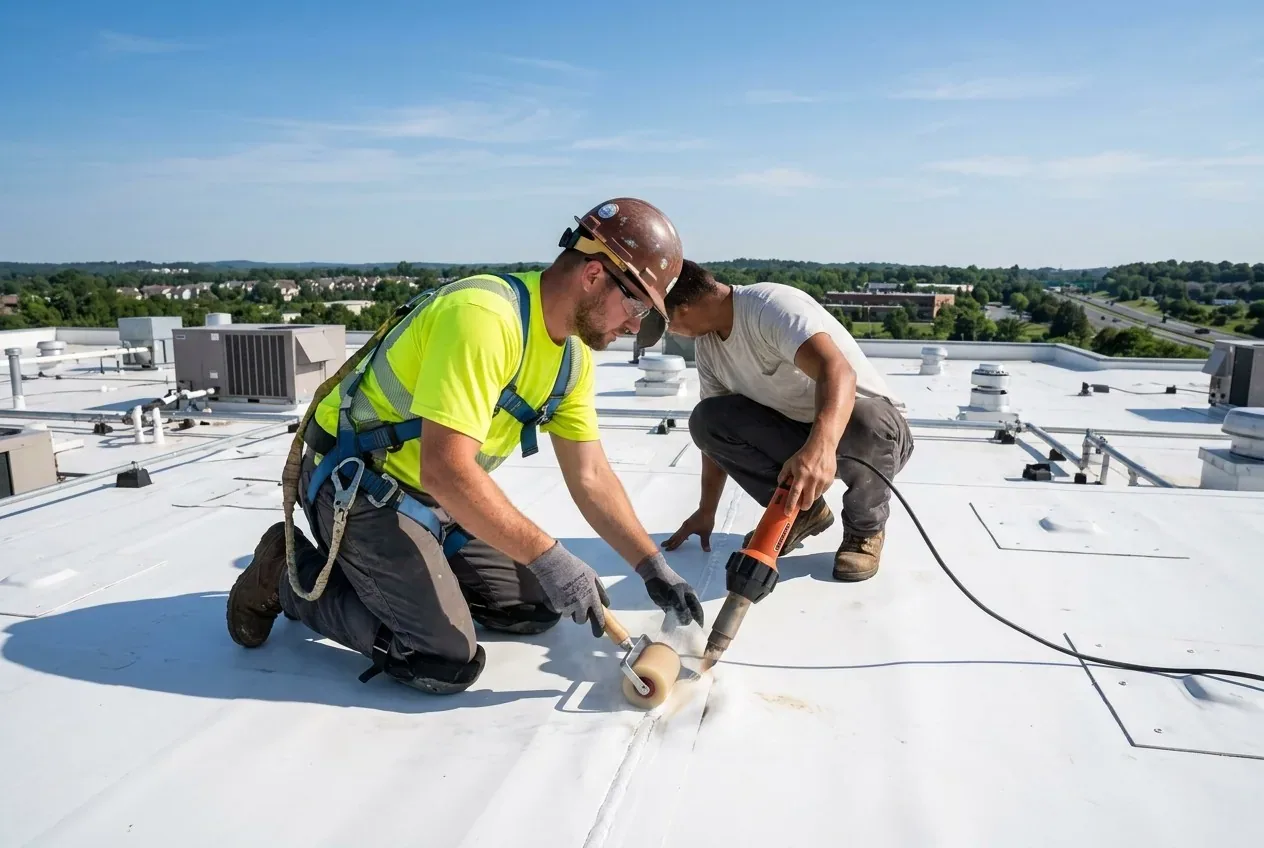
A repair is useful when it closes a defined failure without disguising a larger condition. In Peoria, AZ, heat cycling can work on seams and exposed transitions, while monsoon wind, hail, and brief heavy rain can test the same details in a short interval. We inspect the reported area, trace the water path, and check nearby laps, curbs, drains, and edge conditions before choosing a repair. The owner gets a boundary for the work and a record of what remains. If the pattern extends past one detail, a full roof inspection can establish whether targeted repairs still fit.
Trace the path before sealing the symptom
Water can travel along insulation, deck flutes, or framing before it appears indoors. We start with the reported leak, review weather and repair history, then inspect the roof area above and around it. A puncture, open seam, failed flashing, clogged drain, or loose edge may all produce a similar ceiling mark. Each has a different repair boundary. We look for wet insulation, movement at terminations, residue at laps, and openings around supports. A patch belongs where the membrane and substrate can accept it, not simply where the occupant first noticed water.
Peoria’s Loop 303 plan identifies a mix of business or industrial land and community commercial uses. For a facility near that corridor, access to equipment and active loading can affect when the repair crew reaches a roof zone. We agree on the access path and safe work area, then keep the repair focused on the observed condition. A leak-tracing visit can be paired with the repair when the point of entry is not yet clear. If the membrane itself is compromised, we document the defect and the adjoining material that must be prepared.
Repair the system, not only the opening
On a single-ply roof, repair quality depends on clean, compatible surfaces and a detail that can remain bonded or welded through movement. We remove contamination or loose material as needed, prepare the membrane, and carry the patch beyond the damaged area onto sound material. Seam failures need their own treatment: the open edge must be secured without creating a new water pocket. On modified bitumen or built-up roofs, the repair approach differs because the surfacing and plies respond differently. We identify the roof type before bringing the repair material to the area.
Heat can affect the work window for adhesives, cleaning, and membrane handling. Phoenix records average many days with highs at or above 100°F, a regional air-temperature measure rather than a roof reading. For a property near Peoria’s commercial areas, the owner can link the repair record to the roof assembly and prior service history instead of treating the patch as a standalone event.
Check curbs, edges, and drainage
A field patch cannot correct a separated curb flashing or unstable edge metal. We inspect the vertical transition, termination bar, counterflashing, and nearby membrane for movement or water entry. Rooftop equipment supports also need attention where vibration, added lines, or service access can stress the seal. At drains and scuppers, we check whether debris or a damaged bowl is contributing to water retention. When the repair uncovers a drainage defect, we explain whether a clearing, detail reset, or broader slope correction is needed. The edge and coping scope or drainage repair may be scheduled with the membrane repair.
Peoria’s P83 district mixes commercial, entertainment, hospitality, and employment uses. We set the work zone around the building’s actual equipment and operating hours. If there is a chance of additional weather before a permanent repair can be completed, we secure the opening with temporary protection and define the follow-up work. The temporary measure is documented separately so it does not get mistaken for a permanent repair.
Set the limit for a repeat failure
After the repair, we look for signs that the original cause was broader than the visible opening. Similar damage at adjoining seams, recurring water near multiple curbs, or moisture extending beyond the patch can change the recommendation. We note the area that was opened, the material used, and the condition around it. If the roof has repeated failures but most of the field remains sound, a group of defined repairs may still be more appropriate than replacement. If the same issue returns after a correctly prepared repair, we compare the repair history with broader moisture and attachment findings.
Monsoon guidance for Arizona describes damaging winds, microbursts, hail, and flash flooding among possible storm impacts. A hail report, for example, can help set timing, while the membrane, metal, and insulation findings determine the repair. Our hail-related roof review distinguishes visible impact from confirmed functional damage and records where further testing would change the scope.
Schedule the work around the building
Repair planning accounts for roof access, tenant activity, equipment operation, and the time needed for a secure finish. We coordinate roof hatch use, protect paths below the work, and identify any area that must remain clear for mechanical service. For a multi-tenant retail or office property, we can sequence separate zones rather than leave a wide work area open. If conditions change once the roof is opened, the property contact receives the finding and the recommended next step before the repair expands.
Where a leak threatens inventory, electrical equipment, or occupied space, response speed matters. Around-the-clock emergency service can place temporary protection while a permanent repair is scoped. A rapid stabilization visit and a scheduled repair can be separate steps, with the first protecting the building and the second restoring the assembly.
Leave a repair record that can be reused
We close out with the reported location, the roof condition found, the repair boundary, and any adjacent issue that remains open. Photos before and after work help the next inspection see whether a seam, curb, or drain has changed. If the repair was temporary, that status and the planned permanent correction stay clear in the record. Owners managing properties in both Peoria and Surprise can compare the record by roof area without assuming the two buildings share the same leak history.
A useful repair program also makes the larger capital decision more precise. We identify which areas are isolated, which recur, and which should be watched during the next service visit. When repeated repairs begin to cross boundaries, a condition report can compare those findings to the full assembly. The recommendation follows the evidence, and the file keeps the reason available after the immediate leak is resolved.
Commercial Roofing Questions
Why can the leak show up far from the roof opening?
Water may move through insulation or along the deck before reaching an interior finish. We trace the likely path by checking roof slope, seams, curbs, drains, and the reported area. If the source remains uncertain, we expand inspection in a controlled way rather than sealing the ceiling stain alone.
Can you repair a seam without replacing the whole roof?
A seam can often be repaired when the surrounding membrane is sound, clean enough to prepare, and compatible with the repair method. We check adjoining laps and attachment first. If failures repeat across separate roof areas, we show that pattern and compare a larger scope with another isolated patch.
What happens if rain is forecast during the repair?
We plan a protected stopping point and keep the open area within the crew’s ability to secure. A forecast can change the sequence, especially during monsoon conditions. If permanent work cannot proceed safely, we stabilize the opening, document the temporary measure, and schedule the completed repair.
How do you tell whether a roof needs more than repair?
Repeated entry points, widespread wet insulation, loose attachment, or deteriorated deck can move the decision beyond a patch. We map each finding and compare it with prior service notes. The owner sees which items can be corrected locally and which warrant a broader inspection or capital plan.
Can repairs be coordinated while tenants remain in the building?
Usually, the sequence can be planned around active areas, equipment, and access routes, provided roof conditions allow safe staging. We coordinate with the property contact and protect the area below. If the repair requires a shutdown or restricted zone, that requirement is identified before the crew opens the roof.