Roof Damage Repair in Peoria, AZ
Damage rarely arrives as a single event. A seam that opened in a monsoon gust may have been loosening through a dozen heat cycles, and a puncture found after a storm may sit beside an older repair that never fully bonded. In Peoria, AZ, we treat each damage type as a failure with a cause, a boundary and a consequence for the capital window, and the repair follows that reading. Where the cause is not understood, a patch tends to move the decision forward without improving the record. The owner should leave each visit with a documented condition and a reason to defer or act.
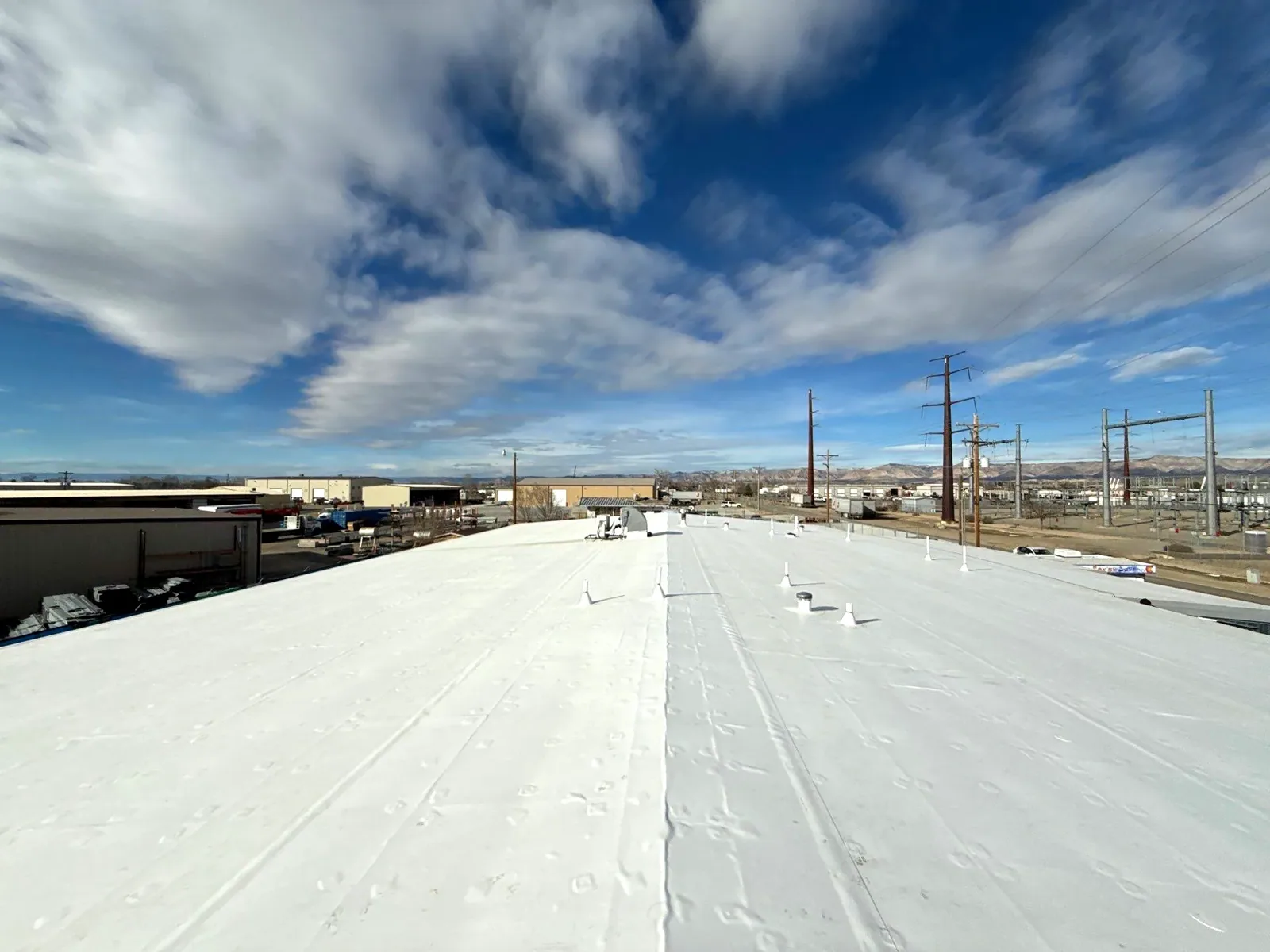
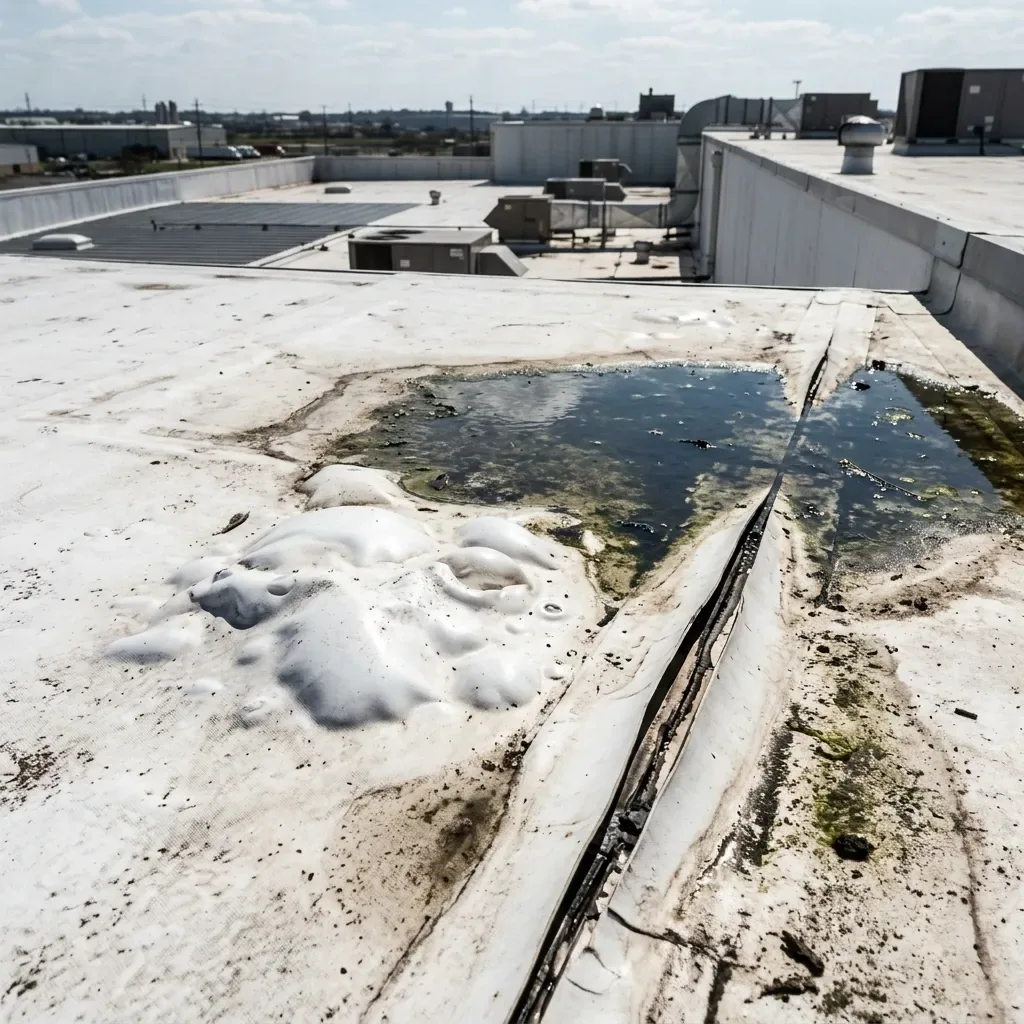
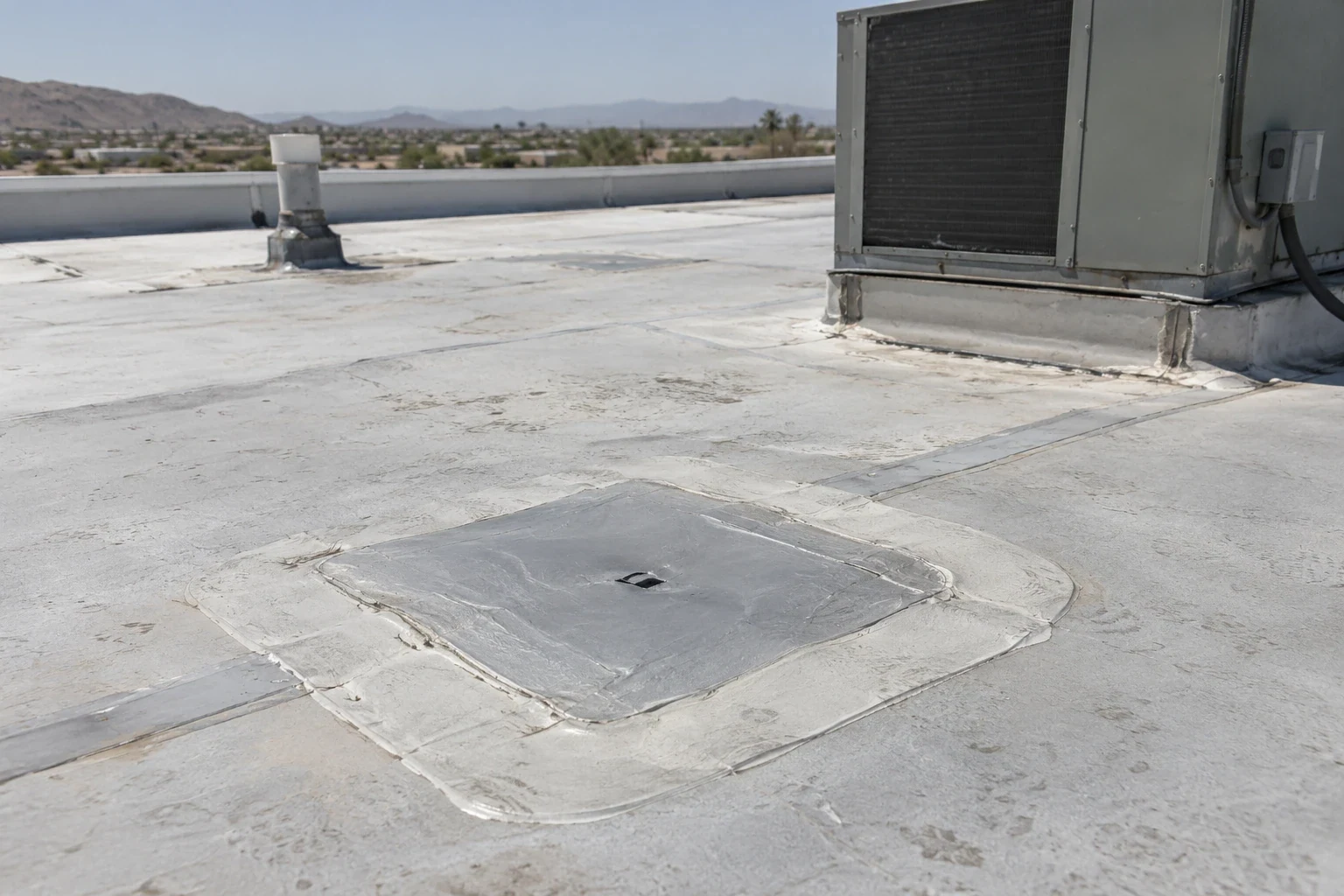
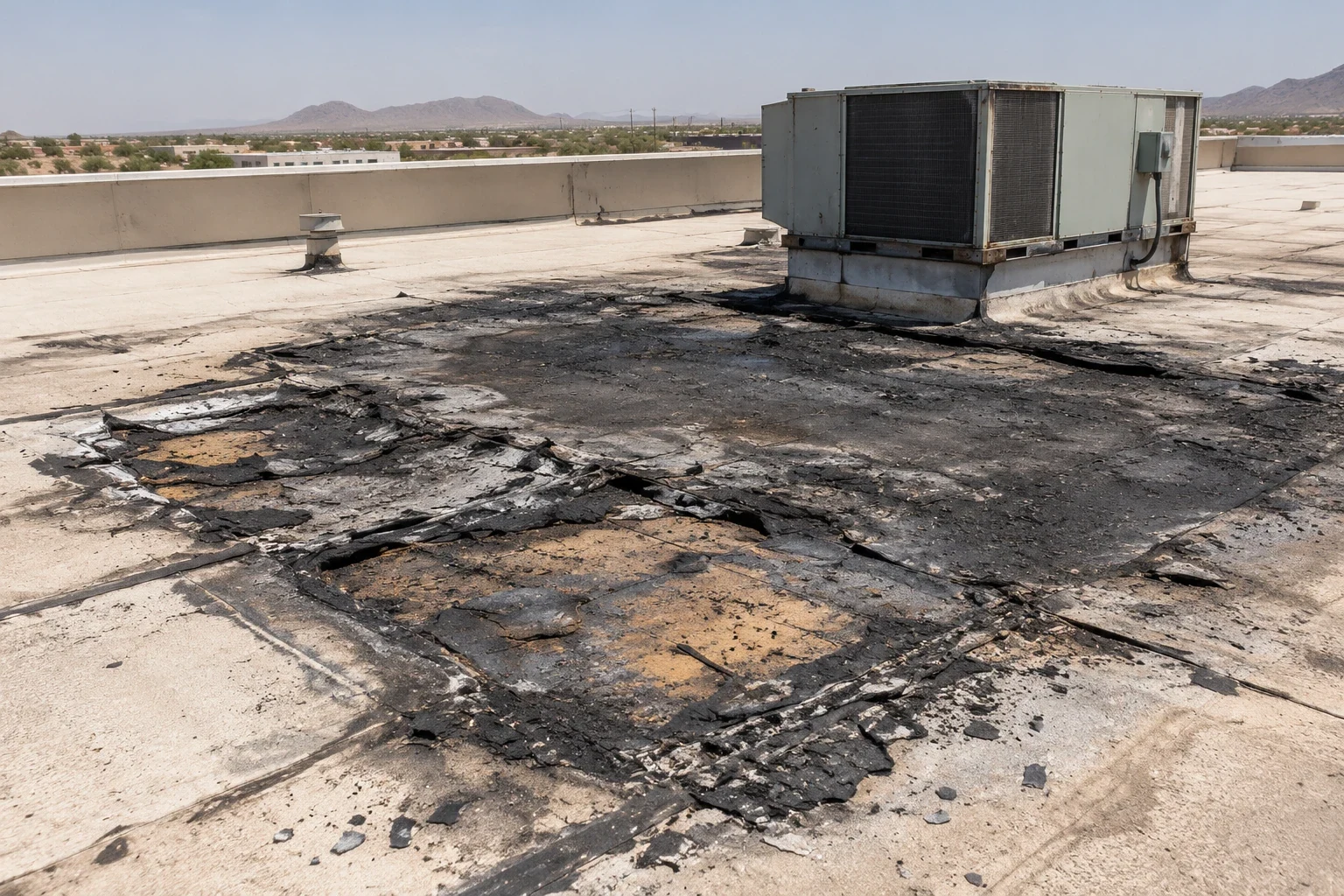
Read storm damage for what it exposed
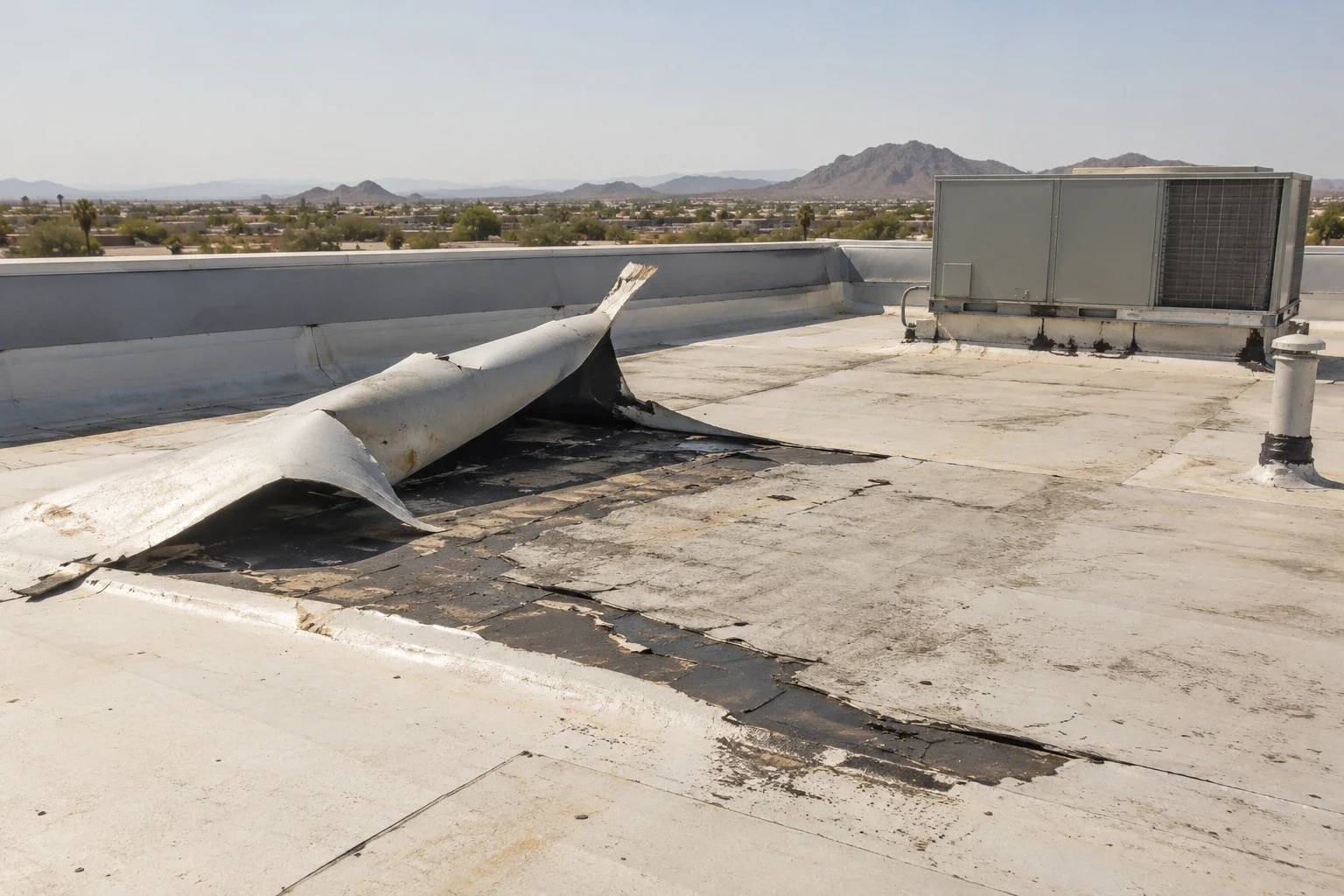
The Arizona monsoon brings thunderstorms that can pair gusts and microbursts with hail and sudden runoff, which is why a post-storm walk checks edges, outlets and membrane together. Wind damage shows at edges, corners and loose membrane, and hail damage shows as bruising and fractured surfaces. A large hail event crossed the Phoenix metro area in October 2010, and the lesson for owners is to document the roof soon after any storm while the evidence is fresh. Photographs by roof zone, with a scale in the frame, make a later claim review far easier.
Follow the water path through drains and details
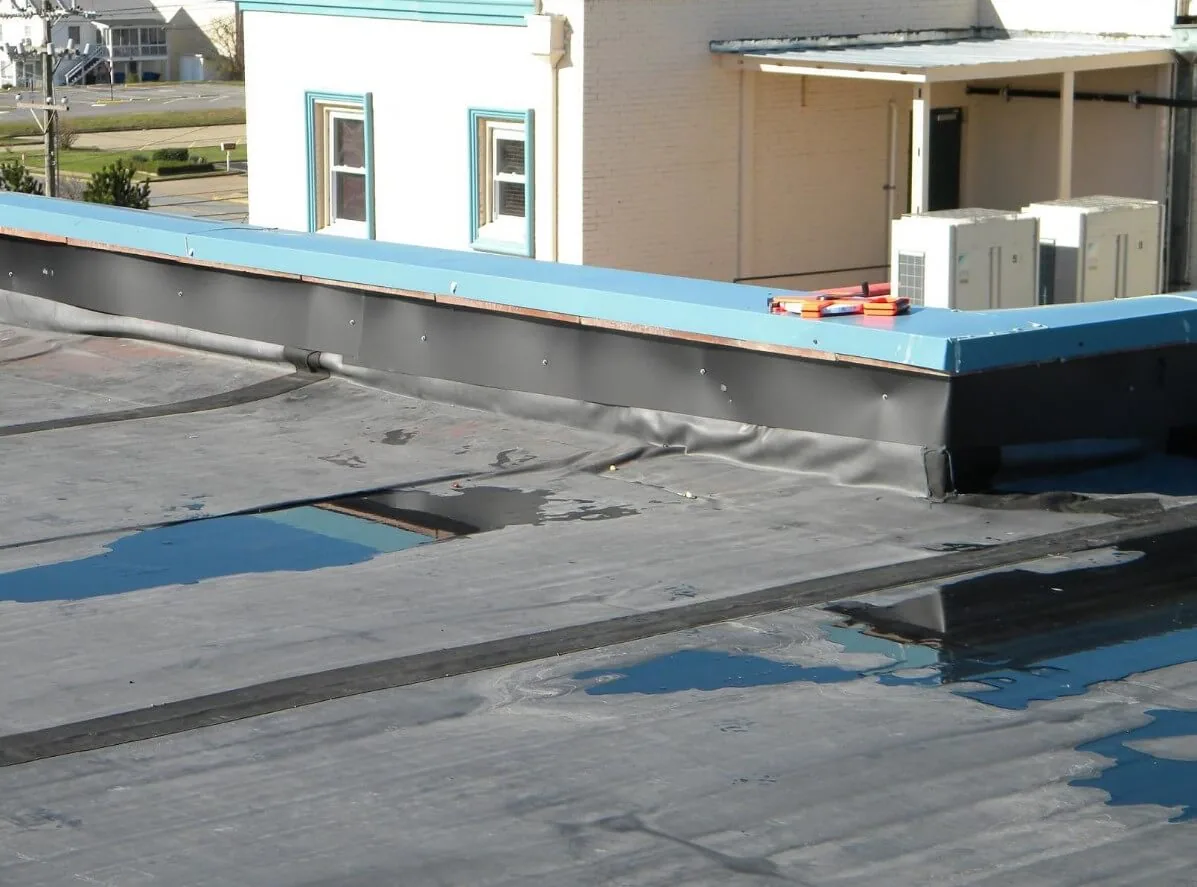
Ponding water repair starts with the question of whether the cause is a clogged outlet, a low area or a deflected deck. Flashing failure repair addresses the transitions at curbs, walls and penetrations, where most leaks begin. Seam failure repair finds why a lap opened before closing it again.
Separate surface injuries from system wear
A membrane puncture from foot traffic or dropped tools is usually local, while heat and ultraviolet damage is a sign of aging across the surface. Summer heat across the Phoenix area is long enough that exposure wears seams and sealants steadily, even on a roof that has never leaked. Fire damage repair adds structural and smoke concerns that go beyond the membrane.
Decide the repair boundary before ordering material
Every damage repair follows the same sequence: locate the damage, establish how far water traveled, check the insulation and deck, and then draw the repair boundary on the roof plan. When failures repeat across several transitions, or wet insulation shows up in separate areas, the scope decision may shift toward a larger repair or replacement, and we say so with the evidence behind it.
Commercial Roofing Questions
How soon after a storm should the roof be inspected?
As soon as it is safe, ideally within days. Debris, standing water and fresh impact marks are easier to read early, and a prompt record supports an insurance review.
Can damage be repaired temporarily until the budget cycle?
A temporary dry-in can hold a roof through a budget gap if the damage is understood. We state how long the measure should last and what must follow.
Does one repair affect the warranty file?
Unauthorized work can complicate coverage, so we review the warranty terms before any repair and record what was done and with what materials.
How do you tell old damage from new?
We compare staining, oxidation, dirt in the cracks and the repair history. Fresh breaks look clean, while older failures show weathering at the edge.