About Commercial Roofers Peoria
A commercial roof is one of the few building systems an owner can ignore for years and then be forced to decide about in a single afternoon. The decision arrives with a stain, a storm or a lender's question, and what the owner has on file decides how good the choice can be. Commercial Roofers Peoria exists to make that file useful. We repair, inspect, maintain, coat and replace low-slope and metal roofs in Peoria, AZ, and we treat each visit as an addition to a record the owner can rely on when the capital window opens.
The work is practical. We walk the roof, trace the water path, photograph what we find and say plainly whether the damage is local or part of a pattern. Then we put the repair boundary, the options and the reasoning in writing, so the owner can defer or act without relying on our word alone.
Repair, restore and replace commercial roofs
The work spans the full range of commercial roofing. Repair and leak tracing deal with the immediate problem. Inspections, drone surveys and infrared moisture mapping build the evidence. Preventive maintenance keeps drains open and details tight between storms. Replacement and restoration coatings extend or reset the service life when the roof has outlived repair.
We install and repair TPO, PVC, EPDM, KEE, modified bitumen, built-up, standing seam and retrofit metal, spray foam, and silicone and acrylic coating systems, and we work on occupied buildings by planning around tenants, operations and schedules. Emergency response runs around the clock, holidays included, because a storm does not wait for the next business day.
Start with failure, then measure the evidence
Our method begins with how a roof fails, because failure patterns point to causes. A seam that opens at a curb cluster suggests movement at a transition. A blister near a drain suggests trapped moisture. Standing water against a wall suggests a slope problem. Reading those patterns tells us which tests to run before we recommend scope.
We compare the leak map, repair history, photographs, drainage paths and warranty terms. If the evidence stays local, a targeted repair can protect the current budget and preserve a later replacement window. If failures repeat across several transitions, or wet insulation appears in separate areas, another patch may only push the decision forward without improving the record. We say which case we see, and show why. The recommendation names the repair boundary on the roof plan, lists what was inspected and what was not, and states the evidence that would change the next step, such as a new leak in an area already repaired or a moisture reading in a zone that tested dry.
Plan for heat, monsoon exposure and fast-changing land
Peoria roofs live with long heat. Phoenix climate records average roughly 94 days a year with highs of at least 100°F, which is regional air-temperature context and not a roof-surface measurement, but it explains why sealants, laps and edge metal deserve regular checks. National Weather Service guidance describes Arizona monsoon storms as capable of damaging winds, microbursts, flash flooding and hail, and on October 5, 2010 supercells dropped large hail across the metro area. Short, intense storms test drains, scuppers and perimeter details in ways steady rain does not. After a storm we look first at outlets and overflow openings, then at edge metal and membrane terminations, because those are the places where a short burst of water finds its way.
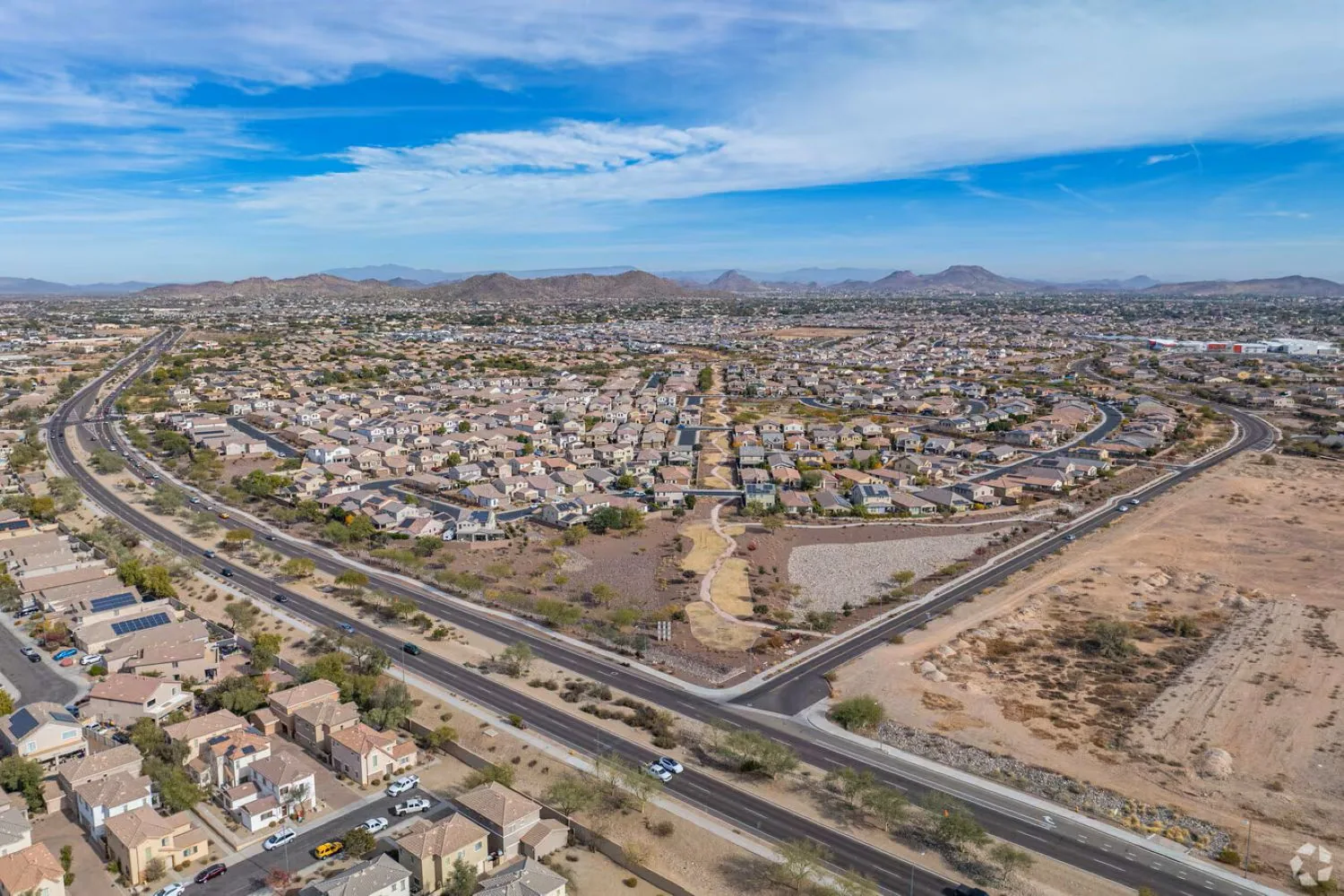
The land around the city is changing as well. Peoria's planning materials describe a 7,000-acre north corridor along Loop 303 where city planning leaves room for employment, advanced manufacturing, retail, housing and open space. That is a planning area, not finished building stock, and we assess only the roofs that exist. For owners whose buildings are still in design, the useful roof conversation is about drains, penetrations and equipment placement before the membrane is laid.
Serve the owners and operators who carry the roof decision
Our clients are property managers, investors, health care operators, manufacturers, school and public facility teams, retail and hospitality owners and general contractors. Peoria records $4.909 billion in 2022 retail sales and $1.351 billion in health-care and social-assistance receipts, two sectors that keep occupied commercial buildings under roof. The buildings range from warehouses and plants to offices, clinics, shopping centers, hotels and schools.
Each owner needs something slightly different from the same inspection. A property manager wants a file a successor can use. A lender wants a condition snapshot. A facility team wants a schedule that keeps operations running. We shape the report and the timing around who must approve the work. A board packet, a lender letter and a maintenance work order need different levels of detail, and we prepare each one from the same underlying findings so the numbers never disagree.
Leave a record that outlives the visit
Every job leaves behind photographs by roof zone, a note of each repair and an outline of any area we did not touch. Over time those pieces become an asset record that supports capital planning and the warranty file. Portfolio owners can compare buildings on the same terms through multi-site programs.
Every statement in a report rests on something we measured or photographed, and the limits of a finding are written beside it. When a test shows a roof can be coated, we say so. When it shows the insulation is wet and the coating would fail, we say that too, and explain what the alternatives require.
Work across Peoria and the neighboring Valley
We work across Peoria, from Old Town and the commercial districts near Loop 101 to the planning areas along Loop 303, and in neighboring cities across the West Valley and the Phoenix metro area. Peoria adopts the 2018 International Building Code as amended by its municipal ordinance, and we confirm local requirements for each project and jurisdiction.
For work near military installations and other secured sites, access, escort and scheduling are planned in advance, and roofing is detailed to the applicable criteria, with the Unified Facilities Criteria for roofing as the reference where a project calls for them. Luke Air Force Base lies about 17 miles southwest of the Peoria city centroid in a straight line, and the same advance planning applies to any secured site in the region.
Commercial Roofing Questions
What should I have ready for a first roof review?
Roof plans, repair invoices, warranty documents and leak reports are most useful, along with any photographs of past damage. If none exist, the first visit starts the file.
Can you work with our current roofer or consultant?
Yes. We share findings and photographs, coordinate scope where calculations or permits are involved, and keep our record separate and clear.
How do you handle tenants during roof work?
We agree on access, noise limits, staging areas and dry-in procedures with the building contact, and notify tenants whose spaces sit under the work zone.
Do you offer emergency response?
Yes, around the clock including holidays. The first step is to dry in the building and document the damage, with permanent repair planned from the findings.
How do you decide between repairing and replacing?
We weigh the extent of moisture, the repeat pattern of failures, the age and condition of the membrane, and the planning window. The evidence goes in writing so the owner sees the reasoning.