
Modified Bitumen Commercial Roofing in Peoria, AZ
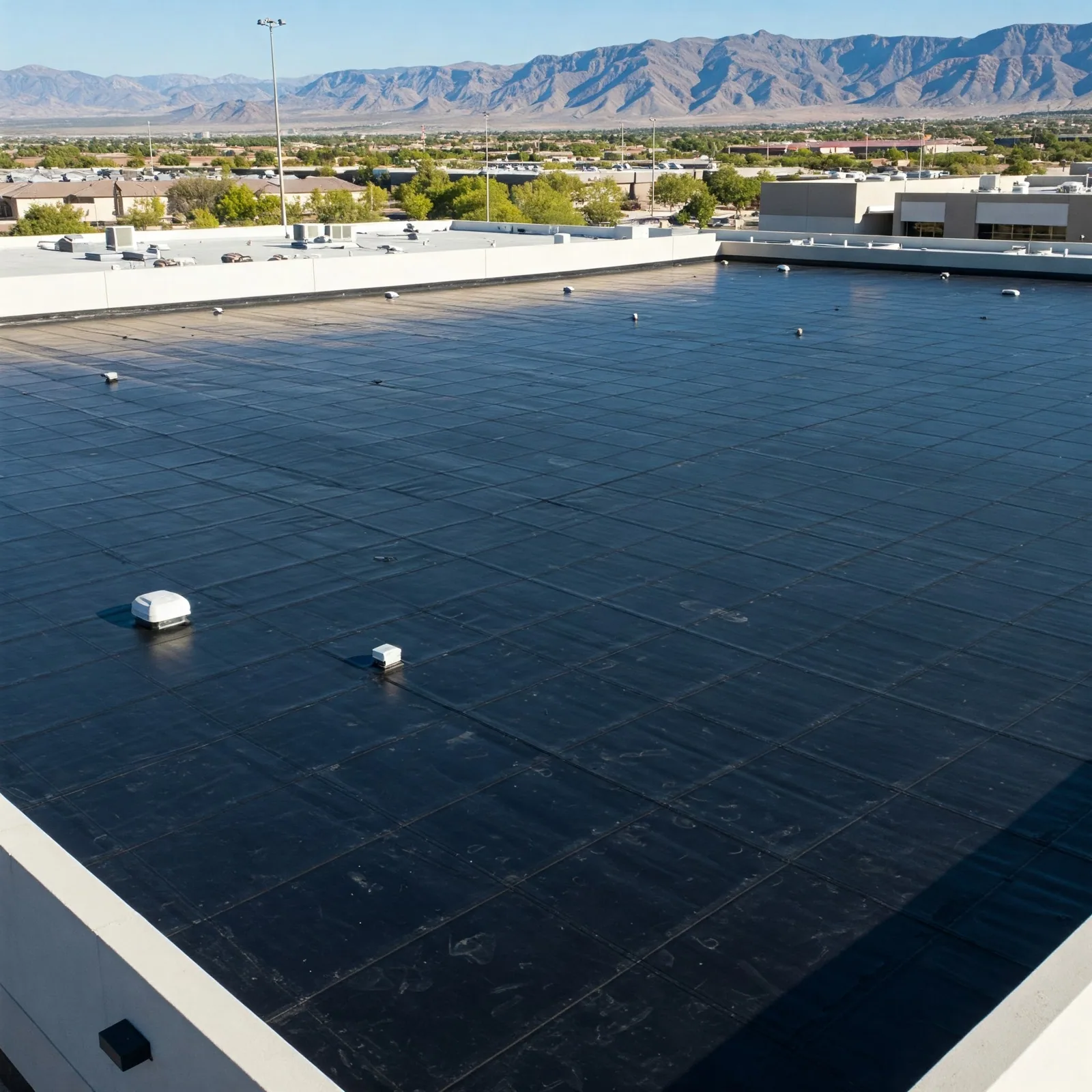
A modified-bitumen roof can hide an opening beneath a surface that still looks continuous. In Peoria, AZ, the owner needs to know whether the concern is a lap, a flashing, worn surfacing, or moisture below the plies. We inspect the installed layers, trace interior reports, and check how the roof meets drains and parapets before recommending work. A roof inspection should identify the repair boundary and any test that could change it. The choice is not simply patch or replacement; it is whether the assembly can be restored without leaving the cause of the leak in place.
Read the layer stack before opening a lap
Modified-bitumen work begins by identifying the sheet and attachment method at the failed area. A torch-applied repair requires different controls from a self-adhered or cold-applied detail, so we confirm the installed assembly before opening a lap. We look for cap-sheet movement, exposed reinforcement, adhesive failure, and moisture between plies. Then we define the smallest boundary that reaches dry, bonded material. A surface bead may hide an edge without restoring the sheet connection and can complicate the next repair.
Camino a Lago's planned commercial core sits near Lake Pleasant Parkway and Deer Valley Road. That planning context does not identify a roof assembly, so each building's layers are checked directly. If the roof proves to be a built-up assembly rather than modified bitumen, a multi-ply roof review follows the cap and ply relationships before a repair method is selected.
Restore laps and wall transitions together
Leaks can begin at a field lap, but water often follows the roof until it reaches a curb, parapet, drain, or penetration. We inspect flashing height, edge securement, counterflashing, and the plies turning up each wall. A repair that stops at the sheet seam may leave a split corner or open metal joint beside it. We photograph the transition before removal and show where the new sheet or flashing will tie into the existing assembly. For curbs and pipes, a support and curb inspection can identify movement that would reopen the flashing.
Park West is a multi-business retail and dining district beside Loop 101 at Northern Avenue. That local context can matter when planning access and service timing, but it does not describe any one roof. We confirm the building's service path, roof access, and drainage arrangement before setting the work window. For properties in the Park West district, the repair record remains specific to the inspected property.
Check surfacing without mistaking wear for failure
Granules or a reflective surfacing can wear unevenly, leaving some areas more exposed than others. We inspect blisters, cracks, open laps, and areas around equipment where service traffic may abrade the cap sheet. A surface mark by itself does not show whether water has reached the plies below. We compare it with seams, repairs, and interior leak reports, then determine whether testing or a localized repair is warranted. If a coating is proposed, the surface and moisture condition must support the product rather than obscure a deteriorated cap.
On October 5, 2010, supercells crossed the Phoenix metropolitan area and produced large hail with extensive damage. That historic regional event does not establish impact on a particular Peoria roof. After a reported storm, we inspect actual cap sheets, metal, and penetrations for fresh damage and keep older wear separate. A hail damage assessment can document which observations support a claim or repair, without treating a mark as proof of membrane failure.
Follow drainage before adding another ply
Drainage on a modified-bitumen roof affects the cap sheet as well as the plies below it. We compare low spots with drain bowls, overflow openings, surfacing wear, and lap direction. If water remains at a seam, the cap may weather differently from the surrounding field and a repair needs to restore both the sheet bond and the path to the outlet. Clearing a blocked drain does not correct a reverse slope or a crushed insulation board, so we identify the cause before adding material. A drainage inspection records whether the issue is a blockage, an outlet detail, or roof geometry.
The October 2010 supercells brought large hail across the Phoenix Metropolitan Area. For an owner reviewing an older event file, we compare dated photographs, current cap damage, and repair history rather than assigning all surface marks to one storm. A hail damage assessment can keep event evidence separate from ordinary surfacing wear and repeated water entry. The result supports a repair boundary that can be priced and revisited.
Set a repair, recover, or replacement threshold
Localized lap separation and sound surrounding plies may support a repair. Repeated leaks, widespread surfacing failure, wet insulation, or unstable transitions can justify a broader scope. A recover may be appropriate only when the assembly below is secure, dry, and compatible with added attachment and height. We record the evidence for each option, including what remains concealed. A recover review should address edge conditions and penetrations, not only the field area.
For replacement, we compare removal, new insulation, deck repairs, access, and building operations. A TPO assembly uses welded single-ply seams, while modified bitumen uses layered sheet details. The new system should match the roof plan, maintenance needs, and schedule. The owner can then weigh current repair against an assembly change using the documented condition rather than the appearance of the cap sheet alone.
Keep the plies and repairs in the roof file
The closeout should name the observed assembly, repaired laps, flashing details, surfacing, and test locations. We photograph where new material meets existing plies and state whether any area remains open for follow-up. That record helps the next inspection distinguish a renewed detail from a new leak path. If the owner manages several Peoria properties, each roof gets its own condition map and repair history rather than a single portfolio-level description.
A condition report can carry the modified-bitumen findings into a budget or future inspection. We leave the owner with the work boundary, what remains uncertain, and the condition that would move the decision from repair to replacement.
Commercial Roofing Questions
How do you repair a separated modified-bitumen lap?
We remove loose or contaminated material to a sound boundary, confirm the sheet layers, and use a compatible repair method. The work restores the lap and adjacent flashing where needed. We document the repaired length and inspect the finished edge so a later visit can compare the same area.
Can a coating solve worn surfacing on this roof?
Only when the cap sheet and underlying plies are suitable for restoration. We inspect for moisture, open laps, and widespread loss of bond, then test the proposed surface if needed. A coating does not repair wet insulation or change roof slope, so those conditions are resolved separately.
What does hail damage look like on modified bitumen?
We inspect the cap sheet and flashing for punctures, displaced surfacing, fractured areas, and related openings. A mark alone may not establish functional damage. We compare the roof condition with the event report and note which findings need repair, further testing, or monitoring.
When should an owner consider a recover over modified bitumen?
The existing plies must be stable, insulation dry enough to remain, and edges and drains able to accept added height. We inspect those conditions and identify tests that could change the decision. If moisture or repeated failures extend across the roof, removal may provide a more reliable boundary.
Can you repair one roof section while another stays in use?
We can phase the work when each section can be protected and closed safely. The plan accounts for access, deliveries, noise, and weather, with temporary edges restored at the end of a shift. The facility contact receives the boundary and any route or equipment restrictions before work begins.