
Carlisle SynTec Roofing Systems in Peoria, AZ
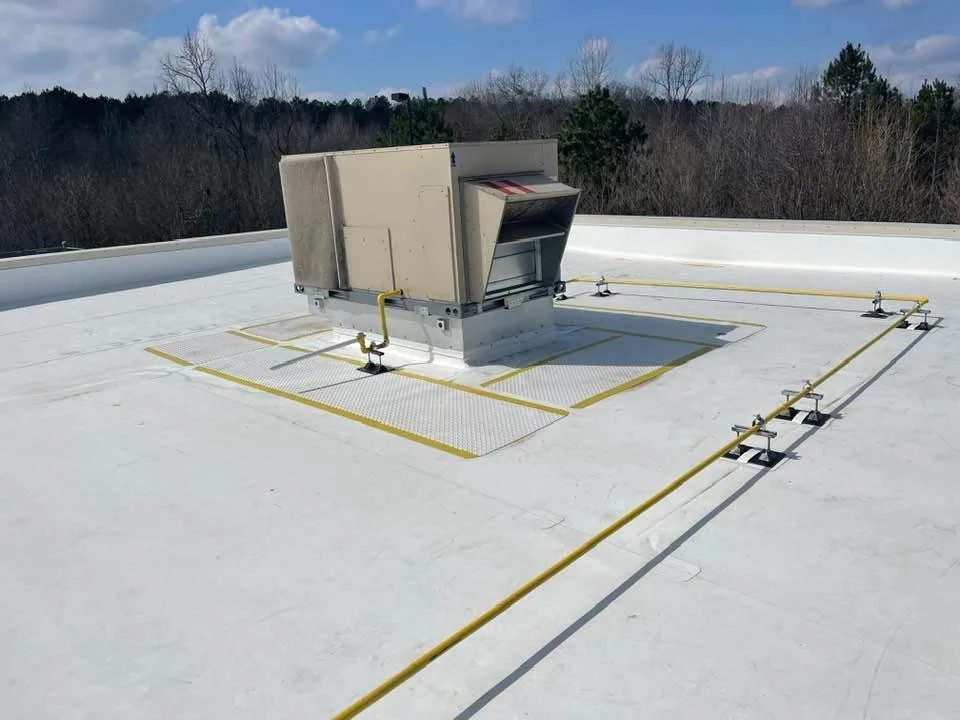
Seam probes on a Carlisle roof often reveal the same story twice. A short run of open weld at one corner is the visible event, and the dirt trail leading to it shows how long water has been finding its way in. Carlisle SynTec makes single-ply membranes, including Sure-Weld TPO and Sure-Seal EPDM, and each system fails in its own way under Peoria, AZ sun and monsoon rain. We install, repair, and maintain these systems, and we start every service visit with the same question: is the damage isolated, or is the roof telling us the whole assembly is nearing the end of its useful life?
Separate the TPO from the EPDM before touching either
Sure-Weld is a thermoplastic membrane whose laps are fused with hot air. Sure-Seal is a thermoset rubber membrane whose laps are bonded with splice adhesives or tapes. They look alike at a glance, but repair methods differ completely. A heat gun on EPDM is wrong, and splice tape on a TPO weld is wrong. We confirm the type by touch, seam construction, and any surviving markings, then pick the repair that suits it.
Both families appear on commercial roofs across the West Valley. Heat, ponding, and foot traffic treat TPO roofing and EPDM roofing differently, and that difference drives repair choices. Our Diligence Notes record which system is on each roof area, since additions and tenant work sometimes introduce a different membrane.
Where an addition or tenant project introduced a different maker’s sheet, the roof may combine Versico or GAF membranes with Carlisle areas. We label each area so repairs match what is underfoot.
Treat laps as the working part of the roof
On a single-ply roof the laps do the work of keeping water out. For Sure-Weld, we probe accessible welds, look for fishmouths and unfused edges, and note areas where heat has hardened the surface or debris has settled on the weld. For Sure-Seal, we check lap adhesive for shrinkage, peeling, and contamination, plus the condition of seam tape and lap sealant.
Repairs follow the membrane. A TPO weld repair involves cleaning, preparing the surface, welding a patch with overlap, and testing the edge. An EPDM repair uses compatible primers, tapes, or flashing materials. We record the length affected, because a short defect might be isolated while a long run signals the need for a wider review of the roof.
Corners and cross-seams get extra time. Where three sheets meet, a small gap at a corner can feed water into the lap and into the insulation below, so we probe those intersections and check that corner patches are fully welded or fully adhered.
Read the roof surface for heat history
Phoenix records count about 94 days a year at 100 degrees or higher. That figure is regional air temperature, not a roof surface reading, but it is why the surface of an older single-ply roof deserves close study. A white TPO surface may show chalking and dirt retention. Black EPDM may show crazing near flashings and fastener lines. Neither is an automatic reason to replace, yet each helps place the roof in its service life.
We also look at what the sun has done to accessories: sealants that have hardened, pipe boots that have cracked, and walkway pads that have curled. A roof with a sound field but failing accessories is a repair candidate, while a roof with widespread surface deterioration and open laps moves toward a replacement conversation.
Ponding is another heat-related finding. Water that stays on a membrane for days accelerates dirt buildup and surface wear. We measure standing water after rain and note whether a drain, a low spot, or a deck deflection explains it.
Check what the storm moved
Monsoon outflows can lift membrane edges, push debris into drains, and drive rain behind flashing. Hail can bruise a membrane and loosen coatings. Microbursts, damaging wind, and hail all appear on the National Weather Service list for Phoenix-area monsoons, and extensive damage followed the October 2010 supercells. After a storm, we inspect perimeters, corners, and curbs first, since uplift tends to start where air can get under the membrane.
Findings go into a storm damage repair scope with photographs, so an owner who needs to discuss coverage with an insurer has a clear record. For roofs along Loop 101 near Park West or in the north Peoria business park areas, including the Arrowhead business park district, we compare post-storm photographs with prior inspections whenever they exist.
Drains and scuppers get cleared as part of the same visit, because monsoon debris blocks them quickly and ponding adds weight and stress to seams.
Choose between repair, restoration, and replacement
A Carlisle roof with sound seams and dry insulation can often continue with repairs and a maintenance plan. A roof with chalking surface and sound insulation may be a candidate for roof coating restoration, subject to compatibility. A roof with wet insulation in separate areas, repeated seam failures, or loss of flexibility points toward replacement. The inspection record tells us which path fits.
We document each decision with the roof sketch, photographs, and the leak history, and we log it in the owner’s roof file for future review. Paired with a condition report, the file supports budget meetings and lender requests alike.
Insulation moisture is the swing factor. A roof that looks stable from the surface can hold wet board under a curb cluster, and an infrared scan followed by a few cores settles the question before a scope is set. Without that step, a restoration can be priced against a roof that needs a deeper repair, and the owner pays twice.
Commercial Roofing Questions
Can an EPDM roof be repaired if it has been in the Arizona sun for many years?
Often yes, if the membrane remains flexible and clean enough for adhesives to bond. We test a small area first, clean the surface thoroughly, and apply a compatible repair. Aged EPDM that is cracking widely or has lost its bond cannot be patched dependably, and we say so before the owner spends money on repeated repairs.
What does a Sure-Weld seam failure look like from the roof?
A failed weld may show an open edge, a lifted lap, a fishmouth where the sheet has curled, or a dirt line where water has traveled. A probe slides under the edge where fusion is missing. We mark each location, measure the run, and check whether the surrounding welds are sound.
How does wind affect a mechanically attached Carlisle roof?
Wind lifts the membrane between fasteners, which flutters and can wear the sheet at fastener lines. Perimeter and corner zones see higher uplift forces, so those areas receive closer review. We check fastener patterns, termination bars, and edge metal, and we recommend securement changes if the roof shows signs of billowing or fastener pull-through.
Will a warranty on my Carlisle roof cover monsoon damage?
Terms vary by warranty, and many exclude wind or hail above set limits. Read the document for named exclusions and for notice requirements. We document storm damage with photographs and condition notes, so the owner can present the facts to either the issuer or an insurer.
Do you service Carlisle roofs on warehouses in the Loop 303 corridor?
We work on commercial roofs in the north Peoria area, where the corridor plan reserves 2,625 acres of its land-use table for business park or industrial use near Loop 303. Single-ply systems are a common choice for low-slope industrial buildings, and we apply the same seam, flashing, and drainage review to each roof we inspect.