Versico Roofing Systems in Peoria, AZ
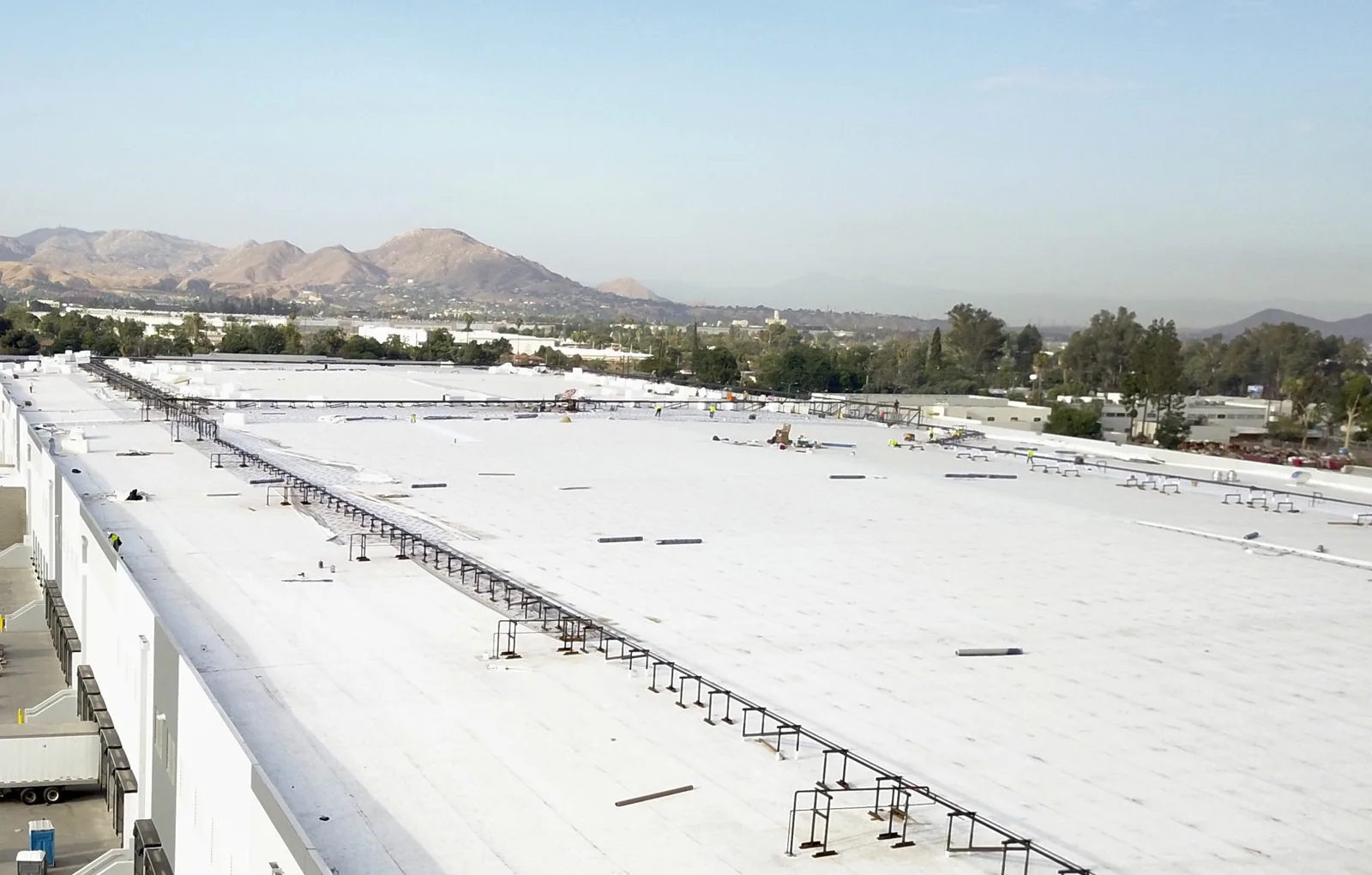
Versico roofs often arrive on a manager’s desk as a name on a warranty and nothing else. The membrane is single-ply, the seams are welded or spliced, and the building has been quiet for years, so the roof has drawn little attention. Then a monsoon cell crosses Peoria, AZ, and a corner lifts, or a curb leaks, and the question becomes how much of the roof the same weakness has reached. Versico is a single-ply roofing brand that includes VersiWeld TPO, and we install, repair, and maintain these systems with the same discipline: probe the seams, read the details, and decide whether the damage is isolated.
Read the system before choosing a repair
VersiWeld is a TPO membrane whose laps are fused by hot-air welding. Single-ply roofs from several makers resemble each other, so identification matters. We check membrane markings, thickness, reinforcement pattern, seam construction, and attachment method, whether mechanically fastened, adhered, or ballasted. Each variation carries different failure patterns and different repair requirements.
A fully adhered roof with a bond failure behaves differently from a mechanically fastened roof with fastener back-out. For general background on how welded thermoplastic sheets perform, owners can compare TPO roofing with other single-ply families, but our field findings come from the roof itself and what it shows at the seams, edges, and penetrations.
Age and exposure shape what we find. A white sheet that has weathered a number of summers often shows dirt retention and light surface wear, while a sheet with ponding shows a dark ring where water has stood. Neither finding settles the roof’s fate. We measure how much of the area is affected and compare it with seam condition, so a cosmetic issue is not mistaken for a failure and a real failure is not excused as cosmetic.
Seam width and weld edge are measured on a sample of laps, and the numbers go in the log for comparison at the next visit.
Check how the sheet is held down
Attachment determines how a roof responds to wind. A mechanically attached membrane relies on fasteners and plates in rows, and the sheet can flutter between them. A fully adhered membrane relies on bonding to the substrate and loses grip if the substrate is wet or dusty. A ballasted roof relies on weight, and displaced stone can expose the membrane.
On a monsoon-exposed roof, we look at perimeter and corner zones first, then work inward. Fastener plates that have pulled up, adhesive bleed-through, and uneven ballast all tell us how the roof has behaved in past storms. Where edge metal is loose, the edge metal and coping repair comes before any patch in the field.
Penetrations get a close look in every attachment type. A cluster of small pipes, conduit supports, and gas lines can hold more leak risk than a wide open field. Each boot, clamp, and sealant joint is checked for cracking, and pitch pockets are examined for shrinkage. We replace worn accessories with compatible products and photograph the finished detail.
Account for the Valley weather in every visit
Phoenix records count some 94 days a year reaching 100 degrees, a reading of the air that still explains why sealants and membrane surfaces never rest. Monsoon cells can bring damaging wind, microbursts, and hail according to the National Weather Service, and extensive damage followed the October 2010 supercells.
For roofs along Loop 303 and in the Arrowhead business park records, we align visits with the weather calendar: a spring review before monsoon season, and a follow-up after major storms. The Arrowhead business park district includes several park and commerce-center records, so roofs there vary in age and system, and each gets its own evidence.
The corridor study around Loop 303 covers roughly 18,300 acres and reserved 2,625 acres of its 2005 table for business park or industrial use. Those numbers describe planning, not roofs, but they signal the range of newer commercial buildings where single-ply membranes and rooftop equipment are likely to meet each other. We check each building on its own terms.
Repair, restore, or replace on documented findings
Isolated seam failures and flashing defects are repair items. Widespread seam failure, wet insulation across multiple areas, or a sheet that has lost flexibility points toward replacement. In between, a sound field with worn surface and dry insulation may be a candidate for roof coating restoration.
We document the roof with photographs and a sketch and record the repair boundary for each finding. That record helps owners explain the decision to a lender or board, and it supports the next inspection. When the findings favor replacement, we compare options and note how each choice affects drainage, insulation, and warranty terms.
Insulation and drainage belong in the same conversation. A repair that leaves a low spot where water ponds will fail again, and tapered insulation or an added drain may be the real fix. We point out those cases when the findings call for them and price the options separately so the owner can choose.
Compare Versico with other single-ply choices
Versico shares ground with other single-ply systems, including Carlisle SynTec and GAF TPO. The best choice for a building depends on roof deck, equipment, wind exposure, and expected foot traffic, not on the brand name. A roof with heavy mechanical equipment might favor a thicker membrane or added walkway pads. A roof with limited traffic may need only standard protection.
When an owner requests a comparison, we describe each option's attachment, seam method, flashing details, and maintenance needs, and we match them to the building. The point is a roof that fits how the property operates.
Warranty records should travel with whichever option is chosen. We help assemble the installation date, product documents, and repair log so the file is ready for the next owner or lender.
Commercial Roofing Questions
How can I tell if a Versico seam is failing before it leaks?
Look for lifted edges, dirt lines, wrinkles at laps, and areas where debris collects along a weld. A probe slid under the edge shows whether fusion is intact. Interior stains are a late signal. Scheduled inspections catch seam defects while they are still repairs, not leaks.
What affects how long a TPO membrane lasts in the Phoenix area?
Surface exposure, seam quality, ponding, rooftop traffic, and maintenance all matter. Heat cycles, sunlight, and monsoon storms add stress, but a well-detailed roof with clear drains tends to hold up better than one with standing water. Records of repairs and inspections give a clearer picture than age alone.
Can a Versico roof be recovered with a new layer instead of torn off?
In some cases, if the existing assembly is dry, stable, and compatible with the new attachment method. We test moisture and examine the deck at representative locations before making that call. If wet insulation or deck deterioration is found, removal is the better scope.
Do you work on Versico roofs at retail centers near Loop 101?
Yes. Retail and restaurant properties near the Loop 101, such as the open-air Park West district, need work scheduled around customer traffic and deliveries. We plan staging and roof access with the property manager and keep open areas dried in each day.
What should be on the roof sketch for a Versico roof?
Roof areas, drains, penetrations, curbs, equipment, access points, and the location of every repair. We also mark seam findings and areas with moisture. A good sketch lets any future crew find the same spot without guesswork.