
Commercial Roofing in the Arrowhead Business Park District, Peoria, AZ
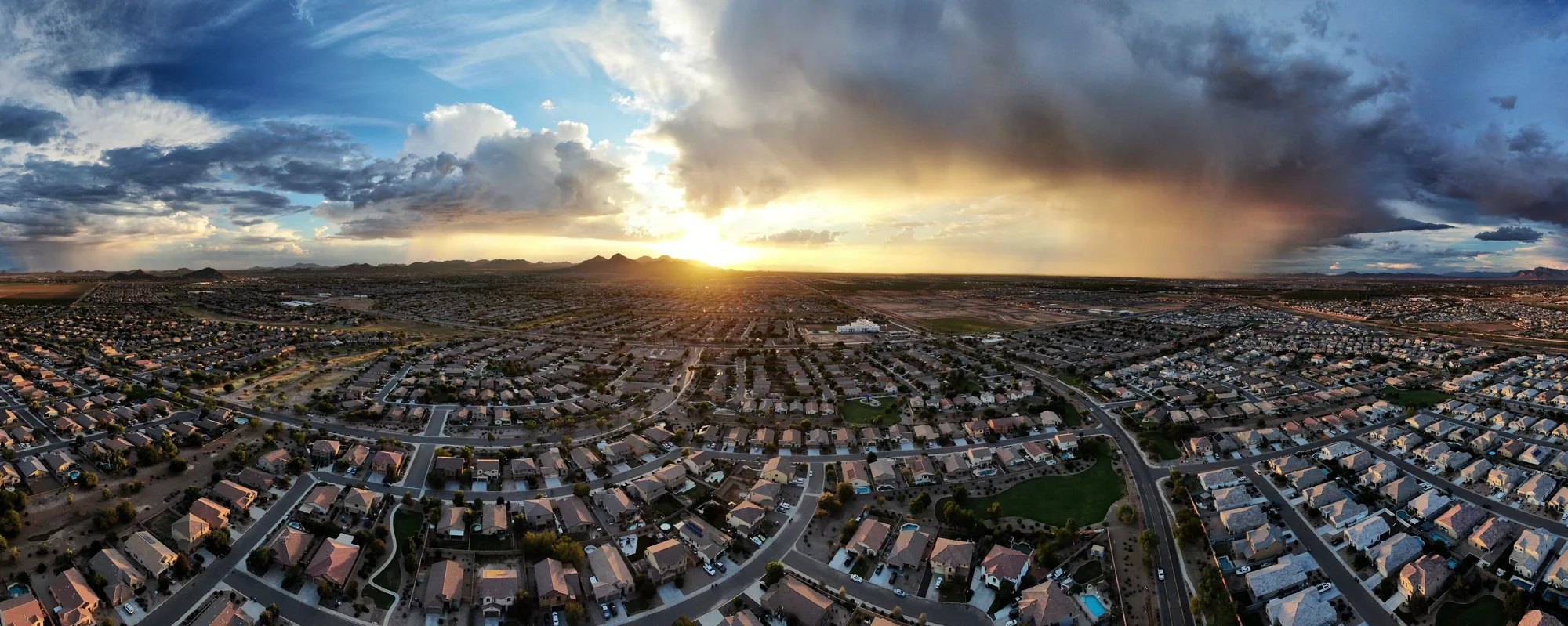
A roof shared by several owners turns a repair into a vote. Peoria's development records carry separate entries for Arrowhead Commerce Center, Arrowhead Business Park and Arrowhead Commerce Park, along with Arrowhead Ranch Business Park and Arrowhead Ranch Office Park records that include condominium and amended-parcel filings. That pattern points to a cluster of properties with different owners, associations and budgets rather than one site. For a building in this cluster in Peoria, AZ, the roof question is as much about who decides and who pays as about the membrane. We document the condition first, then lay out a repair boundary and capital window that an association board or a single owner can act on. A written roof capital plan turns the findings into a schedule.
Start with who owns which section of roof
Condominium and multi-owner business parks often treat the roof as a common element, but the exact terms live in the governing documents, not in our estimate. We ask for the declaration language on roof responsibility, any reserve study and the repair history before pricing a scope. Without that, a repair done for one unit may be disputed by the next. When a section of roof has already been patched by several different contractors, we also look for mismatched materials, because a patch that does not bond to the membrane beneath it will open again and put the next bill in front of the same board.
On the roof itself we mark which sections sit above which units and where the roof is continuous across them. A leak in one unit can start two bays away, so we trace the water path across the roof instead of stopping at the stained ceiling. That tracing gives the board a defensible description of the problem, and an infrared moisture survey shows where wet insulation extends beneath several units at once.
Check office, flex and light industrial details separately
The records identify business park, commerce park and office park properties, which suggests more than one building use. We do not assume what is on any particular roof, but we know what the uses tend to ask of one. Office buildings carry rooftop units on curbs and often have parapets with scuppers. Flex and light industrial buildings can add larger bays with long drain runs and wall-to-roof transitions at loading areas.
We check each condition on its own terms. In a flex industrial roof, the seam between a high bay and a lower office section is a frequent movement point. For an office building roof, the first checks are unit curbs, sealant and the drain path. Findings are sorted by consequence so the board or owner sees what threatens interior damage now. Items that are only cosmetic go at the bottom of the list, with a note on when they could turn into water entry.
Phase the work to match the budget year
Associations and multi-owner parks often cannot pay for a full replacement at once. A phased plan can protect the weakest sections first, repair the rest on a maintenance cycle and schedule replacement by priority. The key is writing the boundary between phases in the scope so each section has a stated condition, work and cost.
We price repair, restoration and replacement for the same roof so decision makers can compare them, and each price carries its own list of what is included, what is excluded and what condition would change it. A coating restoration may be sensible on sections with sound insulation, while sections with wet insulation need replacement. When funds are tight, we identify the sections whose failure would damage tenant spaces, and we protect those first. Deferral is a legitimate choice when the record supports it; the risk comes from deferring without knowing where the moisture is. A written deferral also lets a board show later owners that the decision was made on evidence, with a stated date to review it again.
Account for Valley heat and monsoon exposure
On an average year Phoenix records about 94 days at or above 100 degrees Fahrenheit, a measure of regional air and not of how hot a roof surface gets. Long hot periods stress seams, sealant and metal edges, and our inspection looks for splits, backed-out fasteners and shrinkage at transitions.
The Weather Service lists wind, flash flooding and hail as monsoon risks, and supercells on October 5, 2010 left large hail across the metro. For a shared roof, damage needs to be documented once and clearly, so every owner has the same record. We photograph and map the roof, separate storm damage from wear, and provide claim documentation that the association's insurer can review. Drains and overflow paths come next, because blocked outlets turn a short burst of rain into ponding. Where one drain serves roof area above several units, we note it on the map so the board knows a single clog can affect more than one tenant.
Keep a single record that outlasts any board
Boards change and managers turn over, so the roof history should live in a format that survives both. We build a record with roof sections, ages, penetrations, repairs and photographs, plus a short summary of the next decision. A preventive maintenance program adds regular visits that clear drains, check sealants and log new equipment.
Owners with buildings in other parts of Peoria can use the same record. The P83 District and the Loop 303 corridor each bring different building uses, and one format helps compare roofs across them.
Commercial Roofing Questions
Who is responsible for the roof in a condominium-style business park?
The governing documents decide, not our estimate. Many declarations treat the roof as a common element maintained from association funds, but some assign parts to individual owners. We ask for the roof language, review the repair history and then describe the condition in terms that match the document. That keeps the board and individual owners from arguing about scope.
How can a board decide between a phased repair and a full replacement?
Compare the condition record, repair frequency and moisture map. If wet insulation is limited to a few areas and the rest is sound, phased repair and coating can protect the budget. If moisture is widespread or the same details keep failing, replacement becomes the better use of money. We price both so the board can vote with real numbers.
What should an owner do when a leak appears in only one unit?
Report it to the manager with the date and location, photograph the stain and protect the contents. Then request a roof inspection that traces the water path above the unit and the bays next to it. Fixing only the stained spot can leave the real entry point unaddressed and send the leak to another unit.
Do reserve studies help with roof planning?
They do when they are current and specific. A reserve study that lists the roof by section, age and expected life gives us a starting schedule. We compare it with what the roof shows today and report where the study seems too optimistic or conservative. That comparison helps the board adjust contributions before a large expense arrives.
How is insurance documentation handled for a shared roof after hail?
We capture dated photographs and a roof map of damage areas, separate storm marks from age wear and describe necessary repairs in plain terms. The association or manager submits the claim. We provide the technical record and explain it to an adjuster when asked, but we do not decide coverage.