
Commercial Roof Fire Damage Repair in Peoria, AZ
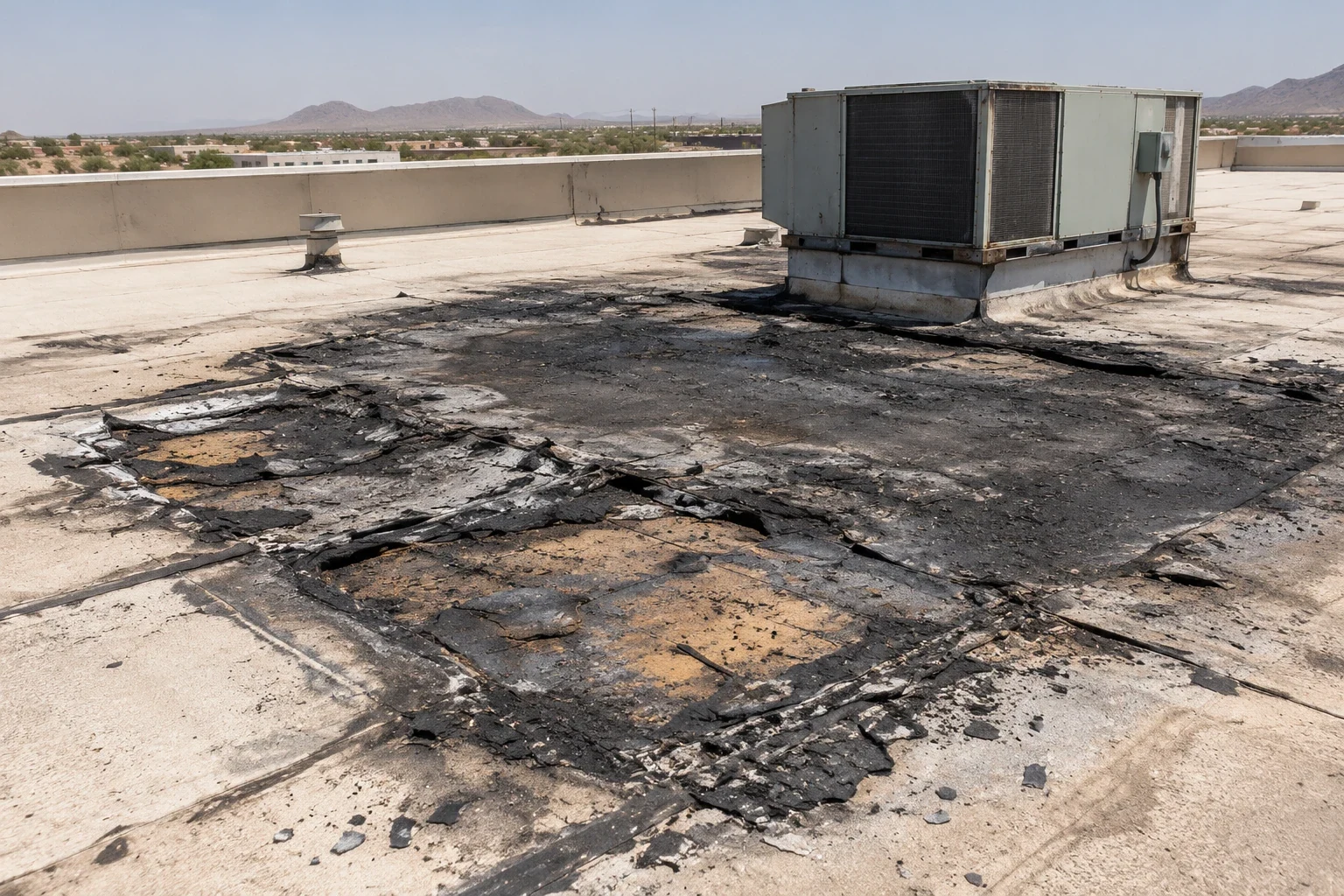
After a roof fire, the visible burn line rarely shows the full repair boundary. Heat may soften or distort membrane beyond the charred area, while suppression water can travel into insulation and interior spaces. In Peoria, AZ, a roof review must distinguish direct heat effects from water damage and from pre-existing conditions. We begin with the fire department's safe-access direction, then document the membrane, metal, curbs, drains, and deck before permanent work is priced. The owner needs a clear record of what can be repaired, what must be removed, and which areas remain inaccessible.
Set access and protection boundaries
Do not enter a roof until the incident lead or building representative confirms that access is safe. Fire-damaged framing, saturated insulation, loose equipment, or weakened deck can create hazards that a surface inspection cannot resolve. Once access is cleared, we identify hot work areas, falling debris zones, interior water collection, and any mechanical equipment that remains isolated. The repair sequence follows those boundaries rather than the exterior appearance of the burn.
We document the perimeter of the affected roof area and the path used by fire crews or suppression water. A marked plan helps separate the area that can be inspected from the area that must wait for structural or electrical clearance. The first record is not a repair promise; it is the basis for a safe, priced scope. A condition report can hold photographs, access limits, and follow-up items together.
Peoria's 2018 International Building Code, as amended by municipal ordinance, provides local code context if the response grows into a permitted repair or replacement. Requirements depend on project scope and authority review. We record the roof assembly and proposed work so the owner can coordinate that determination with the design and building teams.
Map heat damage beyond the char
Heat can change a membrane's texture, bond, and dimensional stability without leaving an obvious burn mark. We look for blistering, shrinkage, loss of adhesion, brittle reinforcement, and lifted seams. Metal flashings and supports may also warp or pull away from their fasteners. Affected details are checked one by one because a single visible burn does not establish whether nearby seams remain serviceable.
The system determines how we test and rebuild. A thermoplastic sheet, EPDM membrane, modified bitumen, built-up roof, or metal panel responds differently to heat and repair materials. We identify the installed layer before recommending patches or replacement. If bond or reinforcement is uncertain, a small test opening can show whether the material below remains intact. The inspection process should record both the observation and the method used to confirm it.
Regional Phoenix observations count about 94 days in a typical year when highs reach at least 100°F. That is an air-temperature measure, not a roof-surface reading. Fire exposure is separate, but comparing the affected area with prior roof condition and service life can help owners set a repair or replacement scope.
Track suppression water and hidden moisture
Fire suppression can wet roof layers beyond the area affected by heat. We map drains, scuppers, seams, penetrations, and interior reports against the path of water on the roof. Saturated insulation may lose thermal performance, hold water, and conceal deck deterioration. If the moisture pattern is uncertain, an infrared moisture survey can guide targeted probes. The readings are interpreted with the roof construction and a confirmed test area rather than treated as a diagnosis by themselves.
We separate wet material from areas that were merely exposed to runoff. That distinction affects tear-out, replacement layers, drying time, and the extent of temporary protection. Drain bowls, overflow routes, and scuppers are checked for debris or damage from the incident response. If a drain connection is compromised, drain and scupper repair belongs in the scope beside membrane restoration.
Peoria's Loop 303 corridor is planned as an employment-growth spine in the north of the city. That broad location can orient access planning, but it does not tell us the roof condition at an active property. We confirm equipment staging, roof entry, and operating hours with the building team.
Choose what to remove and what to retain
If damage is isolated and surrounding layers remain dry and bonded, a cut-out and compatible patch may restore the assembly. A larger area with distorted sheet, weakened reinforcement, or wet insulation may need removal to sound material. Deck damage, metal deformation, and penetrations exposed to heat should be priced separately so the owner can see the work that goes beyond membrane replacement.
We state the boundaries, materials, and assumptions behind each option. If the affected section meets a seam, curb, skylight, or wall, the new work must tie into those details without creating a second weak point. A commercial roof repair can address a confined area; a replacement scope may be more practical when heat and moisture damage extend across multiple sections.
Suppression water can also complicate insurance documentation. We photograph exposed layers and preserve dated records of temporary protection and repair work. Our claim documentation support organizes roof evidence, but the coverage decision belongs to the insurer and policy terms. The owner should retain fire-response records and construction documents alongside the roof report.
Build the next capital decision from confirmed layers
Before closing the scope, we identify materials removed, layers left in place, repair methods, and areas awaiting clearance. The report records water entry, moisture results, deck observations, and limitations. It distinguishes temporary weather protection from permanent restoration so an interim patch or tarp is not mistaken for the final disposition.
The Innovation Core planning area stretches from Loop 303 and Lake Pleasant Parkway toward State Route 74, with a mix of open space, housing, commerce, and employment uses. During a fire response, that broad land-use context is only a cue to coordinate access early; it says nothing about a specific roof. We confirm roof entry, staging, and operating hours with the building team before setting the next capital decision.
We compare fire-area findings with prior leak calls, maintenance notes, and adjacent sections. A roof capital plan can separate immediate restoration from later work. For commercial buildings in the Peoria market, share the incident date, access clearance, photographs, and roof records so we can define what the next inspection must establish. Where the same roof shows unrelated surface breakdown, heat and UV damage review separates exposure from fire effects; a wind damage review checks edge displacement.
Commercial Roofing Questions
Can the roof be inspected before the fire department clears access?
No. We wait until the incident lead or responsible building representative confirms safe entry. Structural, electrical, or equipment hazards may remain even when the roof surface appears stable. The first visit begins within the cleared area and records any zone that cannot yet be reached.
How far beyond a burned area should roof material be removed?
The boundary follows confirmed heat distortion, bond loss, moisture, and substrate condition. We test at the edge of visible damage and extend removal only where layers remain affected. The scope documents both the material removed and the dry, bonded layer where the repair ties.
Does fire suppression water require replacing the entire roof?
Not by itself. We map where water traveled and test insulation and deck where findings warrant it. Localized wet areas may be removed and rebuilt; widespread moisture or heat damage can support a larger replacement analysis. The report separates measured conditions from assumptions.
What records should an owner keep after roof fire repairs?
Keep the incident and access records, roof photographs, moisture results, material notes, temporary protection dates, and paid repair invoices. Include areas that were inaccessible or left for follow-up. A dated roof record helps the next inspection compare restored areas with the original condition.
Can a coating restore membrane that was exposed to fire?
Only after the substrate, bond, and moisture condition are known and the installed system is compatible. A coating cannot reverse heat-softened reinforcement, replace wet insulation, or repair a damaged deck. We first determine whether the affected material can remain in service.