
Commercial Roof Membrane Puncture Repair in Peoria, AZ
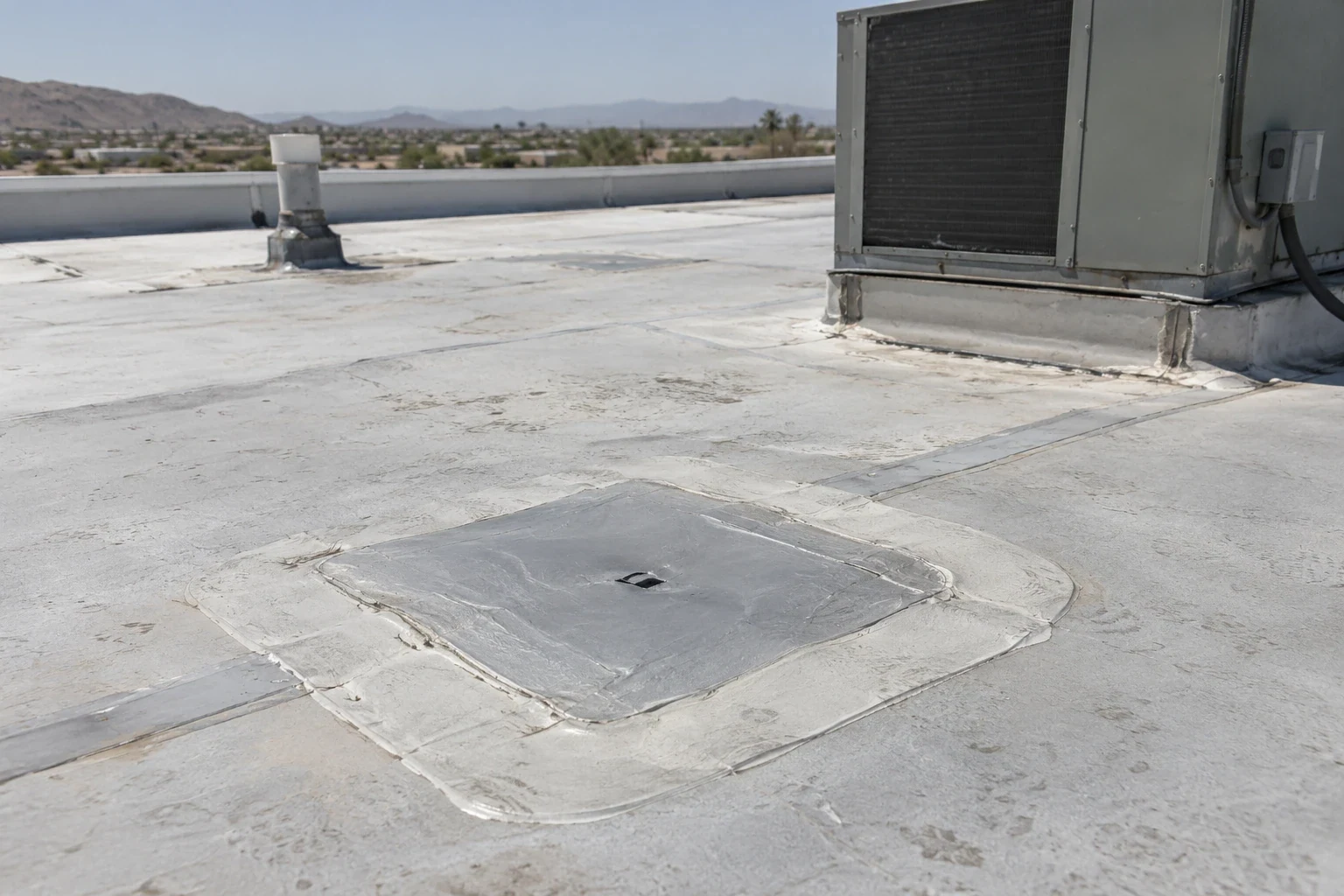
A small puncture can admit water for weeks before the interior shows a stain. In Peoria, AZ, a dropped tool, sharp fastener, or service-cart wheel can break the membrane at a walk path or equipment zone. We mark the impact, inspect the surrounding sheet, and check whether the insulation below has taken on moisture. The useful decision is not only how to seal the opening, but whether the area around it still supports a local repair. The answer comes from the roof layers, traffic pattern, and repair history rather than the size of the visible mark.
Find the puncture and its path
Some punctures are obvious: a screw, dropped bit, or torn corner remains at the surface. Others appear as a pinhole or scuff that opens under foot pressure. We record the point and inspect for cuts, displaced granules, delamination, cracked coating, or a stretched sheet. If the penetration is near a curb or flashing, we check that transition as well; a small tear beside a loose detail may be part of a larger movement pattern.
The interior leak location may not line up with the impact. Water can travel along insulation joints or deck flutes, then show at a ceiling well away from the hole. We compare the roof mark with interior reports and use moisture checks when needed. The infrared survey helps identify areas for confirmation, while a focused leak repair review connects the roof finding to the water path.
Peoria's Loop 303 planning corridor links commercial and employment areas through several service interchanges. For buildings with active loading or deliveries, access planning can affect where a lift or repair materials are staged. That corridor context does not tell us what caused a puncture; the impact location and the condition of the membrane do.
Separate isolated impact from a worn route
A puncture can be one-time damage or a clue that people or equipment repeatedly cross an unprotected path. We ask who needs roof access and what tasks bring them there, then map walk routes around HVAC units, drains, solar equipment, and service connections. Repeated abrasion may require walk pads or a protected route after the opening is repaired. Without addressing traffic, a new patch can be exposed to the same pressure and sharp edges.
On a single-ply system, the repair may use a compatible patch with rounded corners, clean preparation, and a sealed perimeter. Modified bitumen, built-up roofs, metal, and spray foam require different materials and methods. We identify the assembly first and avoid a repair product that can soften, wrinkle, or fail to bond with the existing surface. The TPO system details differ from a rubber membrane roof, so material selection follows the roof rather than a general patch kit.
Park West is a broad retail and dining district beside Loop 101 at Northern Avenue. Where a building operates among customers, restaurant deliveries, and other tenants, work access may need a short, clearly marked route. We plan around the actual property entrance and roof path, not the district name alone.
Check the layers before closing the repair
If water has entered the assembly, sealing only the top sheet can trap a wet area. We inspect the insulation and cover board around the puncture, widen the opening only as needed, and keep a clear record of what was dry or wet. A small opening over dry material may support a simple repair. A puncture above wet insulation may require replacement of affected layers and a larger membrane tie-in.
We also check for deck damage, corrosion, or a soft spot that could make the membrane flex. That condition changes how a patch behaves and whether a larger repair is needed. Our report identifies the confirmed layer condition separately from suspected spread, then records any area that could not be opened. This helps the owner compare a limited repair with the cost and disruption of additional investigation.
When hail is involved, multiple impact marks may appear across a wider field. NWS Phoenix documented large hail across the Phoenix Metropolitan Area on October 5, 2010, after supercells crossed the area. That event is regional history, not evidence that a specific roof was struck. For a current event, we map each confirmed impact and can compare it with the hail damage review. Wind-related lifted edges are checked through a separate wind damage review so each repair follows its own failure point.
Choose the repair width and protection
A repair boundary should include the damaged membrane, sound material for the tie-in, and any wet insulation that must be removed. We photograph the area before cutting, then show the layers as the work proceeds. If the puncture sits at a seam or flashing, we extend the scope only enough to rebuild that transition. A broad coating over the area is not a substitute for a bonded patch, clean substrate, or dry insulation.
Cost follows repair size, assembly type, access, wet materials, and whether a mechanical trade must move equipment. Timing can also depend on heat, wind, and surface moisture because bonding and welding require suitable conditions. The estimate should state the weather assumption and any temporary protection needed if permanent work cannot be completed on the same visit.
A roof with repeated foot-traffic damage may be better served by a route change and protection than recurring individual patches. We compare the map with preventive roof maintenance findings and the prior repair record. If the surface is broadly worn, coating restoration may be considered only after adhesion, moisture, and system compatibility are checked.
Make the puncture visible in the asset record
Keep the impact location, likely cause, repair materials, moisture findings, and photographs in one entry. If a vendor or building technician needs roof access again, the owner can identify the safe path and avoid placing equipment across a repaired area. A note that says only “patch completed” leaves out the information needed to prevent recurrence.
Loop 303's north Peoria corridor is planned for employment and commercial growth, but the roof record belongs to each property. We do not infer its condition from a planned land-use mix. A roof condition report can connect the puncture with drains, seams, and other repairs, while a Peoria roof review keeps the next inspection tied to the actual building.
Send the repair history, photos, or a marked roof plan and we will compare them with a focused inspection. The scope should show whether this is a one-point repair, a moisture removal job, or a traffic-control issue. That distinction gives the owner a defensible next step without turning one puncture into a replacement recommendation.
Commercial Roofing Questions
Can a small puncture cause a leak far from where it appears?
It can. Water may move through insulation joints or deck flutes before it reaches an interior finish. We map both locations and check the layers between them so the repair is placed at the entry point rather than the stain alone.
How do you determine whether insulation below a puncture is wet?
We compare the impact with interior reports and moisture readings, then open a test area when the assembly requires confirmation. The work record separates wet material from areas that remain uncertain, which sets the tear-out and patch boundary.
Should a roof patch be installed over a puncture beside a seam?
Only after we check whether the seam has lost bond and whether the adjacent sheet is sound. A patch must tie into clean, compatible material. If the seam is also failing, the scope should rebuild the connection rather than cover both conditions with one surface layer.
What prevents another puncture on a frequently used roof path?
Map the service route and protect it with suitable walk pads or a changed access path. The repair record should note the equipment or task that uses the area so future work does not repeat the same impact.
Does a hail mark prove the membrane is punctured?
No. We inspect and record the actual condition, including whether the surface is split, bruised, displaced, or intact. Current findings need to be distinguished from older marks and from damage associated with foot traffic or dropped materials.