
Roof Seam Failure Repair in Peoria, AZ
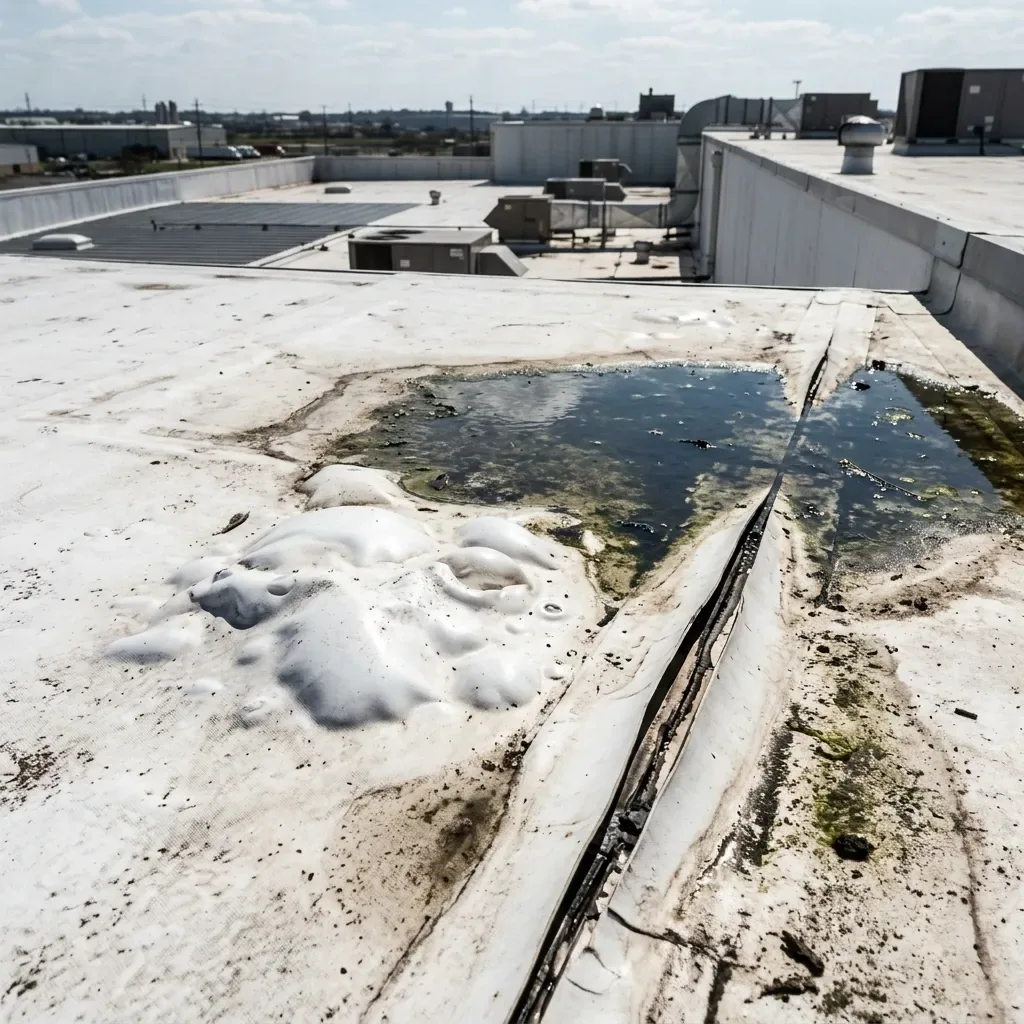
A seam can look closed at one end while a narrow opening lets water travel beneath the sheet. In Peoria, AZ, repeated heat movement can stress a lap before a short-burst storm tests its bond. Historical Phoenix observations count about 94 calendar days each year with a high reaching 100°F; that measures ambient air, not a roof surface. We use the fact to frame exposure, then inspect the actual seam, adhesive or weld, and substrate. The repair decision turns on whether the opening is local, whether moisture has moved under it, and whether the surrounding sheet can hold a lasting tie-in.
Locate the first loss of bond
On a single-ply roof, a seam may release because of contamination, poor weld conditions, movement, or a detail that was never fully bonded. We look for fishmouths, cold welds, open T-joints, wrinkles, and dirt trapped at the lap. The visible split is marked before any material is cut away. That helps distinguish the initial failure from secondary damage caused by water, foot traffic, or a previous patch.
Different assemblies need different tests. A technician can probe a welded TPO or PVC seam, inspect adhesive transfer at an EPDM lap, or check the overlap and bleed-out of modified bitumen. We identify the system and its condition before selecting cleaner, primer, cover strip, or torch work. The general commercial roof inspection can establish whether failures repeat across sections, while a focused roof repair addresses a defined seam boundary.
At an edge or curb, the seam may be carrying tension from metal movement or an adjacent penetration. We examine that connection rather than laying a new strip over an active pull. Where the separation reaches a flashing, the flashing failure repair should document how the two details meet.
Check what the open lap allowed through
A dry surface does not establish that insulation below the seam is dry. We compare the opening with interior reports and look for discoloration, soft spots, or water tracking along the deck. If the path remains uncertain, an infrared moisture survey can identify areas for confirmation. Targeted probes show whether the repair should stay at the seam or extend into wet insulation and the affected cover board.
The repair record should separate confirmed wet material from suspected spread. That distinction affects tear-out, disposal, replacement layers, and how long the roof must remain open. It also protects the owner from paying for a broad replacement based on a narrow visible split, or from accepting a small patch when moisture has traveled farther than the seam.
Peoria's monsoon pattern can bring damaging winds, microbursts, and hail across the low deserts. A storm may expose a seam that was already weak, or add a new puncture nearby. We compare dated roof photos when available, then record whether the lap is the only failure. If standing water is part of the same area, the separate ponding water review addresses slope and drain conditions rather than treating water as proof of seam failure.
Rebuild the lap with a compatible method
When surrounding membrane is serviceable, the repair may involve cleaning, preparing, and resealing the seam with materials compatible with the installed system. A loose or degraded strip may need removal and replacement rather than another layer on top. We extend the repair past the compromised bond to a tested, sound area and check the finished connection along its length. A short patch over a longer separation invites the same water path to return at the next unbonded point.
For modified bitumen or built-up roofs, the lap configuration and asphalt condition govern how a repair is heated or reinforced. For metal roofs, a failed side lap or fastener line may require a different approach from a membrane seam. We note the system, repair material, surface preparation, and whether temperature or moisture constrained the work. This creates a useful record for future inspections and avoids assuming that one detail method fits every roof.
Cost depends on access, the amount of failed seam, wet insulation, material availability, and whether equipment must be moved. Repairing one lap is usually different from correcting a repeated bond problem across multiple roof sections. If tests show broad deterioration, replacement planning can be compared with a repair program using the same condition map.
Tie the seam repair to the roof history
A seam that has been patched more than once needs a history, not another isolated invoice. We record its location, length, system type, repair date, and whether moisture was found below. That entry can be compared with later inspections to see if the bond remains sound or if failures are shifting to a different lap. Repeat openings along one run may point to movement or system-wide aging; separated defects may support local repair.
Peoria's P83 District is described as a mixed-use area near Loop 101 and Bell Road, with commercial and employment uses among its planned functions. That context does not establish the age or assembly of any individual roof. It does underline why work staging and interior protection may need to fit an active property. We confirm access, loading, air intakes, and occupied areas with the building team before opening the roof.
The city adopted the 2018 International Building Code with local amendments. Where a seam repair grows into a larger permitted project, the owner can confirm applicable requirements for that scope. We do not infer an approval from the roof condition; the estimate states the work and the assumptions behind it.
Set a boundary the next inspection can verify
A clear closeout identifies the seam repaired, adjacent transitions checked, materials installed, and areas left for follow-up. If the repair could not be tested because the roof was wet or access was restricted, the record should say so and name the next check. A later inspection then has a specific point to verify rather than a vague note that the roof was repaired.
For owners with separate properties in Peoria or Glendale, consistent seam records make portfolio comparisons possible without assuming that roofs match. We keep each building's assembly, repair history, and leak map distinct. A roof condition report can put the seam findings beside other sections when a capital decision is approaching.
Send photos, prior repair notes, or leak locations and we will compare them with a focused roof review. The scope should make clear whether the seam can be rebuilt locally, whether moisture changes the boundary, or whether repeated failures have moved the roof toward a larger decision.
Commercial Roofing Questions
How do you know whether a seam is actually open?
We inspect the lap along its length and use a probe or system-appropriate test to find loss of bond. The surface is photographed before preparation, and we check nearby T-joints and terminations so the repair does not stop at the first visible split.
Can a seam be repaired if water has reached insulation?
Yes, but the scope must include the wet material and restore the assembly below the membrane. We map the confirmed moisture boundary and tie the new seam work into sound material. A surface repair alone would leave the underlying condition in place.
Does a seam failure mean the whole roof has reached the end of its life?
One seam does not answer that. The decision depends on how many laps are affected, whether bond loss repeats, moisture findings, and prior repairs. We document the section and compare it with the rest of the roof before recommending local work or a broader plan.
Will a coating stop an open seam from leaking?
A coating should not be used to bridge an unprepared opening. The seam needs a compatible repair and sound substrate first; wet insulation and failed flashing need separate attention. A coating may be considered later if the system and surface condition support it.
What should the owner keep after the seam is repaired?
Keep the marked roof plan, before-and-after photos, system and material notes, moisture findings, and any access limits. Those details let a later inspection check whether the same bond held and whether adjacent laps need attention.