Rooftop Equipment Curbs and Supports in Peoria, AZ
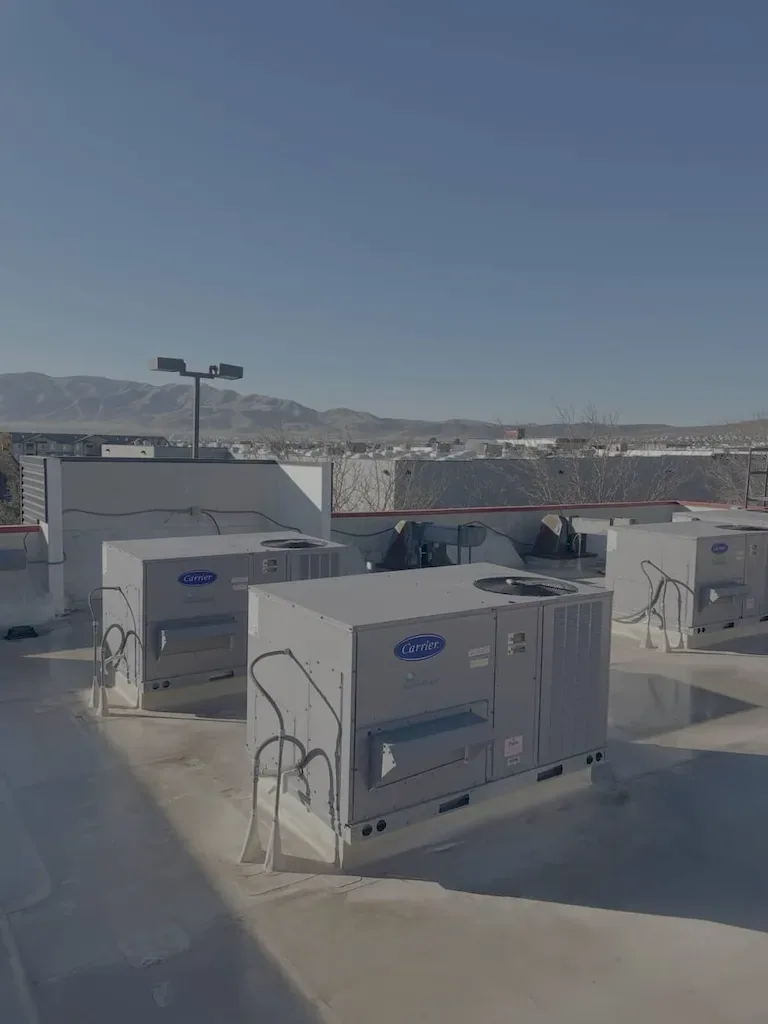
A curb can hold an HVAC unit in place while its flashing begins to separate from the roof. The leak may appear well away from that opening, especially where insulation and deck channels carry water. In Peoria, AZ, repeated heat exposure and monsoon wind make curb corners, pipe supports, and service paths worth checking together. We inspect the membrane, fasteners, metal, and equipment movement before recommending a patch or rebuild. A commercial roof inspection ties each opening to the roof map and prior repair history. The owner should know which support is moving, whether the curb remains sound, and what detail needs to change before the next service visit.
Find what is moving at the curb
Equipment vibration, thermal movement, and repeated service access can stress the junction between a curb and membrane. We look for split corners, loose counterflashing, fastener withdrawal, open seams, and sealant that has stopped bridging the joint. A surface bead may hide the path without restoring the connection. We trace water toward the opening and inspect the curb faces, base flashing, and nearby field seams. If the curb itself is deteriorated or the unit sits unevenly, membrane repair alone will not resolve the load or movement.
North of the city, the Loop 303 corridor is mapped for jobs, shopping, housing, and open land. A land-use map says nothing about the equipment on any particular roof. For owners comparing facilities in the Peoria Innovation Core, we document each curb and support by roof area rather than assume similar equipment layouts. A condition report records the defect, the repair boundary, and any follow-up inspection needed.
Separate the support from the flashing
Pipe stands and equipment rails need a stable bearing point that does not cut or crush the membrane beneath them. We inspect the base, attachment, pad, and flashing as one detail. Movement in a loose support can keep opening a pipe boot after resealing. A rail that concentrates weight on soft insulation can create a low area. We identify whether the support can remain, should be reset, or needs mechanical coordination before the roof is closed.
Commercial planning along Loop 303 includes business park, industrial, and community-commercial designations. Those planned uses do not prove a specific building has particular equipment. We check the actual access route and note where technicians step, stage tools, or disconnect lines. If the perimeter also needs work, coping and edge-metal repair can be coordinated with the curb detail.
Rebuild the water seal by roof system
The flashing method depends on the membrane and curb geometry. We prepare the surface, remove failed material, reinforce corners where the system calls for it, and install compatible flashing from curb to field. A counterflashing receiver may need to be reset first. On a single-ply roof, the weld or adhesive must match the product and substrate. Built-up layers and surfacing change how that repair is tied in, so we check the installed assembly before choosing a detail.
Where a unit has been replaced, we compare its footprint with the existing curb. A size change can expose fastener lines or leave a gap. Our TPO repair approach follows the installed membrane, while a penetration flashing review can address pipe boots and nearby openings. The scope states what will be removed and what remains.
Keep water and service paths clear
Curbs alter the roof plane. A cricket may be needed behind a wide unit, and a drain path must remain open after flashing is rebuilt. We note ponding at the curb, debris trapped behind supports, and any roof surface compressed by repeated foot traffic. If the low area persists after outlets are clear, adding sealant at the curb will not improve drainage. A drainage review can establish whether slope correction belongs in the same project or should remain a separate scope.
Park West is an open-air retail and dining district with multiple businesses, set beside Loop 101 at Northern Avenue. That district context makes rooftop equipment access relevant to active commercial operations, but each building has its own service route and drainage arrangement. We photograph the curb from each side and keep the work area clear of mechanical access points. The owner can then plan future visits without cutting across a newly repaired membrane.
Coordinate the roof and mechanical trades
Some curb repairs can proceed with equipment in place. Others require a mechanical contractor to disconnect lines, lift a unit, or reset a support. We identify that boundary before mobilization and state who must protect or reconnect each system. A temporary opening needs a dry-in plan before work begins, especially when the building cannot tolerate interior water. We schedule removal and restoration as a controlled sequence, then verify flashing and attachment before equipment returns to service.
Camino a Lago is an adopted north Peoria plan with a commercial core set at Lake Pleasant Parkway and Deer Valley Road. A plan says little about any one tenant schedule, so we confirm loading hours, roof access, and critical equipment with the facility contact. For occupied properties, the work sequence can separate roof access from interior operations. The written scope also identifies conditions that could change the sequence, such as a damaged curb or unexpected wet insulation.
Keep each curb in the roof history
After repair, we record the unit or pipe location, material used, fasteners or welds addressed, and any area that needs observation. Photos show corners and the transition into the field, not only a wide view of the rooftop. If a curb was left in place, the record explains why it remains suitable for the repair. If mechanical work is pending, we note the return visit needed to finish the flashing. That detail helps the owner distinguish a completed roof repair from a coordinated item that still needs a trade partner.
Surprise City Center is a downtown development area where commercial service, healthcare, hotel, retail, and residential blocks sit side by side. The building mix does not establish roof conditions, but it underscores why an asset record should stay specific to each roof. We close with a repair boundary and a next step: monitor, test, coordinate, or defer.
Commercial Roofing Questions
Can a leaking curb be repaired without moving the rooftop unit?
Often, when the curb is sound and the membrane can be restored around it. We inspect access, corners, curb height, and the existing flashing before deciding. If the unit blocks a failed transition or its support has shifted, mechanical coordination may be needed. The scope identifies which condition controls before work is scheduled.
Why does water show up far from the equipment curb?
Roof insulation and deck flutes can carry water away from the opening. We compare interior marks with roof seams, curb corners, drains, and the path water could follow. A moisture survey may help define an area for testing, but any test opening is tied to the assembly. The repair should follow the confirmed entry point, not just the ceiling stain.
Do pipe supports need flashing too?
Yes, where a support penetrates or bears through the membrane, its base and the surrounding seal must remain watertight. We check whether the stand moves, whether a pad protects the roof, and whether the boot fits the pipe. If the support is unstable, resetting the base may be more useful than renewing the boot alone.
What changes when a replacement unit has a different footprint?
A different curb size can expose old fasteners, leave a gap, or shift the flashing line. We compare the curb and membrane before the unit is set, then identify any added metal or membrane work. Mechanical and roofing scopes need to agree on the final curb position so the water seal can be rebuilt once.
Can curb repairs be included with a roof replacement?
They can be addressed in the same project if the equipment schedule and roof scope allow it. We document which curbs remain, which require rebuilding, and what coordination must happen before tear-off reaches that area. This gives the owner a single transition plan while keeping mechanical changes visible in the budget and schedule.