
Commercial Skylight and Penetration Flashing in Peoria, AZ
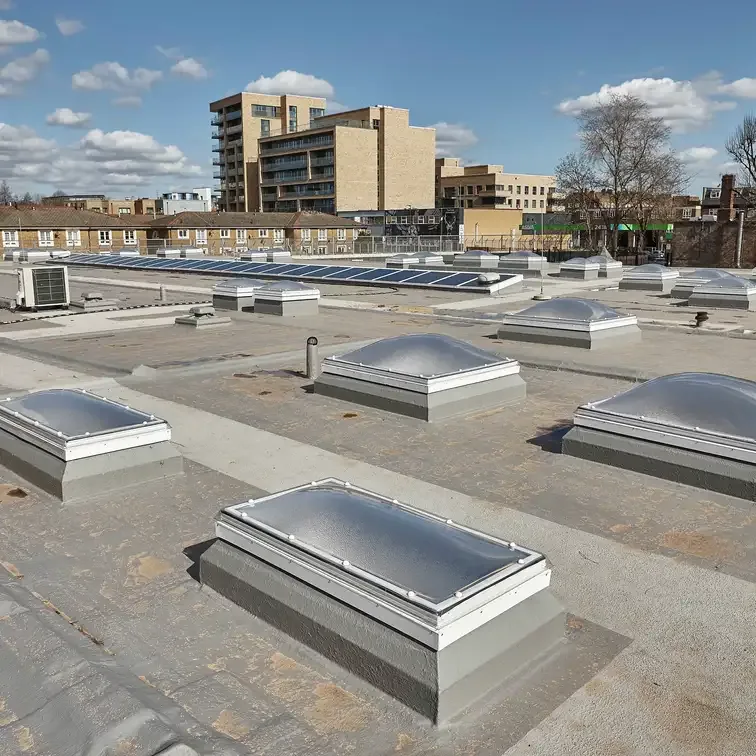
A roof opening concentrates water, movement, and maintenance activity at one detail. In Peoria, AZ, heat cycling and monsoon wind can test skylight curbs, pipe boots, equipment penetrations, and their membrane transitions. We inspect the curb, flashing, seal, and surrounding roof surface to determine whether water enters at the opening or travels from another area. The repair should restore the entire transition, not place another bead on the visible edge. We document each opening by roof area and note whether replacement, flashing repair, or additional moisture testing is justified.
Inspect the opening from membrane to curb
We check the flashing height, curb corners, termination, fasteners, and membrane tie-in. A skylight may show cracked sealant or a loose frame, while a pipe penetration can have a split boot or unsupported line. Equipment curbs need attention where vibration, service access, or added piping stresses the flashing. We also look at the roof field around the opening for ponding or surface damage that could feed the leak. A failed seal is not always the entry point, so we compare the detail with the reported water path before deciding how far to open the assembly.
Peoria’s Loop 303 planning includes business, industrial, and commercial areas, where roof equipment and system transitions can vary by building. The planned land use is not evidence of any particular curb or roof assembly; we inspect the actual property. A hands-on roof inspection can identify nearby failures before a flashing repair is approved. We label each opening so later maintenance can compare the same curb or penetration rather than rely on memory.
Trace water around the curb and roof field
Water may enter at a curb corner, travel along a membrane seam, or follow a pipe toward a different interior point. We inspect upslope and downslope surfaces, nearby laps, and the underside of accessible flashing. If several openings sit close together, we check whether a shared low area or repair seam is the actual source. A targeted water test may be considered when it can isolate a question safely. We do not flood a roof or disturb an operating system without a clear test plan and authorization.
At a property near P83, entertainment, hospitality, and employment uses may require coordination with customers, deliveries, and operating equipment. The city identifies P83 as a broad district near Loop 101 and Bell Road, but the roof condition remains property-specific. We coordinate access around the active building and protect areas below. For water entry at a curb, a leak tracing visit can compare the interior report with the roof opening and any adjoining seam.
Match flashing repair to the roof system
The correct flashing method depends on the membrane and the opening. A single-ply system may need a compatible boot, reinforced membrane, or welded transition. A metal roof may require a formed curb detail that allows panel movement. A coated roof can need a compatible flashing fabric and coating. We identify the assembly first and prepare sound material around the opening. If the curb itself is damaged, replacing flashing alone may leave an unstable transition. The repair description names the component being restored and the adjacent surface that needs preparation.
Peoria adopts the 2018 International Building Code as amended by ordinance, and energy-efficient design is governed by the International Energy Conservation Code. For a skylight replacement or reroof, the project team confirms the edition in force with the city. We avoid assuming an existing opening can be raised, covered, or reused without review. A TPO flashing detail or metal roof curb transition should be selected for the actual assembly.
Decide when an opening needs replacement
A skylight or curb may be beyond a local seal repair when the frame is cracked, the curb has deteriorated, fasteners will not hold, or repeated water entry has affected surrounding materials. We inspect visible condition and explain what would need removal to confirm concealed layers. If the opening is sound but the flashing is loose, a targeted rebuild may be appropriate. If moisture extends past the detail, we map the suspected area and use testing where it changes the scope. A moisture survey can help define the repair boundary.
Monsoon guidance for Arizona describes damaging winds and microbursts, while hail and flash flooding are possible regional impacts. Those conditions can bring attention to roof openings, but the evidence comes from the observed curb, membrane, and interior report. Near Park West, the owner may need a work window that avoids busy entrances and tenant activity. We stage materials and protect the space below. If an urgent leak is active, temporary protection can precede the permanent curb repair.
Coordinate roof access with building systems
Many penetrations serve equipment that must remain available. We confirm whether HVAC, electrical, plumbing, or other trades need the roof opening during the repair and coordinate a safe service window. Lines and supports should be protected from disturbance, and any temporary disconnection must be approved by the responsible trade. We define where the crew can work and how equipment access will be restored. The roof flashing cannot be considered complete if another service visit immediately disturbs the new detail.
A property near Camino a Lago may be within a planned commercial area, but our work plan uses the existing site layout and operating contact. We keep the roof area clean, secure loose components, and inspect the completed transition. If the opening needs a larger roof section repaired, we can combine the detail with membrane repair or include it in a replacement scope if the broader assembly warrants it.
Track every roof opening after repair
Closeout records the opening type, roof section, flashing method, and any limits on inspection. Photos show the curb corners and membrane transition after the repair. During future maintenance, we can compare the same details for movement, cracking, loose fasteners, or new water tracks. If the roof has many curbs, a map is more useful than a note saying only that penetrations were checked. The property team can connect equipment service with roof inspections and reduce the chance that a mechanical visit leaves a new opening.
For an owner with buildings in Peoria and Surprise, each opening record stays assigned to the roof where it was inspected. Surprise City Center includes commercial, service, healthcare, retail, and employment uses across multiple blocks, but those district facts do not establish a specific building’s roof design. We use the actual system and maintenance history. A scheduled maintenance program can keep curbs and penetrations on the inspection route.
Commercial Roofing Questions
Can you repair a skylight leak without replacing the skylight?
Yes, when the frame, curb, and surrounding substrate remain suitable and the flashing is the failed component. We inspect the whole transition before choosing a repair. If the frame is damaged or water has reached concealed materials, replacement or additional testing may be needed.
Why does a leak appear beside the skylight rather than below it?
Water can move along the roof assembly before reaching the interior. We check upslope seams, curb corners, nearby penetrations, and the reported area to find a matching path. A stain near an opening is a useful clue, but the roof inspection determines the repair point.
Will you disconnect rooftop equipment for flashing work?
We coordinate with the building contact and the trade responsible for the equipment. Any disconnection or service window must be approved by that trade. We protect lines and supports, complete the flashing transition, and arrange access so new work is not disturbed.
Can you add flashing over an old repair?
Only when the existing materials are sound enough to prepare and the new detail is compatible with the roof system. Loose coating, wet insulation, or repeated patches may need removal before a lasting repair can be built. We document what must be exposed and corrected.
What should our team check after repair?
Keep the closeout photos and watch for new water tracks, loose fasteners, cracked flashing, or changes after equipment service. A later inspection can compare the same curb corners and membrane tie-in. If the roof system or equipment changes, the transition should be reviewed again.