Roof Warranty Management in Peoria, AZ
A warranty can be voided by a repair that fixed the leak. That is the quiet risk in a roof file: someone patches a seam with the wrong sealant, adds a rooftop unit without notifying the manufacturer, or lets a service contractor walk the membrane in the wrong places, and the coverage the owner is counting on no longer applies. In Peoria, AZ, long heat cycles and monsoon storms generate exactly the kind of repairs and rooftop changes that put a warranty file at risk. Warranty management treats the paper as part of the roof. We read the terms, record what the roof has been through, and route repairs and new penetrations so the file stays intact.
Read the terms before the first repair
Manufacturer warranties vary in what they cover, what they exclude, and what the owner must do to keep them. Some address material defects only. Others add workmanship coverage by the installing contractor. Many exclude storm damage above a stated wind speed, ponding beyond a set depth, damage from other trades, and conditions caused by neglected maintenance. Reading the document is the first step, and the terms should be summarized in plain language and stored with the roof record.
We extract the items that affect field decisions: required notice periods, approved repair methods, maintenance duties, restrictions on penetrations, and what documentation the issuer expects after a leak. Those points are written on the roof sketch or the maintenance log so that anyone sent to the roof knows the rules before they open a toolbox.
The roof sketch carries a second layer of information: which areas are covered by the original warranty, which were added later under a different document, and which fall outside any coverage. Older additions are the usual gap. A building that grew in two phases may have a membrane under warranty on one side and an expired or unknown status on the other, and repair choices should follow that boundary.
Route every repair through the file
The simplest warranty protection is a repair routine. Before work starts, we check whether the roof is under coverage and what the manufacturer requires. Repairs use compatible materials and methods for the membrane type, whether that is a heat-welded patch on a TPO roof or a compatible repair on a different system. After the work, we photograph the repair, log the date and location, and record the materials used.
Where a leak calls for notice to the issuer, we help assemble the description, photographs, and prior maintenance entries. Fast notice matters because many warranties set a window for reporting a defect. Our commercial roof leak repair work follows the same discipline, so an emergency call does not leave a gap in the record.
Heat adds a practical constraint. Hot membranes soften, adhesives flash off quickly, and welding windows narrow in the afternoon, so repair timing affects whether the work meets the manufacturer procedure. We schedule covered repairs for conditions that let the product perform as specified, and we note the conditions in the log.
Control what is added to the roof after installation
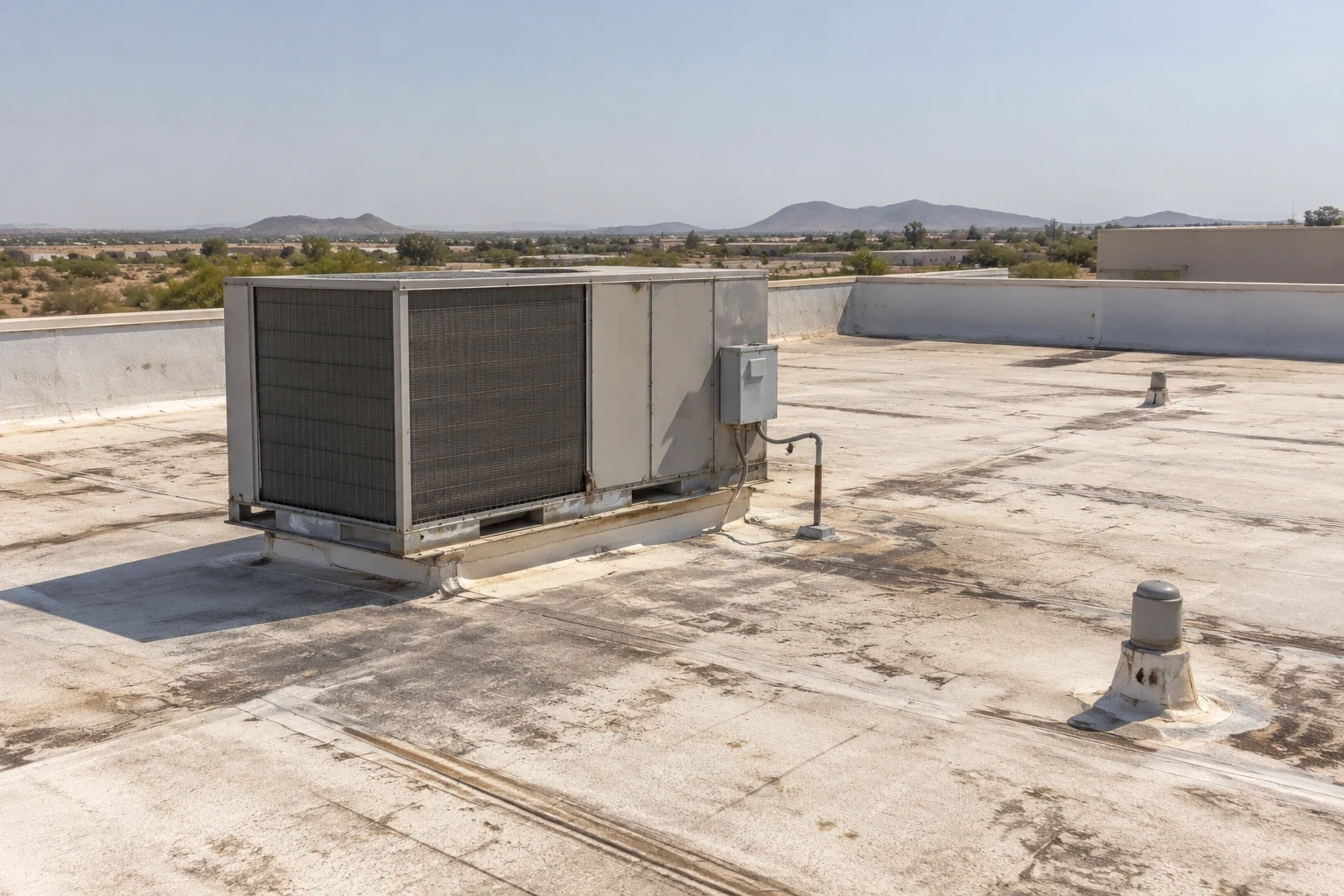
The most common warranty problem is not a membrane defect. It is the new satellite dish, solar array, exhaust fan, or tenant mechanical unit installed by someone else. Each adds penetrations, foot traffic, and flashing details that the original warranty may not contemplate. Some issuers require notification, an inspection, or a repair by an approved party before changes are made.
We recommend a simple rule for property managers: no rooftop work without a call to the roof file. That call identifies whether the change affects coverage, how the penetrations should be flashed, and whether protective walkway pads are needed. For solar projects, the solar-ready roofing planning step is the place to settle attachment methods and warranty implications before any hardware arrives.
Walkway pads, curb heights, and flashing terminations belong on the same checklist. A properly flashed unit installed by a competent trade still needs a record entry, and the entry is what an issuer will ask to see.
Respond to monsoon and hail events with the warranty in mind
Wind, hail, and flash flooding are the monsoon hazards the National Weather Service associates with the Phoenix area, and large hail from supercells in October 2010 left the metro with extensive damage. Warranty language often treats storm damage differently from defects: wind or hail above a threshold may fall outside manufacturer coverage and into an insurance claim, while a seam failure in moderate weather may belong with the manufacturer or the installer.
After a storm we document conditions on the roof before temporary repairs hide the evidence, and we sort findings into likely warranty items, likely insurance items, and maintenance items. That sorting saves time with both parties. Owners who work with roof insurance claim assistance alongside warranty notice keep the two tracks from contradicting each other.
Carry the warranty through a sale or lease change
Warranties may be transferable, but usually only with notice, an inspection, or a fee, and sometimes with limits on remaining term. A buyer in the Arrowhead business park cluster or in the P83 district near Bell Road will ask for the warranty file as part of a closing review. If transfer steps were missed, coverage that appeared to exist may not.
We help owners confirm transfer requirements early, assemble the roof history that supports a request, and flag open repair items that could complicate the process. Buyers in need of a pre-closing review can combine that work with due diligence roof surveys so the warranty position is part of the same report. For ongoing owners, the roof asset record keeps the terms next to the condition data they govern.
Commercial Roofing Questions
Does a small patch by my maintenance staff affect the roof warranty?
It can. Many warranties name approved repair methods and materials, and a patch with the wrong sealant or an incompatible membrane can create a reason to deny coverage later. Before staff touch a covered roof, check the terms. Where a repair is routine, we can write a short procedure for your team that matches the manufacturer requirements for your membrane.
What should be in the file if a leak starts during monsoon season?
Dated photographs of the interior and the roof, the weather on the day of the leak, any prior repairs at that location, and the most recent maintenance record. Many issuers want notice within a stated period, so a complete package submitted promptly carries more weight than a late description. We build the package while the roof conditions are still visible.
Can a coating restoration extend or replace an existing warranty?
A restoration usually carries its own terms, and the existing manufacturer warranty may be affected by the work. The old issuer may require notice before coating or may exclude coated areas going forward. Check the original terms before committing, and we can compare them with the restoration system warranty so the owner sees which coverage applies after the work.
How do maintenance duties tie into the warranty?
Most warranties expect the owner to keep drains clear, limit rooftop traffic, and report damage. Missing records can weaken a claim even if the failure is not related to the neglect. Scheduled visits under a preventive maintenance plan create the evidence: cleaned drains, photographed seams, and logged repairs.
What happens to the warranty when a tenant adds equipment on an open-air retail roof like Park West?
The addition is a roof change, and the warranty terms may require notice or an approved contractor for flashing. Tenant turnover in retail and dining space brings new exhaust or HVAC equipment, which makes rooftop approvals a standing item. We recommend a written rule in the lease or property rules that routes rooftop work to the property manager before anyone drills.