
Commercial Roofing in Wickenburg, AZ
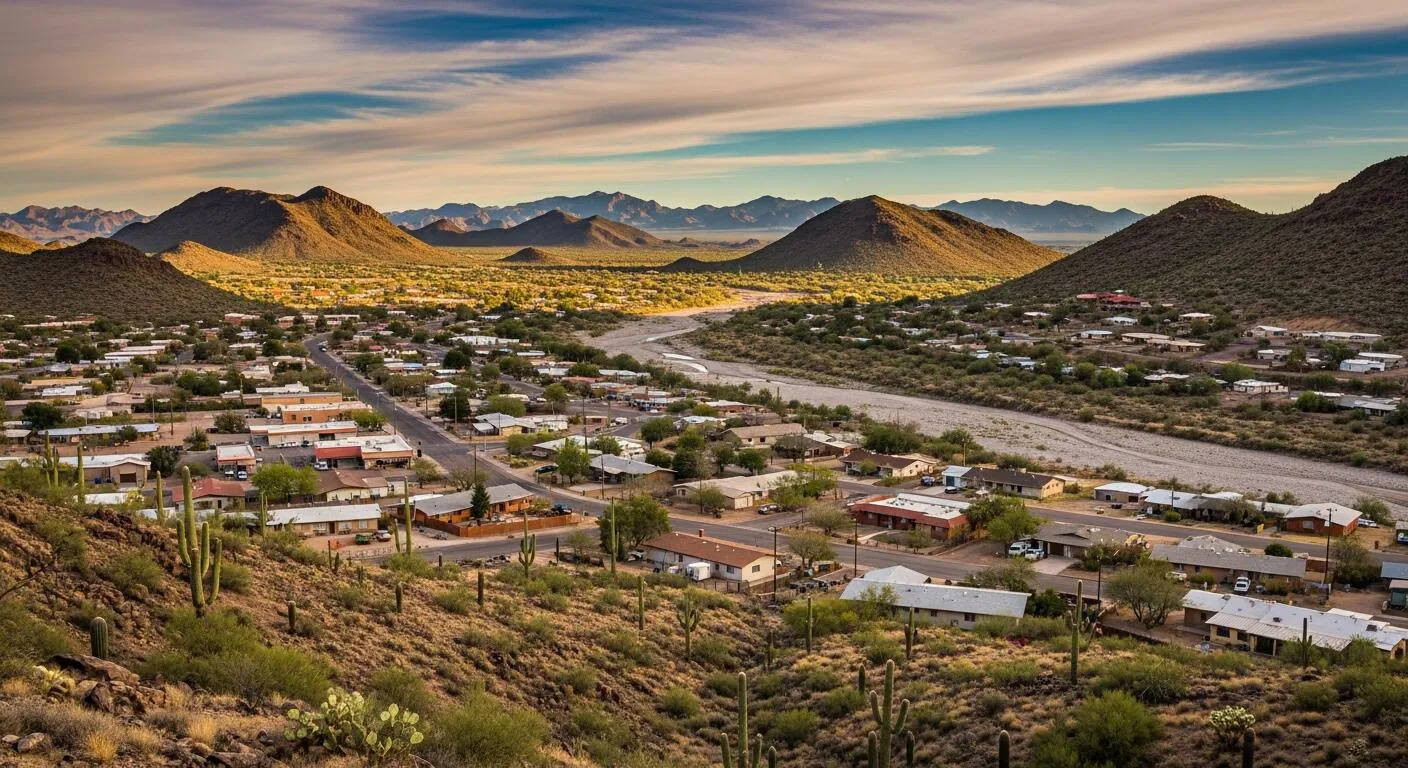
Wickenburg covers almost 27 square miles, which is large for a town whose 2022 retail sales were about $233 million and whose health care and social assistance receipts were about $138 million. Commercial roofs in a spread-out place sit farther apart, so a leak that is reported on Monday may not be seen by the owner's maintenance staff until the next scheduled visit. That gap is where a small defect grows into a wet-insulation problem. Wickenburg is about 30 miles in a straight line from Peoria, AZ, and we plan visits with that distance in mind: a first walk that records everything, a ranked list of defects and a schedule that does not require a second trip for the same finding.
Gather the whole roof record in one trip
Because the drive is a real cost, we ask for the paper before we go: original specifications if the owner has them, repair invoices, warranty documents and any interior leak notes from tenants. On the roof we photograph every section, mark penetrations on a plan and record the condition of seams, flashings and drains. The visit ends with a short list that separates urgent items from items that can wait for a planned maintenance window.
That record serves two later decisions. It tells the owner whether a maintenance program can keep the roof in service, and it provides the baseline for a replacement budget if the evidence points that way. Owners who hold several properties in the northwest Valley, such as in Surprise or Buckeye, can have those visited on the same route.
Look behind the storefront at the parapet and the scupper
Retail and service buildings usually fail at their details first: parapet caps that have loosened, scuppers that are undersized for the drainage area, and flashings at the junction of a roof and a taller wall. A shopping center roof adds another source of trouble, since tenant work often adds rooftop units and penetrations over time.
We count the penetrations, check how each was flashed and see whether a later installer left sealant in place of a proper boot. Sealant alone has a short life in strong sun. When we find a pattern of such patches, we recommend replacing the detail with a proper flashing assembly, which costs more now and less over the remaining life of the roof.
Read the heat cycle on membranes and coatings
The Phoenix area sees about 94 days a year at 100 degrees or higher. That is an air reading and not a roof-surface one, yet it gives context for the daily expansion and contraction that wears at seams, corners and edge metal. Ultraviolet exposure adds to the problem by drying out sealants and chalking old coatings.
For roofs that are dry and well bonded, a restoration coating can extend service life and add a reflective surface, with a silicone or acrylic choice depending on the substrate and drainage. For roofs with wet insulation or open seams, coating hides the defect and the owner pays twice. A moisture check and a few cores decide which case we are in, and we put the finding in writing before proposing any system.
Prepare drains for a short burst of monsoon rain
Monsoon storms in this part of Arizona can carry microbursts and flash flooding, and hail is a possibility across the Phoenix metro. A short burst of rain tests every drain, so one that is half-blocked with leaves or grit can hold water on a seam for hours.
We trace the water path from each low point to its outlet, clear what slows it and check that overflow openings are free. If a roof holds water persistently, the cause might be a settled low spot, an undersized drain or a missing scupper, and each has a different repair. A ponding water repair that does not correct the cause will recur, so we describe the cause in the report. Wall flashings and coping joints are checked on the same visit because wind-driven rain finds them first.
Choose between recover, coating and replacement
There are three broad paths for an aging roof, and each has conditions. A recover over the existing roof avoids tear-off when the existing system is dry, flat and securely attached. A coating suits a sound, dry membrane with seams that can be reinforced. A full replacement fits roofs with widespread wet insulation, repeated failures or a deck that needs repair.
The cost drivers are the same in each case: how much of the existing system must come off, how many penetrations need new flashings, what the access and hoisting are like, and how long the building can tolerate disruption. We state those drivers in the proposal and show which one is carrying most of the cost. Owners can then see where a design change would lower the price and where it would only move the problem. Insulation thickness, cover board and edge details are the usual places where a scope can be adjusted without giving up performance, and we mark each one so the owner can weigh it against the budget.
Keep a response plan for storm leaks
Emergency response runs around the clock, all week, holidays included. For an active leak, the first task is to stop water entry with a temporary seal or tarp and photograph what we find. A permanent repair follows once the roof is dry enough to work on. If the building has a roof warranty, we check its terms before any repair so the work does not conflict with them. For emergency roof repair after a storm, a written account of the damage and the temporary work protects the owner's position with an insurer. The distance from Peoria does not change the order of priorities; it only shapes how we stage materials.
Commercial Roofing Questions
What should a Wickenburg owner gather before the first roof walk?
Collect any repair invoices, the roof warranty if one exists, the original drawings if they can be found, and a list of where tenants have seen stains. These documents let us read the roof against its history, so the walk answers specific questions and we do not have to return to ask for what we missed.
Is a coating a sensible choice for an older retail roof?
It can be, provided the substrate is dry and securely bonded. Moisture mapping and cores tell us that. A coating over wet insulation traps the water and shortens the roof's life, so we decline to propose one in that case and explain why. Where it fits, the coating adds reflectivity and can delay replacement.
How does a monsoon storm change the order of repairs?
It moves drainage and perimeter work to the front. Water that cannot leave the roof loads the deck, and wind loosens edge metal and equipment covers. After a storm we clear drains, secure the perimeter and photograph damage, then schedule seam and flashing work behind those items.
Who decides whether a roof needs replacing or recovering?
The evidence decides, and the owner chooses. If the existing system is dry, flat and well fastened, a recover may fit. If wet insulation spreads across separate areas, the deck has deteriorated or repeated repairs keep failing, replacement is the sound option. We lay out each path with cost drivers so the choice is clear.
Can repairs be scheduled in batches to avoid repeated travel?
Yes, and the plan is simple. We list findings by urgency, handle the leak-causing items first and group the remaining small repairs into one planned visit, so the owner pays for a single mobilization instead of several.