Commercial Roofing in Downtown and Old Town, Peoria, AZ
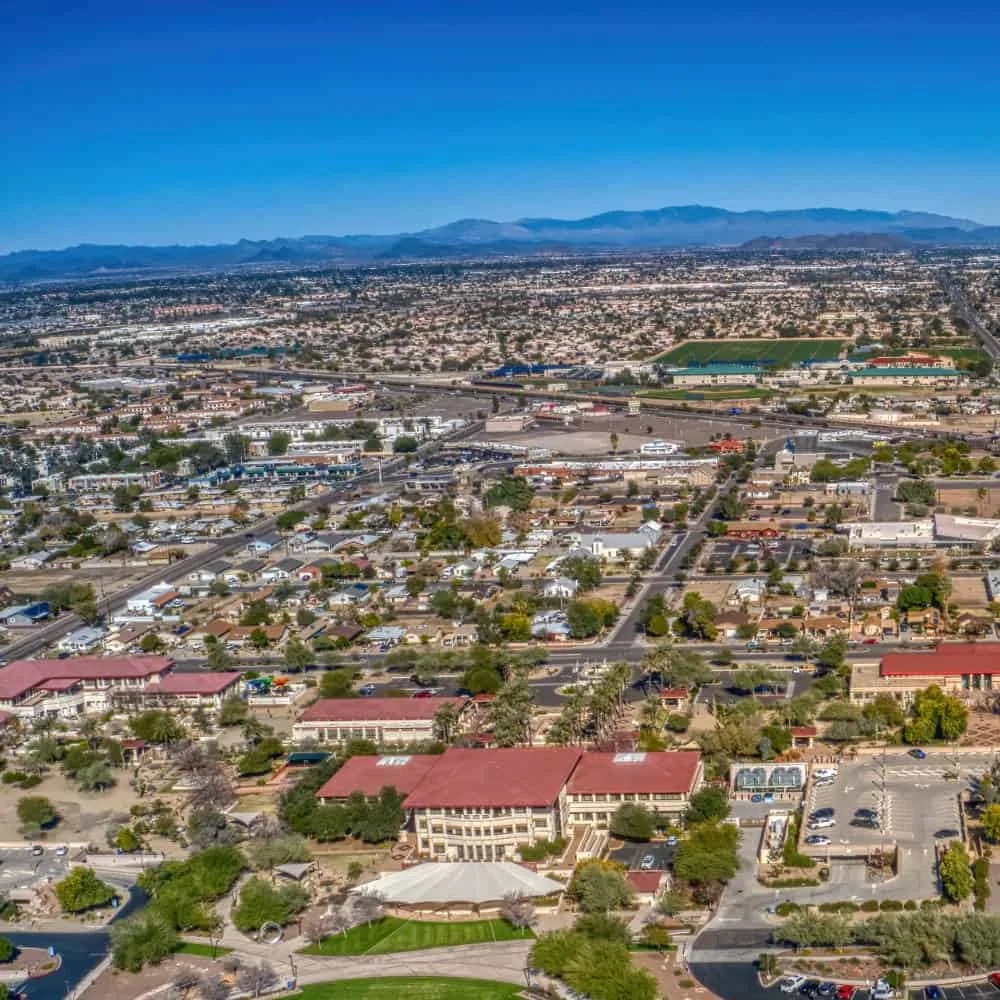
Where buildings share walls, a roof problem rarely stays on one property. Under Peoria's zoning code, downtown is a mixed-use district meant to hold civic, historic, residential, commercial and employment functions, and a city planning case puts the Old Town plan area at roughly four square miles with Grand Avenue and nearby commercial parcels among its redevelopment contexts. Roofs in a compact district like that meet at party walls, parapets and shared drainage, and a repair on one side can move water to the other. We begin by tracing the water path across the whole building edge, then draw the repair boundary and name the capital window, giving a Peoria, AZ owner a clear view of what to do now and what to plan. A written roof condition report gives that decision its evidence.
Follow water along party walls and parapets
In a compact mixed-use block, the places where one roof meets the next building or a taller wall are the most likely to admit water. Counterflashing may be sealed with caulk that has aged out, parapet caps may have opened, and a shared gutter or internal drain can serve more than one owner. We trace stains and wet insulation back to those transitions before we assume the membrane has failed.
When a drain or scupper is shared, the repair needs a conversation with the neighbor as well as a crew. We document the condition, photograph the shared detail and propose a repair that keeps the water path working for both properties. A short drain and scupper check often settles whether the problem is blockage or a deeper slope issue, and it is easier to agree on a fix when the finding is on paper. If the neighbor's roof sits higher, runoff from it can land on ours, so we also note any downspout or scupper that discharges onto the lower membrane and add a splash pad or protection sheet when the flow is steady.
Respect the character of structures near historic fabric
The code calls for context-sensitive redevelopment beside historic or culturally significant structures, and the zoning describes pedestrian-oriented subdistricts and streetscapes. A building's age or location in Old Town does not tell us what it is made of, so we identify the roof type and the structure before recommending anything. A roof visible from the street may need a membrane color, edge profile or parapet height that fits its surroundings, and a new system may have to avoid altering a roofline that the owner wants to keep.
Where design or permit review applies, we help the owner assemble the roof description, product data and photographs the reviewer needs, and we build the approval time into the schedule. For an older structure, the first decision is often whether repair can keep the existing assembly in service. Our commercial roof repair approach aims to preserve what is sound and replace only what has failed.
Stage materials where sidewalks and streets are tight
Pedestrian-oriented streetscapes leave little room for a crane, a dumpster and a material delivery. We plan staging before a date is set: where the lift sits, how much of a sidewalk must be closed, which hours trucks can stop and how debris will move from the roof to the container. In some cases the answer is a smaller crew over more days, or hand-carrying material to avoid a lift.
Neighbors, restaurants and offices will stay open, so we protect entries and windows, set up covered walkways when the work is overhead and keep noise to agreed windows. These measures affect cost, since limited access and tighter windows add labor time and sometimes require a flagger or a shorter workday. We give the owner a line-by-line view of what drives the price. The same planning applies when we handle occupied building reroofing, where tenants below continue to work through the job.
Read heat cycles and storm exposure on older and newer roofs alike
Across a year, Phoenix has some 94 days that reach 100 degrees Fahrenheit or hotter; as an air-temperature record for the region it says little about the surface of any downtown roof. The mechanism still applies: heat moves membrane, sealant and flashing, and older details tend to show it first. We look for cracked sealant, lifted flashing and chalked or brittle membrane.
According to the Weather Service, monsoon storms may arrive with microbursts, flash flooding and hail as well as wind that damages buildings. In a district with parapets and shared drainage, wind may lift caps and loosen flashing, and a short heavy rain can overwhelm an outlet. After a storm we check flashing failures first because wall terminations and counterflashing are where a shared-wall roof most often admits water. Hail, like the large stones of the October 5, 2010 supercells across the metro, is documented with dated photographs for later claims.
Record the roof so redevelopment decisions have evidence
Redevelopment changes ownership, use and sometimes floor plans, and each change affects the roof. We keep a record of roof sections, ages, drains, penetrations and repairs, so a buyer or architect can see what exists before design starts. If the building will take new rooftop equipment or a rooftop use, the record helps decide whether the structure and membrane can support it.
Owners holding property in other Peoria business areas can keep one format. The Park West Commercial District and the P83 District are both along the Loop 101 side of the city, and a shared record makes capital timing easier to compare across them. Our roof capital planning turns the record into a schedule.
Commercial Roofing Questions
How can I tell whether a leak near a shared wall is my roof or my neighbor's?
We trace the water path from the interior stain upward, examining counterflashing, the parapet cap and any shared drain. If the entry point sits on your side of the line, the repair is yours. If it sits at the joint, both properties share the finding. Photographs and a sketch of the transition make it possible to discuss cost sharing with facts rather than guesses.
What changes if my building is in a district with historic or character guidelines?
Visible roof changes, such as a new color, parapet height or edge profile, may need review. We confirm requirements with the city before ordering material and prepare the descriptions and photographs that reviewers ask for. Timing for review should be part of the project schedule so material does not arrive before approval.
How do you handle a lift or dumpster when the street is narrow?
We survey the frontage first and decide among a crane, a roof hoist and hand-carrying. Staging may require a short sidewalk or lane closure, and we coordinate hours with the city and neighbors. Material drops are timed to the delivery window, and debris is moved off the roof as it is created rather than stacked.
Is repair realistic for an older flat roof near the center of town?
Often, if the structure is sound and the insulation is mostly dry. We confirm with a moisture survey, mark the wet areas and price a repair limited to them. A roof with failure spread across many areas is closer to the end of its service life, and we tell you where that line sits so you can plan the capital spend.
What documents help when a downtown building is sold or redeveloped?
A current roof condition report, drain map, repair log and any warranty paperwork. We also include photographs of every roof section and a note on which parts are shared with neighbors. With that package, a buyer or architect can plan around the roof instead of discovering its limits partway through design.