
Roof Capital Planning in Peoria, AZ
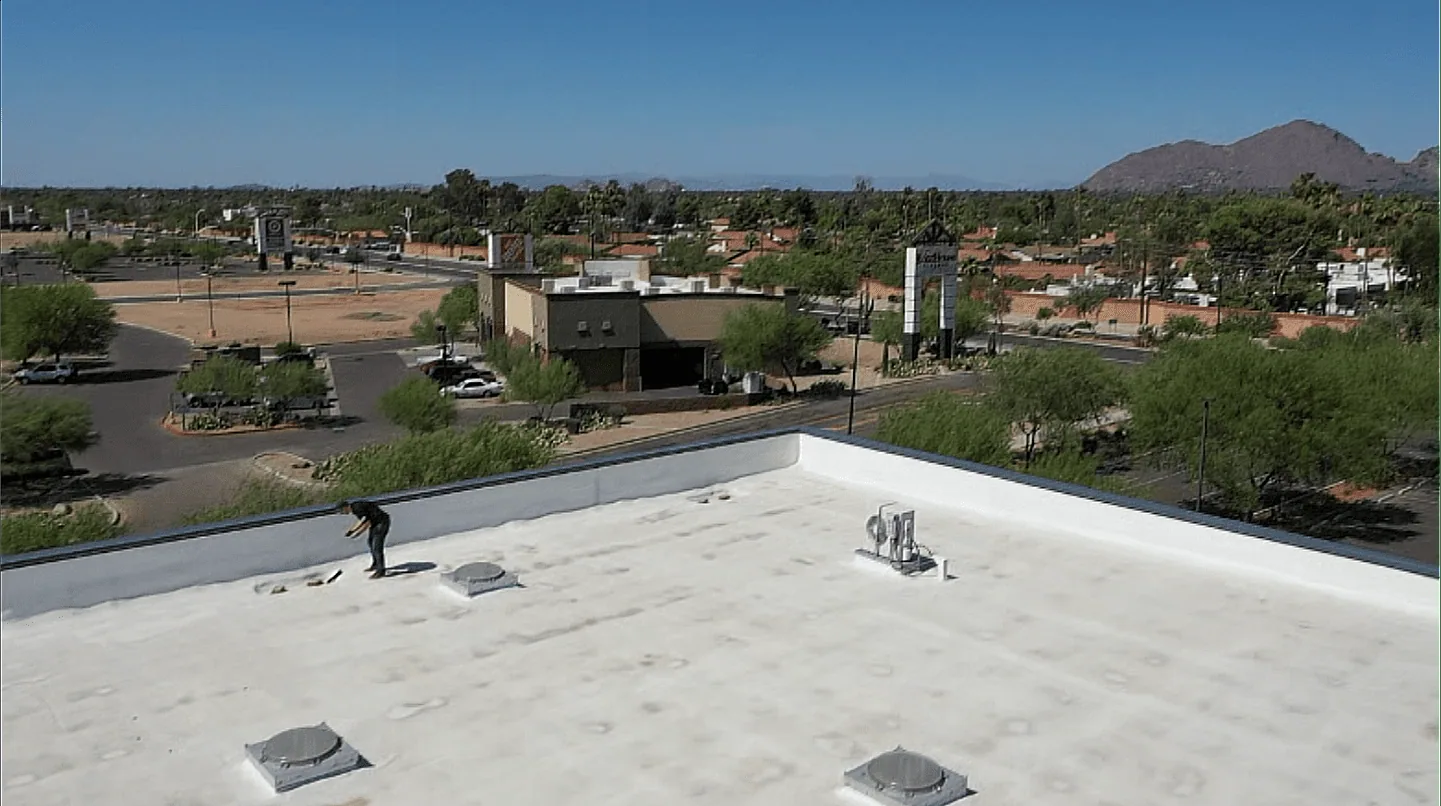
Wet insulation under a membrane that still looks flat and clean can quietly move a replacement from next year to this one. Capital plans built on roof age alone miss it, because age says nothing about where water has already traveled. In Peoria, AZ, the combination of long heat cycles and sudden monsoon rain gives roofs plenty of chances to fail at an edge or a curb before the field wears out. Roof capital planning sets the replacement horizon from observed condition: what has failed, what is likely to, and how much of the spend can be deferred without raising the risk of interior damage. We assemble that picture from a field review, moisture findings, repair history, and the schedule the building has to keep.
Rank each roof on a scope ladder
Every roof sits on a ladder of possible scopes: monitor, repair, restore, recover, or replace. The planning job is to place each roof on the right rung and explain why. A membrane with sound seams and dry insulation may belong at monitor or repair. A coated roof with surface wear but no moisture below may belong at restoration. A field with failed laps and saturated board belongs at replacement, and putting it lower only creates repeat repair costs without improving the record.
We write the rung for each roof beside the evidence that supports it. When the roof recover option is on the table, the evidence has to include a moisture result and an assessment of whether the existing assembly can carry another layer. Owners who see the ladder can challenge any assignment, and a good plan survives that challenge.
Edge metal, drains, and penetrations deserve their own line in the ladder. A roof field can be sound while the perimeter has opened up, and an edge metal repair costs far less than the water damage that follows a lifted coping. Placing small items on the plan keeps them from being forgotten until a storm finds them.
Time the spend to the building, not the calendar
Capital windows are real constraints. A retail center cares about the holiday season, a medical office about clinic hours, a school about summer break, and a logistics operator about peak volume. We place each project in the window where the building can absorb the work, then work backward to when design, material ordering, and permit review need to start. Peoria works from the 2018 International Building Code as amended locally, so replacement scopes are reviewed against that framework and permit lead time belongs in the schedule.
Material lead time and monsoon season also shape the calendar. Roofing started in late spring can finish ahead of the storm months, while work deferred into July leaves open roof areas exposed to sudden rain. Tying the start date to the weather window protects both the budget and the building contents. The same plan identifies which roofs can wait for the next budget year without raising exposure, so reserves go to the roofs that need them.
Price the cost of deferral
Deferral is a legitimate choice when it is made knowingly. The risk is deferring with an incomplete picture. A leak at a rooftop unit may be a flashing issue that a modest repair resolves, or it may be wet insulation spreading under a larger area. We separate the two with an infrared moisture survey and core samples where the findings call for them, then describe what waiting is likely to cost in qualitative terms: additional insulation to replace, deck exposure, interior finishes, and tenant disruption.
For a lender, an investor, or a board, the deferral note belongs in the record. It states what was found, what decision was made, and what trigger would reopen it. If the roof is monitored through preventive maintenance visits, the trigger can be specific: a new leak at the same curb, a second failed seam, or ponding that holds longer after rain.
A short list of questions helps frame the choice: has water reached the insulation, do the repairs hold between visits, is the warranty still in force, and does the next tenant change require new equipment on the roof. Answers to those four questions usually decide whether deferral is sound.
Plan for portfolios that are still growing
North Peoria is the city’s growth edge. The adopted Camino a Lago plan allows commercial development near Lake Pleasant Parkway and Deer Valley Road, and its table assigns 1,143,450 square feet to the two-parcel commercial core as a plan allowance rather than built space. Planning materials for the Peoria Innovation Core describe semiconductor, aerospace, and advanced manufacturing uses along the Loop 303 corridor. Owners who hold or expect to acquire roofs in these areas benefit from a capital template before the first building is under management.
We help set that template: a standard condition scale, an inspection cadence, and a budget view that adds new roofs without rebuilding the plan. Properties in the Camino a Lago commercial core area and in the Peoria Innovation Core area can then be folded in as they come online.
Deliver a plan the owner can use in a meeting
The finished plan is short enough to read and detailed enough to defend. It lists each roof, its rung on the scope ladder, the evidence behind it, the recommended window, and the trigger that would change it. Photographs and the leak map sit behind each entry. The condition reports that feed the plan stay available for lenders and insurers.
Plans also link to the building’s asset record, so updates in the field flow into the next budget cycle. If conditions change after a storm, the plan can be revised without starting over, which keeps the capital view honest across the year.
Commercial Roofing Questions
How far ahead should a property owner budget for a replacement?
A two to three year view is usually enough to place the roofs that are clearly heading toward replacement, with a rolling update each year as inspections add evidence. Farther out, the range gets too wide to guide a decision. We give each roof a window and the findings that would shift it, so the budget moves when the condition does.
What evidence would move a roof from repair to replacement in the plan?
Repeated failures across different transitions, wet insulation found in separate areas, or seams that fail when probed along a long run all push toward replacement. A single failed flashing with dry assembly around it does not. We record the finding, show where it sits on the roof, and explain which rung of the scope ladder it supports.
Can monsoon damage change a capital plan that was already approved?
It can. Flash flooding, hail, and damaging wind all appear on the National Weather Service list of monsoon impacts, and any of them may damage edges, curbs, or drainage in a way that changes priority. After a storm we inspect the roofs on the plan, mark new damage against the prior photographs, and revise the order of work if needed.
Does the plan cover buildings that are only under contract?
Yes, if a survey can be completed before closing. A short field review, moisture findings where warranted, and a capital forecast give the buyer a number to negotiate with and a schedule to plan against. The same record then becomes the first entry in the buyer’s asset file.
What does a lender or board expect in a roof plan for an open-air retail center like Park West?
They look for a clear statement of condition, a funded schedule, and evidence that leak history is being managed. For an open-air retail and dining district beside Loop 101, we add notes on roof access around customer areas, restaurant exhaust curbs, and drainage near entrances, because those items affect both the repair sequence and the cost of interruption. The plan gives the board a number and a reason.