
Silicone Roof Coatings in Peoria, AZ
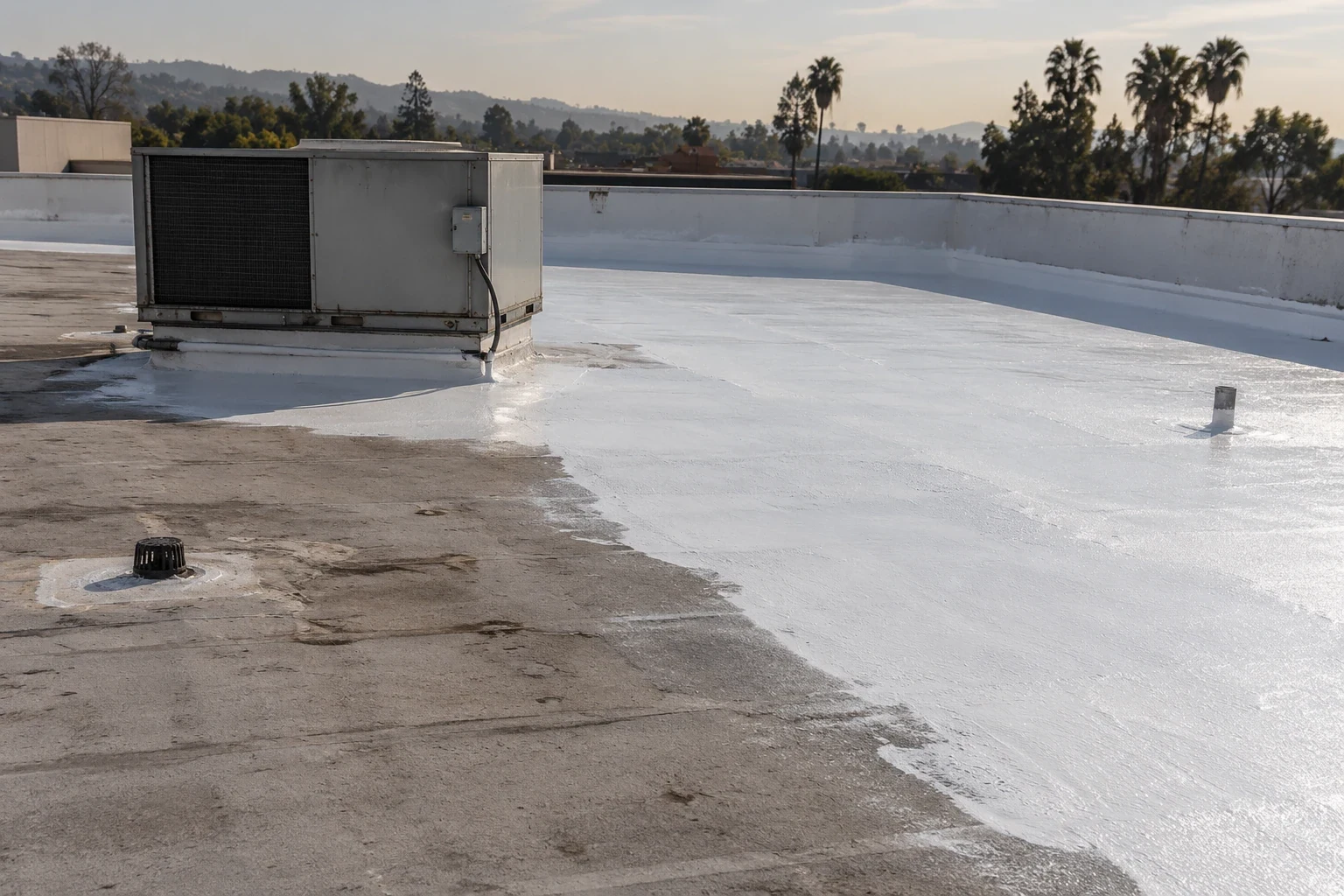
A silicone coating can still be attached while a seam or drain detail below it has started to fail. In Peoria, AZ, the first decision is whether the roof surface is a viable coating substrate or whether moisture, movement, or separation requires repair first. We map drains, penetrations, curbs, field seams, and prior patches. The inspection record should identify where coating is continuous and where the assembly needs a separate test.
Test the Existing Surface
We review the current membrane or coating, remove loose material where the approved test allows, and check adhesion at representative areas. Dirt, chalking, oils, failed sealant, and incompatible prior products can interfere with bonding. A test patch and product instructions help establish whether cleaning and primer are needed. The record identifies the tested location and result, rather than assuming one area represents the entire roof.
Silicone is a liquid-applied coating that cures into a protective layer. It does not restore loose insulation, a moving curb, or an open seam beneath it. If a moisture survey or core opening could change the repair boundary, scope that investigation before coating. A roof-layer review should separate confirmed wet material from untested areas.
Correct Drainage Before Coating
Existing low areas, drains, scuppers, and overflow paths need review before the coating scope is priced. A coating may tolerate standing water only when the specified product and assembly allow that exposure. Confirm the manufacturer’s current instructions instead of applying a general claim to every system. If outlets are blocked or the slope directs water away from them, drainage correction is separate work. The repair boundary should follow the observed flow path and roof geometry.
Monsoon storms in Arizona can bring flash flooding, hail, and damaging winds in the Phoenix metro pattern. That context makes drainage and perimeter inspection useful, but it does not prove a property has ponding or storm damage. For roof conditions, we inspect the actual drains and edges. A drainage repair scope can be compared with a coating project when outlet function is part of the decision.
Rebuild Details Before Coating
Penetrations, curbs, parapets, edge metal, and terminations require compatible preparation and flashing. We check where the coating ends, whether the substrate moves, and how water reaches a drain. Loose sealant or a split corner should not be hidden under field coating. If the assembly needs reinforcement, the scope names the fabric or detail required by the selected product and identifies the transitions included.
P83 is a Peoria district near Loop 101 and Bell Road, with planning that includes commercial, entertainment, hospitality, employment, and residential uses. Those mixed uses do not establish any individual property’s roof or operating hours. For a building near this district, the owner contact confirms equipment access and service windows. A curb and support assessment can document rooftop interfaces before coating starts.
Read Heat and Storm Context Carefully
National Weather Service records report roughly 94 Phoenix days each year with highs of at least 100 degrees Fahrenheit. That is a regional air-temperature measure. The roof surface may differ, so the crew checks actual surface conditions against the chosen product’s application requirements. We inspect coating wear, cracks, pinholes, and adhesion at the property instead of predicting condition from a weather statistic.
The October 5, 2010 Phoenix-area supercells produced large hail and extensive damage across the metro area. That historical event is regional context, not evidence of impact on a present-day roof. If an owner reports hail, we photograph the current surface, flashings, edges, and equipment stands, then compare those observations with earlier records. A hail-damage review keeps the event report separate from the inspected condition.
Silicone’s performance still depends on the complete assembly and the application record. We note whether the existing roof moves at seams, whether foot traffic has worn the finish, and whether debris collects near drains. A coating that remains bonded in the field can still fail at a curb or termination. The inspection marks each detail separately so the owner can decide whether reinforcement, flashing work, or a wider coating area belongs in the approved scope.
Compare Silicone With Other Roof Options
A silicone recoat may suit a compatible, sound substrate where the owner wants to renew a protective surface. It is not automatically the best choice for every roof. We compare repair, recoat, recover, and replacement based on adhesion, trapped moisture, drainage, detail failures, and remaining assembly condition. A coating restoration scope should define preparation, test areas, repairs, and the finished thickness required by the product.
Acrylic coatings have different water exposure limits and application requirements. When the roof may suit a different film, the acrylic coating considerations weigh into the same decision. If the existing roof is a verified single-ply system, compare with TPO roofing only after confirming compatibility and whether recovery is permitted for that assembly.
A recoat proposal should state the existing product, test locations, cleaning method, primer, repair materials, and specified application thickness. It should also identify dry-time requirements, access limitations, staging, and any roof area excluded from work. Silicone can accumulate dirt and may need a specific preparation step before a later coating is considered. We keep that future maintenance question in the asset record rather than assume a second layer will bond without testing.
Keep Coating Scope and Closeout Together
File the inspection date, substrate test results, coating product, preparation steps, repair lines, application conditions, and before-and-after photographs. Identify areas not included and any drainage issue left open. Keep the approved scope version with the closeout record so an owner can compare later wear against the original boundary.
Application records should identify the crew’s start and stop areas, the product batch or identifier, and any weather interruption. Where the product instructions call for a thickness check, record the measurement and location. Photograph repairs before the coating hides the detail, then capture the finished surface and terminations. If a work area remains excluded because of moisture, access, or drainage, keep it visible in the closeout file. These notes help the next inspection compare like areas and distinguish aging from a prior condition.
Peoria planning identifies the Loop 303 employment corridor as a growth spine connecting major arterials, while the adopted Camino a Lago plan identifies a commercial core near Lake Pleasant Parkway and Deer Valley Road. These area plans can orient a project discussion, but access and roof condition remain property-specific. A Loop 303 corridor request begins with the exact address and an access contact, not a district-wide assumption.
Commercial Roofing Questions
Can silicone coating fix ponding water?
Only a product specifically approved for that exposure should be considered, and the drainage condition still needs review. We inspect slopes, outlets, and low areas, then confirm current product instructions. Persistent water caused by a drainage defect may require correction before coating.
How do you know if an old roof can accept silicone?
We check the substrate, adhesion, contamination, moisture, prior coatings, and detail condition. Representative testing can show whether preparation or primer is needed. If the assembly is wet or detached, coating does not replace the repair.
Will silicone coating stop every roof leak?
No. A coating cannot correct every failed seam, drain, curb, or concealed wet area. We map the source that is confirmed and identify separate repairs before coating is priced.
How does monsoon weather affect coating work?
Wind, rain risk, surface moisture, and temperature can affect preparation and application. We check jobsite conditions and the specified product limits. The schedule may need to shift if the surface is not ready for coating.
What should a recoat proposal identify?
It should state tested areas, cleaning and preparation, repair boundaries, product, required thickness, drainage exclusions, application limits, and closeout evidence. A clear boundary lets the owner compare the coating scope with replacement.