
Spray Foam Roofing in Peoria, AZ
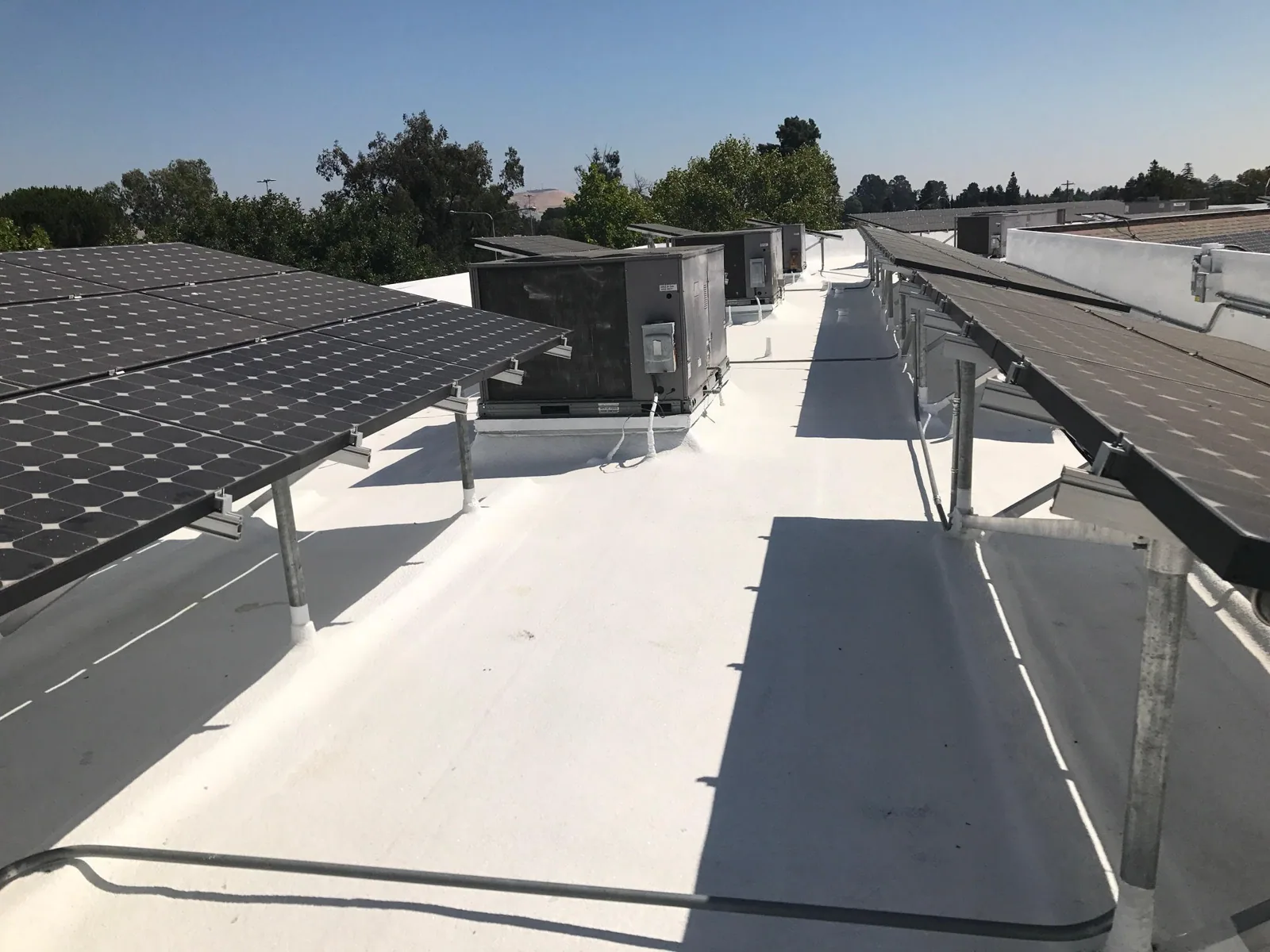
A foam roof can remain intact below a coating that has started to crack at a curb or seam. In Peoria, AZ, the owner decision depends on both layers: the spray polyurethane foam and its protective coating. We inspect adhesion, surface condition, drainage, penetrations, and prior repairs before pricing a recoat or removal. The roof inspection maps each observation to a roof area. A coating surface alone does not show whether the foam below is dry or firmly bonded.
Inspect the Foam and Substrate
We look for exposed foam, open cracks, blisters, soft areas, impact damage, loose coating, and transitions where water can work beneath the surface. At drains, curbs, parapets, and equipment supports, the termination needs its own review. A probe or test cut may be needed to distinguish a coating defect from separation in the foam or substrate. The report marks the test location, what it showed, and any area left unverified. Photographs of each cut, taken before it is patched, give a later recoat decision something to compare against.
SPF is applied in place and can conform to irregular roof geometry, but adhesion depends on a clean, dry, suitable substrate and controlled application. Existing foam may cover earlier layers or repairs. We review available records and compare them with exposed conditions before treating the visible surface as a complete system description. A condition report keeps those differences traceable.
Separate Local Repair From Refoaming
A small opening or isolated coating failure can be repaired when the surrounding foam remains sound and bonded. The work boundary should include the affected foam, the sound landing around it, and the compatible protective finish. Widespread delamination, wet substrate, or repeated failure at separate roof zones can shift the decision toward larger removal and replacement. We compare the measured conditions rather than recommend a new assembly from age alone.
For an uncertain area, the owner may approve a test cut before the bid carries a larger removal quantity. Document the opening, moisture observation, deck condition, and restoration detail. If only the surface coating needs renewal, a coating restoration scope can identify preparation, repairs, and the product requirements that control application. A recover review should state what remains beneath any new work.
Protect the Foam From Exposure
The coating shields exposed foam from ultraviolet exposure and weather. We inspect wear, cracks, blisters, pinholes, embedded debris, and loss of adhesion, then confirm whether cleaning and preparation can produce a suitable surface. The specified coating must be compatible with the existing system and applied to the required thickness under its product instructions. We record test areas and surface preparation instead of describing a simple topcoat as a complete roof correction.
Silicone and acrylic products have different moisture, adhesion, and recoat requirements. A silicone coating review considers the actual substrate and water exposure; an acrylic coating option needs drainage that does not leave unapproved ponding. Neither material repairs detached foam by covering it. A documented restoration scope should show substrate repairs separately from coating work.
Account for Peoria Exposure
Triple-digit highs run for months in the Phoenix area, and the roof surface is hotter than the air. That makes coating condition, UV exposure, and work-window planning relevant questions for an owner. We measure the roof and follow the chosen product’s application limits rather than substitute a regional average for jobsite conditions.
Monsoon storms can bring damaging winds and microbursts toward the low deserts. After a storm report, inspect perimeter edges, curbs, drains, exposed foam, and coating breaks for fresh changes. The Loop 303 employment corridor plan links major arterials through the Happy Valley Parkway, Lone Mountain or Dynamite Parkway, and Lake Pleasant Parkway interchanges. Access should be confirmed for the exact address. A Loop 303 area review provides broader context, not a finding about a specific roof.
Plan the Application Window
Foam and coating work depends on substrate dryness, surface temperature, wind, humidity, forecast conditions, and the approved product limits. The crew must protect the application area from dust and moisture while material cures. We confirm roof access, staging, equipment shutdowns, and occupied-space protection with the site contact. If a weather window changes, the work sequence may need to pause before a coating layer is placed.
North of the city, the Camino a Lago plan sets its shopping and services at Lake Pleasant Parkway and Deer Valley Road. A plan says nothing about an individual foam roof, so for a building there the address, entrance, and operating rules get confirmed before a crew is scheduled. A Camino a Lago service-area review starts from that exact address.
Keep the Foam Roof History Useful
Record the inspection date, roof map, coating product, test areas, repair boundary, and photographs before and after the work. Note any foam that remains exposed, any area excluded from the scope, and the next review point. Preserve product documents and warranty files when they apply. A future inspection can then distinguish new coating wear from a prior repair and compare the same roof zones.
Owners can weigh a localized repair against recoating or broader replacement by comparing the documented condition with the capital window. P83 along Loop 101 and the Camino a Lago commercial core in the north are very different settings, and neither tells us anything about the assembly at a given address. The chosen scope should follow the roof record, not the district label. For a project decision, compare the SPF findings with a TPO assembly option only after the current layers and drainage are confirmed.
Removal depth, disposal, access, rooftop equipment, and interior protection can shift the comparison even when the roof area is similar. We separate those cost drivers from the condition finding. The owner can then see whether the decision is about a local defect, a coating renewal, or a broader assembly change. If the test result changes the work area, the revised scope version should identify the evidence and approval date. That record is more useful than a single summary number without an area map or exclusion list.
Commercial Roofing Questions
What shows whether an SPF roof needs only a new coating?
The foam must remain dry, bonded, and stable, with defects confined to the protective surface. We inspect adhesion, test uncertain areas, and map exposed or damaged foam. If the substrate or foam is wet or detached, coating alone would leave the failure below it.
Can spray foam be installed over the roof that is there?
Possibly, if the existing assembly is dry, secure, clean, and approved for the proposed application. We verify the substrate, attachment, drainage, and transitions first. A test area or opening may be needed before the owner accepts an overlay quantity.
How does extreme heat affect SPF roof work?
Regional air-temperature records do not give the surface temperature at a jobsite. We check actual substrate and weather conditions against the selected product instructions. Heat can change application and cure behavior, so the work plan needs a suitable installation window.
What happens when monsoon wind exposes foam?
We document the area, check edges and transitions, and protect the opening if needed. Then we determine whether damage is limited to coating or reaches the foam and substrate. The permanent scope follows that inspection and any owner-approved testing.
How can I compare recoat and replacement bids?
Use the same roof map, test findings, repair limits, product requirements, exclusions, and closeout records. A recoat bid should identify preparation and foam repairs separately. A replacement option should state removal depth and concealed-condition approvals.