
Grocery Store Roofing in Peoria, AZ
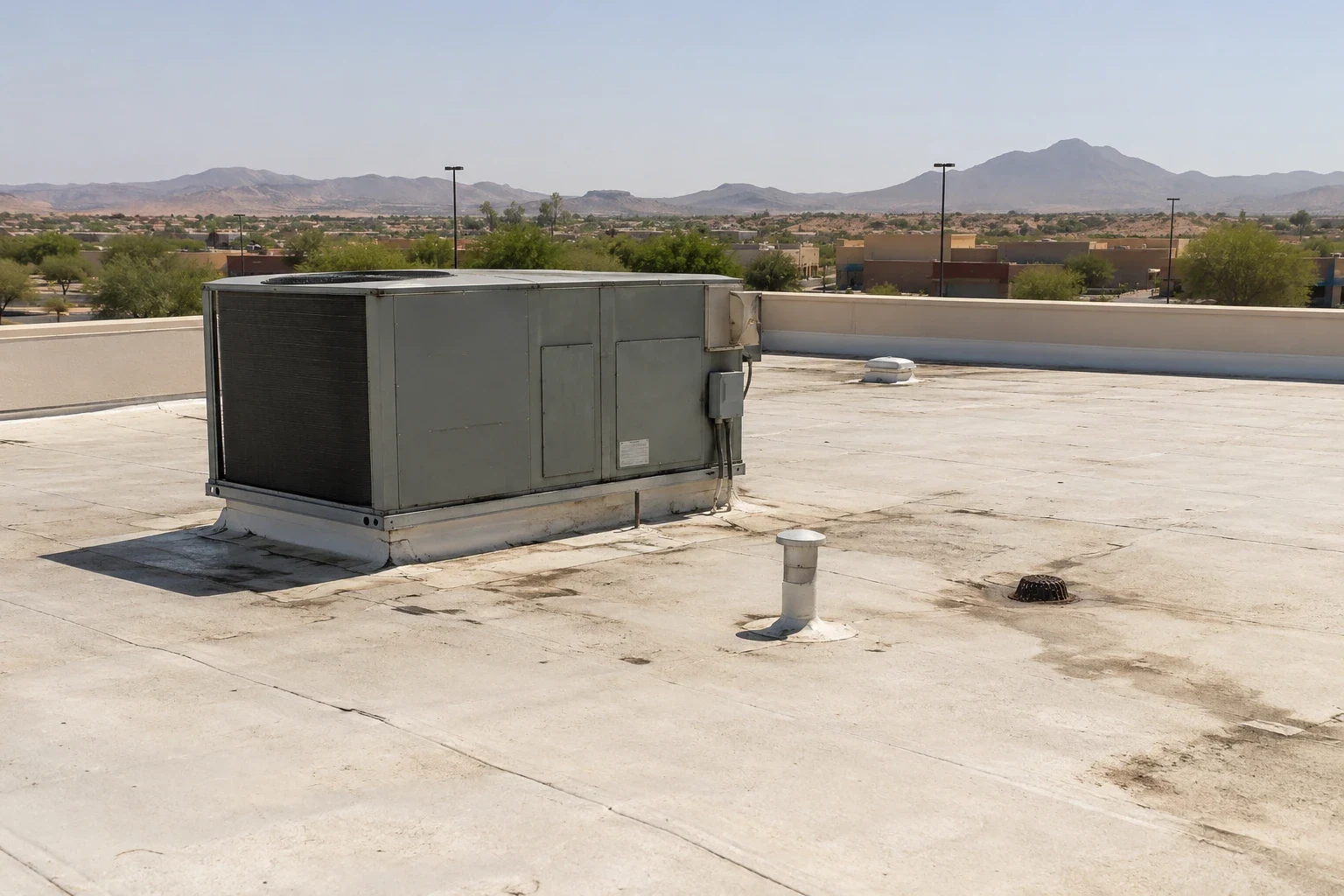
A grocery roof carries refrigeration heat, exhaust and condensate, and the roof history usually shows where those loads have been hardest on the membrane. The field may look sound while the area around the condensers is stained, soft or patched in layers. In Peoria, AZ, summer afternoons run well past 100 degrees, and a store that rejects refrigeration heat into that air asks a lot of its roof. Retail is a big part of the city's economy, so grocery roofs sit among many others under similar demands. We begin by reading the equipment zones, because they set the order of repairs and the timing of any larger plan.
Read refrigeration condensers as roof loads
Condensers add weight, vibration and heat to a roof. They sit on rails or frames, and their supports bear on the membrane or the deck. Over time, vibration loosens fasteners, rails shift and the membrane beneath wears. Hot exhaust can soften some surfaces and age the sheet faster than the field around it.
We inspect support points, rail attachments and the membrane under and around each unit. Where wear is clear, we add protection pads and repair the sheet. Equipment supports are coordinated with the refrigeration contractor, since moving a rail can disturb a line. The result is a roof whose equipment zone is protected and documented.
Rails that sit directly on the membrane need a separate look. Many are set on pads that compress or slide, and a pad that has worn through lets metal ride on the sheet. Replacing worn pads during a scheduled visit costs little next to a membrane repair under a condenser.
Where units have been added over the years, we count them against the drawings. Extra units add weight and traffic, and the roof plan should show what is actually up there, not what was originally designed.
Keep condensate and glycol lines off the membrane
Lines that leak or drip onto a roof cause damage that is easy to mistake for age. Condensate stains and softens the surface, glycol can attack some materials and a pinhole in a refrigerant line may drip for months before anyone notices. Lines that lie directly on the membrane wear a groove as they expand and contract.
We trace lines, raise them on supports where needed and check connections for staining. Routing condensate to a drain or a pad removes a recurring source of wear. If a membrane has been damaged, we repair it with a compatible patch, then confirm the cause is corrected so the patch does not fail for the same reason.
A cold line that sweats can wet insulation below it and mimic a roof leak inside the store. Checking line insulation before a roof repair rules in or out a cause that no membrane work could cure.
Protect food safety during open-roof work
A grocery store cannot risk dust, water or odor reaching product. Before any roof opening, we identify the departments below the work: produce, meat, bakery, dairy, frozen and receiving. Each has its own tolerance, and the plan reflects it.
Temporary protection, such as sealed ceiling coverings or relocation of exposed product, is agreed with the store manager. Air intakes are protected and adhesives with strong odors are scheduled for the quietest period. A restaurant roof shares many of these concerns, and a store with a deli or prepared-food area follows both. A named contact on each side can stop work immediately.
Tear-off waste is lowered in covered chutes away from customer paths, and the roof is swept each shift so loose debris cannot enter intakes or the parking area. Nothing is stored above produce or open food areas.
Manage heat on a cooling-dominated building
A grocery store spends heavily on cooling, and the roof contributes to the load. A reflective surface can reduce the heat entering the building, though the benefit depends on insulation, equipment and hours of operation. We describe the effect in general terms and avoid promising a specific saving.
A cool roof surface, kept clean, may also lower thermal stress on the membrane. Dirt and algae reduce reflectivity, so cleaning belongs in the maintenance plan. Where the existing roof is dry and bonded, a restoration coating may add reflectivity and service life at lower cost than replacement. Moisture and adhesion tests decide whether it fits.
Wind and hail still matter. Monsoon gusts and microbursts reach the low desert every season, so equipment screens and edge metal are checked for attachment before the season.
Schedule around deliveries, peak days and holidays
Grocery operations run on early deliveries, weekend peaks and holiday surges. Roof work has to avoid all three. We ask for the delivery calendar and the days when the store is busiest, then place noisy and disruptive tasks in quieter periods.
Staging areas stay clear of receiving docks and fire lanes. Customer parking and entrances are protected with barricades and spotters. For stores in the Camino a Lago commercial core planning area, which the city describes with a two-parcel commercial concentration near Lake Pleasant Parkway and Deer Valley Road, the plan accounts for the access limits of a shared site. A big-box store with a grocery section adds both sets of concerns.
Seasonal resets and remodels sometimes bring contractors onto the roof without notice. A rule that all roof access goes through the store manager, with a sign-in log, keeps the roof record accurate and protects the membrane.
Keep a roof record ready for audits and insurers
Grocery chains and independent stores face audits from insurers, lenders and food-safety inspectors. A roof record with condition reports, equipment locations, repair logs and photographs shows that the roof is under control. It also helps when a store is sold or its lease changes. Owners with stores in the P83 district or elsewhere can keep every site in the same format.
The same format works for owners who hold several stores, and a manager can see at a glance which roof is next in line.
Stores along the Loop 303 corridor and the Loop 101 retail areas that the city treats as commercial access corridors share the same climate and the same monsoon exposure, so one checklist can serve them all.
Commercial Roofing Questions
How do you protect food and product during a grocery store reroof?
We identify the departments below the work, agree on temporary ceiling protection or product relocation with the store manager and keep the open roof section small. Dust and odor controls are set in advance, and a named contact on each side can stop the work.
Why does the membrane around condensers fail early?
Vibration, heat and moisture all concentrate there. Rails shift, lines drip and exhaust warms the surface. We inspect supports, add wear pads and reroute leaking lines to extend the life of the surrounding sheet.
Can a grocery roof be coated instead of replaced?
Yes when insulation is dry and the membrane is still bonded. A coating can add reflectivity and service life. We test moisture and adhesion first. If the tests fail, repair or replacement is the safer route.
How should roof work be timed around deliveries?
By asking for the delivery schedule and planning noisy or staging-heavy tasks outside those hours. Material hoisting and crew parking stay away from receiving docks. The plan is shared with store staff before the first day.
What records help a store in an insurance review?
Dated photographs, repair logs, moisture survey results and equipment locations. They show that the roof is inspected and maintained, and they give the insurer a clear baseline if a claim arises after a storm.