Restaurant Roofing in Peoria, AZ
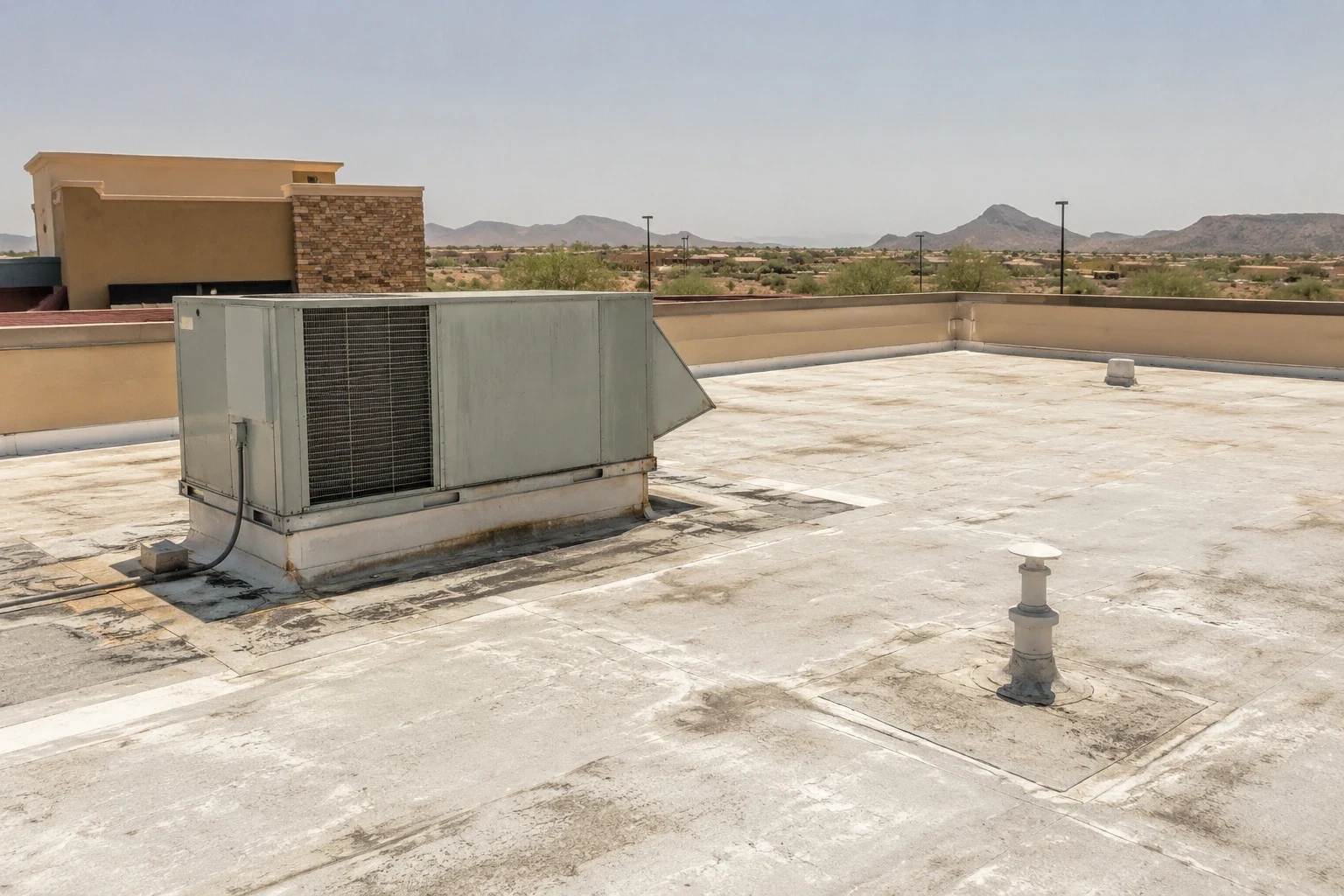
A restaurant roof ages from the kitchen outward, and the stain pattern shows the order. The hood discharge leaves a slick film, the membrane around it softens, and the first patch is applied to the wrong problem because the leak shows up in the dining room, thirty feet away. In Peoria, AZ, the long Phoenix-area summer compounds what grease starts. Park West is an open-air retail and dining center beside Loop 101, and P83 mixes dining with entertainment and lodging, so restaurant roofs in both settings face a mix of tenants, schedules and equipment. We start where the damage starts: the exhaust.
Follow the grease from the hood outward
Kitchen exhaust throws grease droplets onto the roof, and the pattern follows wind and fan direction. Grease softens some single-ply membranes, swells seams and collects dirt that holds moisture. We walk the area downwind of each fan, photograph staining and press the surface to find soft spots.
The damaged area is usually smaller than the stain, but it can reach seams and flashings. We map it, repair the membrane with a compatible patch and add a protective pad or a containment pan. A grease-resistant system, such as PVC or KEE-based sheet, may be the better choice when a replacement is planned, since those systems are formulated for better resistance to fats and oils.
Hood cleaning crews also walk the roof, and their work can spill grease on the membrane. A drop cloth and a rule that cleaners catch and remove runoff reduce the load on the roof substantially. Where the service contract does not mention the roof, adding that line is a low-cost fix. The same clause should name who pays for membrane that grease has already softened, so the cost does not land on whoever holds the lease at that moment.
After repairs, we return in a few weeks to see whether the patch is holding and whether the staining pattern has changed. The comparison tells us whether the chosen protection is working or the fan needs service.
Inspect fan curbs, make-up air and ductwork
A restaurant roof often holds exhaust fans, make-up air units, grease ducts and refrigeration condensers. Each unit sits on a curb or rail, and each curb is a flashing detail that moves with the heat cycle. Grease-soaked sealant fails early because it loses adhesion and softens.
We check curb caps, base flashing, sealant and fasteners and look for staining at the base. When an exhaust fan is replaced, the new curb is flashed before the unit is set. Work on equipment curbs and supports is coordinated with the hood cleaning and mechanical contractors, since a roof repair that blocks access for cleaning will soon be undone.
Make-up air units sit on the same roof and bring in hot or humid air in summer. Condensate from those units should drain to a pad or a pipe and never onto the sheet. A quick check of drain lines during a visit prevents a slow, quiet stain.
Plan around meal service and delivery windows
Restaurants have two clear peaks: lunch and dinner. Roof work above the kitchen during service creates noise, vibration and risk, so we place loud tasks in the mid-morning and mid-afternoon lulls. Weekend peaks are common, and some venues have late-night hours that shift the quiet period.
We ask for the full week of operations, including delivery times, private events and holiday closures. Staging is placed away from the kitchen entrance and customer parking. When a leak cannot wait, our emergency roof repair response aims to stop the water first and leaves permanent work for a slower hour.
Special events and holidays change the pattern. A private party booking can fill a normally quiet afternoon, so we confirm the schedule a few days ahead and adjust if the kitchen calls.
Protect the dining room, kitchen and stored food
A drip above a dining table is a customer-facing problem. A drip above a prep line or dry storage is a food-safety problem. Before opening the roof, we identify what lies below each section and plan protection accordingly: sealed ceiling coverings, moved stock and covered equipment.
Dust and odor control matter. Adhesives and sealants can carry strong smells, so they are scheduled when the dining room is empty or closed, and air intakes are covered. Wet ceiling tile is removed and dried quickly, since mold can develop within days. A grocery store with a prepared-food area follows the same discipline.
A short written summary after each visit tells the manager what was done, what to watch and who to call if water appears. Clear notes save time when staff change shifts.
Handle shared roofs in multi-tenant dining and retail centers
Many restaurants sit in centers with several tenants and a single roof. The membrane is shared, the drains serve multiple bays and the landlord controls access. A leak may come from a neighbor's equipment or a shared drain, and the roof map is the way to find out.
In a retail and dining district such as Park West, the roof record tells a landlord which tenant's equipment sits where and what damage each has caused. A shopping center roof plan ties leases to roof sections, which makes repair costs easier to assign and discuss.
When more than one restaurant shares a roof, the grease from one can reach the intake of another. We watch wind direction and discharge points to understand which tenant affects which section.
Put exhaust maintenance and roof access in the lease record
Lease language can prevent a great deal of damage: who cleans the pans, who services the fans, who may access the roof and how damage is reported. A roof record showing the condition at move-in and at each visit supports those terms. Restaurants in the P83 district or elsewhere can keep the same file and update it after each service visit.
Heat cycles continue to work on any lease term, so the record also lists the remaining service life of each roof section and flags any section expected to need replacement during the lease.
Commercial Roofing Questions
Which roof membrane resists kitchen grease best?
Systems formulated for fat and oil resistance, such as KEE-based sheets and many PVC products, tend to perform better than others near exhaust. The right choice also depends on the roof, the structure and the budget. We review the exposure and the manufacturer's data before specifying.
Can a restaurant stay open during roof work?
Often yes, with work scheduled around meal service, interior protection above prep and dining areas and odor control. Some tasks may need a closed day. We agree on the plan with the manager and set a stop rule if conditions change.
How can grease damage be slowed on an existing roof?
Keep containment pans emptied, add protective pads under the discharge, clean the area regularly and repair damaged membrane with a compatible patch. Fan maintenance matters too, since a worn fan sheds more grease. Regular checks catch spread early.
What should a landlord include in a restaurant lease about the roof?
Who maintains the pans and fans, who may access the roof, how damage is reported and who pays for repairs caused by the tenant's equipment. A roof record at move-in gives the lease terms something to measure against.
Why does a roof leak show up far from the kitchen?
Water travels along the deck or insulation before it enters the ceiling. We trace the path by checking seams, curbs and drains around the reported area, then define a repair boundary. Sealing only the stain rarely solves the leak.