
Soprema Roofing Systems in Peoria, AZ
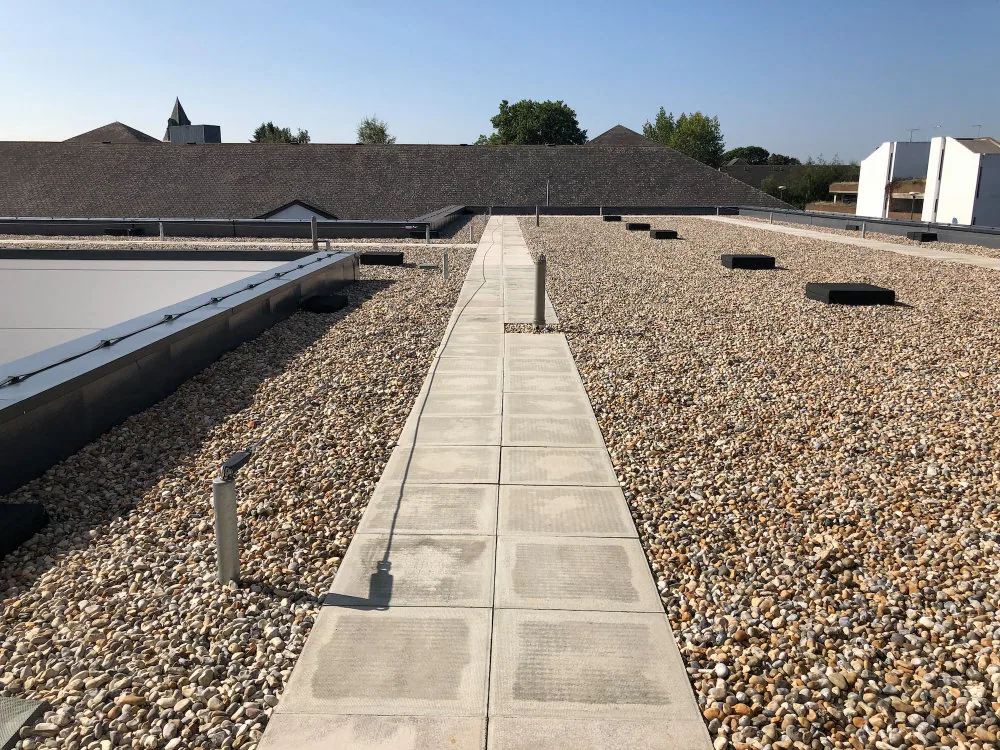
The cap sheet on a Soprema modified bitumen roof can look intact long after the layers below have begun to move. Granules thin, laps creep, and a seam that once sat flat begins to show a shadow line. In Peoria, AZ, long heat cycles soften asphalt-based sheets daily, and monsoon rain then finds the weakness that heat opened. Soprema makes modified bitumen under the Sopralene name, along with liquid-applied products such as Alsan flashing resins, and we service these systems by reading what each layer is doing. The first question is whether the roof is aging evenly or failing at specific details.
Learn how the layered sheet carries the weather
A modified bitumen roof is built from reinforced asphalt sheets applied in plies. Some are torch-applied, some are heat-welded, and some are self-adhered. The lower ply provides waterproofing continuity, and the cap sheet gives surfacing and wear resistance. Laps and end joints are the working edges, and each must be fully bonded for the layers to act as one membrane.
On an existing modified bitumen roof, we examine cap sheet surfacing, laps, flashing plies, and any signs of slippage or blistering. Heat can cause laps to creep and surfacing to loosen, while foot traffic grinds granules away near equipment. We map those conditions, measure affected lengths, and mark where deeper layers may be exposed.
Base sheets and fasteners belong in the survey as well. Where a roof was installed over mechanically fastened base, fastener heads that have backed out can print through the cap and abrade it. Where the base is adhered, blisters point to trapped moisture or vapor. We cut and examine a few of these rather than leaving them as unknowns, since a blister that holds water behaves differently from one that holds only air.
Use liquid-applied flashing where sheets cannot lie flat
Penetrations, drains, and irregular curbs make poor candidates for cut sheet flashing. Liquid-applied resin systems, such as Soprema Alsan, cure into a continuous layer around awkward shapes and bond to many substrates when properly prepared. They also suit repairs at tie-ins between different materials.
Preparation decides the result. Surfaces must be clean, dry, and compatible, and reinforcing fabric is embedded in the resin where movement is expected. We check the product’s cure conditions against the weather window, because monsoon moisture and extreme heat both affect timing. Details finished in liquid are photographed and logged so the next inspection can compare them. For cluttered rooftops, our skylight and penetration flashing work often relies on this approach.
Compatibility is the discipline. Liquid resins bond well to many surfaces, but a primer chosen for one substrate can fail on another, and a resin applied to damp surfaces can lose adhesion. We keep a record of substrate, primer, resin, and fabric for each detail, so any later repair can match what was applied.
Anticipate surface wear from heat and hail
Phoenix sees about 94 days a year with highs of 100 degrees or more, a statement about air and not about surface temperature. Heat accelerates asphalt aging and softens the sheet, which makes it easier to mark under foot traffic. The National Weather Service lists microbursts, damaging wind, and hail among Arizona monsoon impacts, and large hail from October 2010 supercells hit the metro area.
Hail can fracture granules, bruise the reinforcement, and leave soft spots that leak later. After a storm we walk the roof with attention to texture changes and impact marks, then test suspect spots. When damage may support a claim, we assemble the photographs and notes through roof insurance claim assistance.
Surface protection is the visible result of that exposure. Reflective coatings, granule replacement, and walkway pads protect worn cap sheets, and each carries compatibility requirements. A coating over a dirty sheet will peel in the first season, so preparation and cleaning take most of the labor.
Handle layered roofs in older districts with care
Older commercial buildings may carry several roof generations. In downtown and Old Town Peoria, the zoning code describes compact subdistricts with civic, historic, residential, commercial, and employment uses, and a historic setting can bring added constraints on appearance and access. A roof there may combine built-up layers, patched modified bitumen, and a later coating.
We cut test openings where permitted, identify the layers, and check for trapped moisture before choosing a repair. The downtown and Old Town Peoria area gets evaluated building by building, since zoning describes uses, not roof construction. If layers are saturated, patching rarely holds, and the plan moves toward commercial roof replacement.
For newer commercial areas such as the planned Camino a Lago commercial core at Lake Pleasant Parkway and Deer Valley Road, where the adopted Camino a Lago plan sets aside 87.5 acres for two commercial parcels, we do not assume what buildings will rise or what roofs they will carry. When roofs there are in place, they will be inspected on their own evidence.
Pick the next step from the layers you can prove
A roof with firm laps, sound flashing, and dry layers can continue with repair and a maintenance plan. A roof with sound layers and worn surface may take a restoration. A roof with wet layers, open laps across long runs, or repeated flashing failure belongs in a replacement plan. We document what we find in a written report with photographs and a sketch.
For owners who want to compare membrane families, Johns Manville and GAF also supply modified bitumen, and the choice rests on the building’s needs and the installation conditions. We describe each option with its seams, flashing methods, and maintenance duties.
Timing matters in this region. A replacement planned for the cooler months avoids installing hot-applied or heat-welded sheets in peak summer heat, and it can finish ahead of the monsoon season. Tying the work to a calendar protects the open deck and the building contents.
Commercial Roofing Questions
Can a torch-applied roof be repaired near rooftop equipment?
Torch work near combustible materials requires careful fire safety, and some buildings prohibit open flame. Alternatives include heat-welded patches, self-adhered materials, and liquid-applied systems. We review site rules and roof construction before choosing a method, and we fit the repair to the safety conditions on that building.
Why do the laps on my modified bitumen roof look wavy?
Heat can cause the sheet to expand and creep, and laps that were not fully bonded may shift. Wavy laps are a prompt to probe them, since an open lap lets water in even when the surface looks flat. We measure how much of the roof is affected and decide whether a repair or a broader scope is needed.
Is Alsan a good fit for repairing a roof drain area?
Liquid-applied flashing resin can work well around drains, provided the surface is sound and the resin is compatible. The substrate and drain body must be clean, and any lifted membrane must be fixed first. We inspect the drain, the sump, and the surrounding sheet before recommending a liquid repair.
What does wet insulation under a Soprema membrane mean for the repair plan?
It enlarges the scope. Wet board must be removed and replaced, or the membrane above will keep deteriorating. Infrared imaging and cores define the boundary. If wet areas appear in several places, replacement planning becomes the practical path.
Can modified bitumen be coated instead of replaced?
Coatings can extend life when the sheet is sound, dry, and clean. Granule loss, small blisters, and light surface wear may be candidates, while open laps, deep cracks, and wet insulation are not. Compatibility with the existing surface and any warranty terms must be confirmed before a coating is chosen.