
Commercial Roof Insurance Claim Assistance in Peoria, AZ
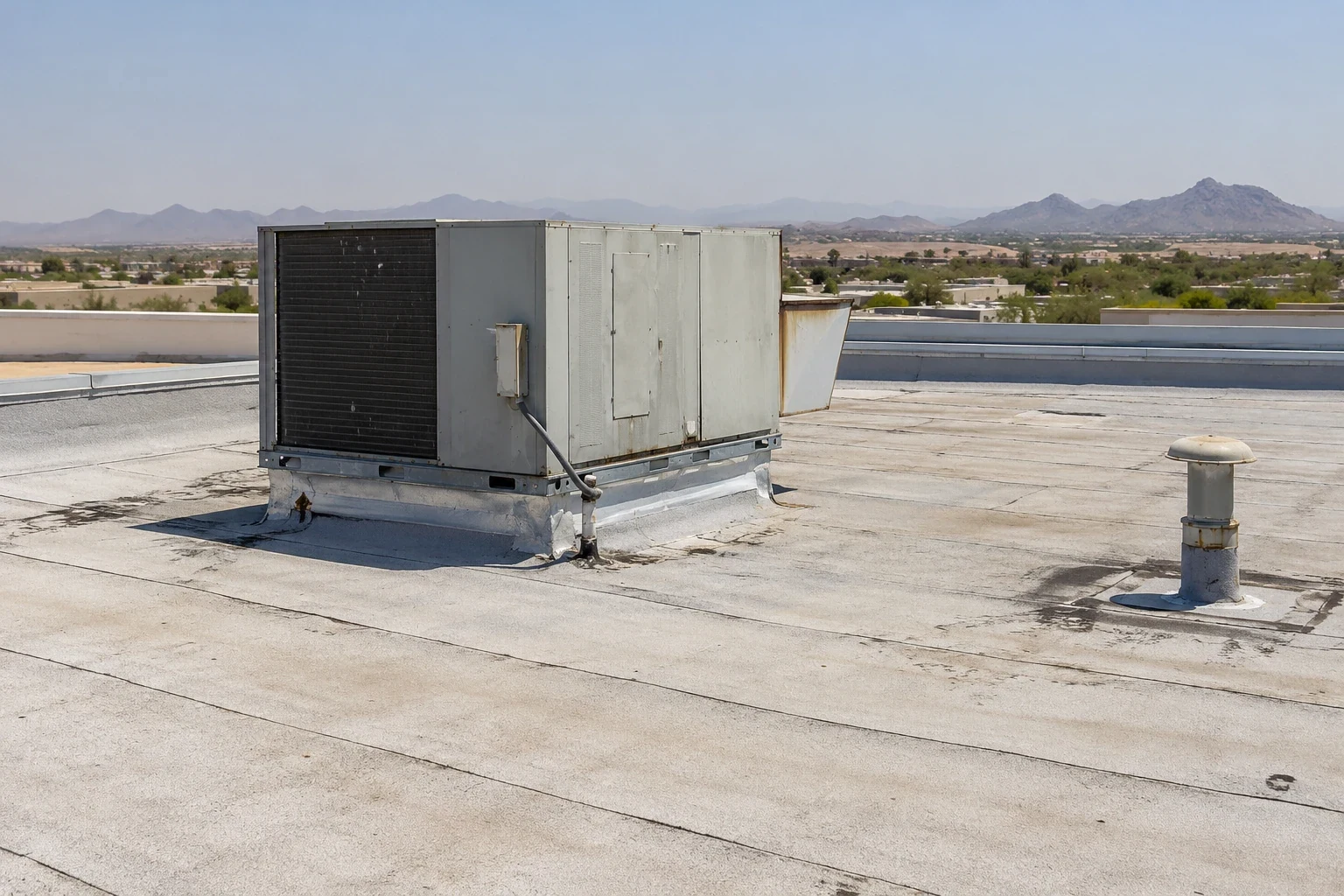
A roof claim becomes harder to manage when the damage, repair, and timeline sit in separate files. In Peoria, AZ, monsoon wind, hail, and short heavy rain can prompt an inspection, but the claim record must describe the actual building condition. We document roof areas, visible findings, temporary protection, and recommended work in a clear sequence. The owner can share that technical record with the adjuster while the insurer applies the policy. We do not decide coverage or promise a claim outcome. Our role is to make the roof facts and repair boundary understandable to the people reviewing them.
Build the record from dated observations
We begin with the date the condition was reported, the weather or operating event the owner wants reviewed, and any previous roof records. The inspection notes what was accessible, which areas were photographed, and what conditions were visible. If the roof is unsafe or still wet, we separate the initial stabilization from the later examination. The timeline can include interior reports and temporary measures, but each statement remains tied to its source: owner-provided information, a field observation, or a repair record.
Arizona monsoon storms can bring gusts, microbursts, hail, and flash flooding. That regional pattern explains why certain roof details may be inspected after a storm; it does not prove a particular claim. A property near Loop 303 can have several roof zones and active operations, so our notes locate each finding by area. If a new opening is confirmed, a storm damage assessment records the roof-side condition that supports the requested repair scope.
Separate visible damage from interpretation
Photographs should show the roof detail, its location, and enough surrounding material to understand the repair boundary. We capture seams, penetrations, edge conditions, drains, equipment supports, and interior effects when relevant. The written note identifies what is visible and whether additional testing is needed. A surface mark is not automatically a functional failure; a concealed wet area is not confirmed until tested. This distinction helps prevent a report from turning one observation into a broader statement about the entire assembly.
NWS Phoenix records a large hail event across the Phoenix Metropolitan Area on October 5, 2010. That historical event cannot establish the cause of current damage at a Peoria property. For a current review, we use the date and conditions supplied by the owner, then record what the roof inspection shows. If hail is part of the reported event, a hail inspection can document impact areas and any confirmed membrane or metal damage without treating every mark as a leak.
Describe repair work in owner terms
A useful estimate identifies the roof section, material, preparation, detail work, and conditions that may change after opening the assembly. We distinguish emergency dry-in from the permanent correction and note whether insulation or deck testing remains. If the roof needs a drain repair, flashing replacement, seam correction, or membrane patch, the scope says which component will be restored. The owner can hold our work description up against the field record and ask questions before authorizing work.
Peoria planning around the P83 district describes a mix of commercial, entertainment, hospitality, and employment uses. Those uses may create delivery or access constraints, but they do not establish damage at an individual property. We coordinate with the building contact and identify any operating area affected by the repair. The scope can reference targeted roof repair and drainage corrections where those conditions were observed. For broader damage, a replacement estimate should show why localized work no longer fits.
Keep temporary protection in its own record
When water is entering, temporary protection may be needed before an adjuster or permanent repair can be scheduled. We document the location and purpose of the cover, what area it protects, and what follow-up is still required. The temporary measure should not be described as a finished roof repair. If weather conditions prevent safe access, we note that limit and return when a field examination can be completed. Photos of the temporary work help the owner track how it changed between visits.
Peoria’s monsoon weather pattern can include gusty wind and brief heavy rain, so a temporary cover needs secure attachment and a clear runoff path. We assess the conditions before placing it and avoid blocking drains or creating a new water pocket. The property contact can retain the service note with the claim file and later repair invoice. If the building is in Peoria or Surprise, our record remains specific to the individual property rather than relying on citywide weather as proof.
Coordinate technical records with the claim process
We can provide inspection findings, photos, repair descriptions, and invoices that clarify the work performed. We can also identify a condition that remains uncertain and propose testing to resolve it. The owner decides how to submit the record and who receives it. We do not interpret policy language, negotiate coverage, or speak for the insurer. If an adjuster asks what material is damaged or what repair is needed, we can explain the roof conditions and scope in direct terms.
Where a claim involves several roof areas, we label them consistently and keep each set of photos connected to its findings. Peoria’s Loop 303 planning includes industrial, business park, and community commercial land in its study area; a multi-roof property may still have different systems or operating requirements on each building. We do not combine those conditions into one blanket description. The written condition report can retain the inspection baseline, and a warranty file review can keep existing documents organized alongside the claim record.
Close with the next documented action
The claim support file should end with what was inspected, what was repaired, what remains open, and what action follows. We identify whether additional moisture tests, a second roof visit, or a separate estimate is needed. If no storm-related defect is found, we record the condition observed and any unrelated maintenance issue without assigning a cause that the evidence cannot establish. A clear closeout helps an owner decide whether to monitor, repair, or plan capital work while keeping claim documents accurate.
For a property team managing sites near P83 and across Peoria, repeatable records make future comparisons easier. P83’s district facts provide useful context for access and building activity, but the claim remains tied to one roof and one reported event. We can organize the roof file so a later maintenance visit uses the same area labels and photos. The record supports an informed conversation; the insurer remains responsible for applying the policy.
Commercial Roofing Questions
Will you tell us whether insurance should cover the roof?
No. We document observed roof conditions and the repair needed; the insurer interprets the policy and decides coverage. We can explain the technical scope, provide photographs, and identify testing that would clarify a disputed or concealed condition.
What should we gather before the inspection?
Useful records include the date the issue was noticed, interior photos, prior repair notes, roof plans, and any existing warranty documents. We still inspect the roof directly. The information helps connect the current finding to its location and history without treating owner reports as field observations.
Can a storm report prove the date of damage?
A regional weather record can confirm that a storm pattern occurred, but it does not show what happened to a specific roof. We document the event date supplied for the claim and describe the conditions observed on the building. The report keeps those evidence types separate.
Do you attend an adjuster inspection?
We can coordinate a roof walk and explain the observed system, damage, and repair scope. The owner arranges access and confirms who should attend. We remain focused on the roof evidence and do not make a coverage decision or promise a claim result.
What if the roof needs emergency work before the claim review?
Active water entry may need stabilization before an adjuster or permanent repair can be scheduled. We document the temporary protection separately from permanent repair. The owner should keep the date, photographs, and service record. We can return to inspect the assembly and prepare a permanent scope when conditions allow.