Solar-Ready Commercial Roofing in Peoria, AZ
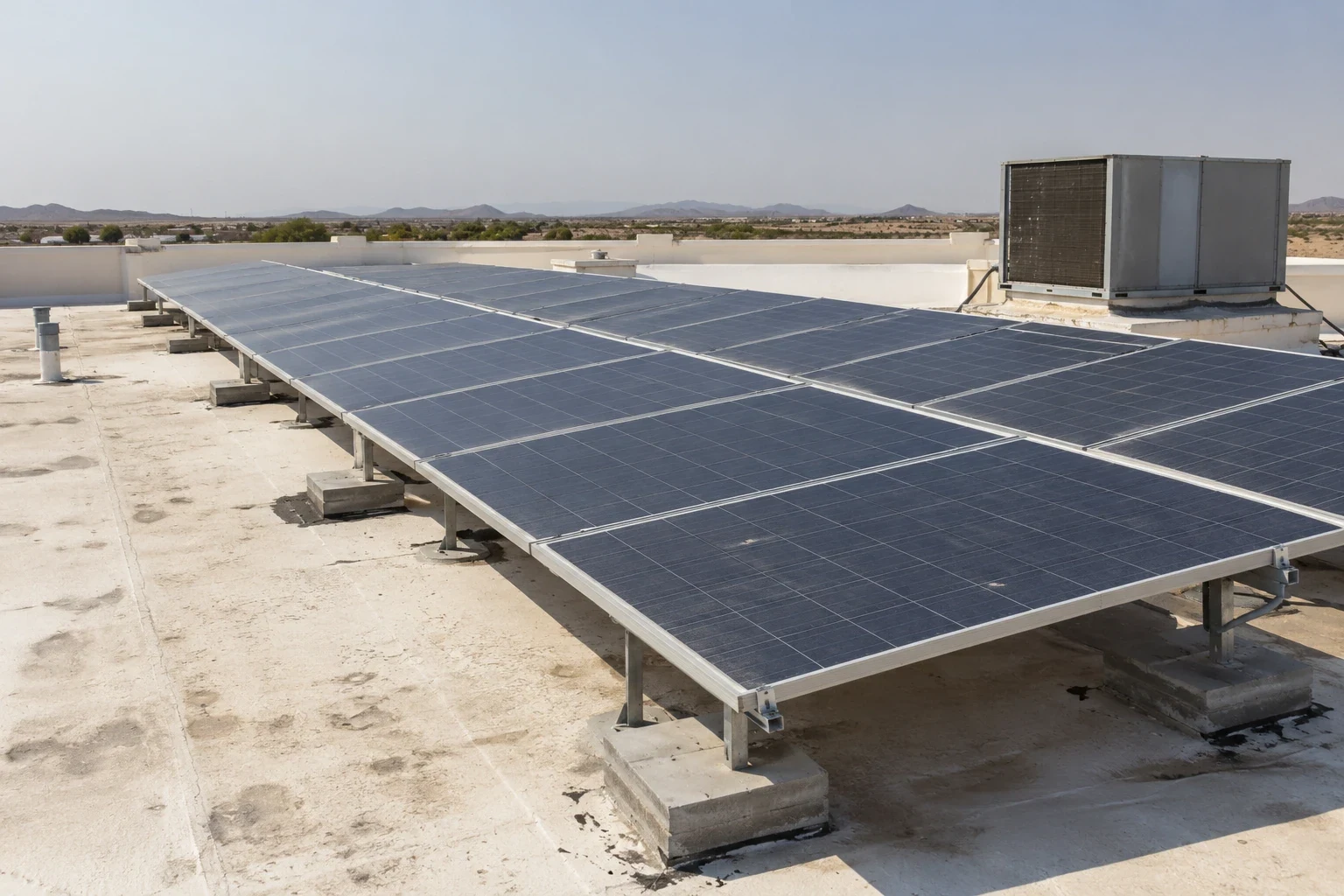
A solar proposal can arrive before anyone has confirmed whether the roof can carry the next service cycle. In Peoria, AZ, heat exposure, rooftop equipment, and planned commercial growth make that sequence worth sorting out before an array layout is fixed. We inspect the membrane, insulation, drainage, access routes, and repair history, then identify what roof work should precede solar installation. A commercial roof review gives the owner a condition record to share with the solar and design teams. It does not replace structural engineering or electrical design. The roof scope needs its own boundary, schedule, and responsibility for future service.
Set a roof baseline before the array
Panels can limit access to the membrane below them. Before that area is covered, we map leaks, open seams, edge details, penetrations, and sections that need testing. We compare repair history with what is visible and identify whether the roof has enough service life for the planned equipment cycle. If moisture is suspected, we mark test areas before supports are installed. A condition report can separate confirmed defects from questions that still need a core sample or structural review.
Peoria and the Arizona State Land Department are planning a large north-corridor area along Loop 303 from Lake Pleasant Parkway toward State Route 74. That is a planning area, not completed roof inventory. It does show why owners may be evaluating long-range building and energy decisions as land uses evolve. We keep the solar-ready recommendation tied to the actual roof, not a planning forecast. A Peoria Innovation Core review can connect the location context with the property's inspection record.
Compare roof life with equipment life
Roofing and solar systems follow different replacement cycles. If the membrane needs significant work soon, installing an array first can make later tear-off more disruptive and costly. We inspect seams, attachment, wet insulation, and perimeter details, then describe what must be repaired or replaced before equipment placement. The solar designer and structural engineer confirm loading and support layout. Our role is to state what the roof can accept, what remains uncertain, and what access must be preserved for future maintenance.
Peoria's adopted Camino a Lago plan locates a commercial core near Lake Pleasant Parkway and Deer Valley Road. That planned core does not tell us whether an individual building has solar equipment or what roof system it uses. For each property, we review penetrations, drains, curbs, and the proposed attachment points against the field condition. The insulation and cover-board review can address assembly changes when the roof needs a broader correction before solar work.
Coordinate supports with the membrane
Array supports may be ballasted, mechanically attached, or connected through engineered details. Each option affects the roof differently. We review drawings for penetration locations, flashing requirements, walkway clearance, and drainage conflicts. A support placed near a seam or drain may complicate repair access. We also identify responsibility for flashing and warranty coordination before installation begins. The attachment design belongs with the solar and structural teams; the roofing scope defines how the membrane remains watertight at each approved transition.
Long hot periods can affect exposed membrane and metal movement. Triple-digit heat is a fixture of the Phoenix summer, and the roof surface runs hotter than the air. We look for current movement at seams and equipment curbs before accepting additional attachments. If a roof needs an alternate membrane or a recover, TPO system options and recover feasibility can be evaluated against the actual assembly.
Preserve drainage and service routes
Array rows should not block drains, overflow paths, or the routes needed to inspect them. We compare the layout with the roof's low points and document any area that may collect debris. A solar installation also changes how crews reach seams, curbs, and equipment. We identify clear paths before installation and note where removable panels or planned access may be required for roof service. The drainage review helps settle the water path before supports make the roof harder to inspect.
Several north Peoria interchanges tie into the Loop 303 corridor, and the land along it is slated for jobs and commerce. Buildings there will vary in use, and nothing in a land-use table tells us what is on a given roof. We inspect the facility and coordinate with the solar contractor on loading zones, staging, and service access. If the building remains active during roof work, the phased reroof plan can coordinate tenant routes and temporary protection.
Sequence roofing before solar installation
When replacement is needed, the cleanest sequence is usually to finish the roof work before array installation. We set the roofing limits, complete membrane and edge details, test the finished work as appropriate, and provide records for the next trade. If the roof is serviceable and only localized work is needed, we mark the locations that require access before equipment is placed. The schedule must allow for weather protection and final inspection; no roof opening should be left dependent on an array crew returning later.
For an operating property in Peoria, the facility contact can help identify delivery windows, tenant needs, and areas that cannot be blocked. We coordinate those constraints with the roof and solar teams so materials do not cross protected routes. The owner record can capture the roof decision, unresolved structural items, and timing assumption when comparing current repair with replacement before solar construction.
Define responsibility after the panels arrive
Once the array is operating, roof repairs may require coordination with a solar provider to isolate or remove equipment. The closeout should identify who handles each system, how to request access, and which conditions require a roofing inspection. We provide photographs of the completed membrane, flashing details, drains, and repair areas before they are covered. The owner keeps those records with the solar drawings and roof warranty file. That makes later service a planned step rather than a debate over who owns the transition.
Surprise City Center covers about one square mile of downtown, split into blocks for services, healthcare, hotels, shops, and housing. A planning map is not a roof survey, but that mix of operations makes access planning important. For properties in the Surprise service area, we still set responsibilities building by building. A solar-ready roof is a documented assembly, a clear service path, and a schedule that respects the roof's own replacement horizon.
Commercial Roofing Questions
Can solar panels be installed on our existing commercial roof?
We inspect the current membrane, repairs, insulation, drainage, and access first. A structural engineer evaluates the building and support design. If the roof condition or remaining service life is a concern, the owner may want roof work completed before panels limit access. We provide the roofing findings and coordinate the roof sequence with the solar team.
Who determines whether the roof can carry the array?
A licensed structural professional evaluates the building structure and proposed loads. We describe the roof assembly, visible condition, and membrane details that affect attachment and water protection. The solar designer lays out the system. Those roles should be aligned before equipment is ordered or installed.
Should we reroof before installing solar?
The roof record and replacement horizon guide that choice. If broad deterioration, wet insulation, or recurring repairs are present, completing roof work first may avoid removing panels later. A serviceable roof with isolated defects may need a defined repair and access plan instead. We document the evidence that supports either path.
How do panels affect future leak repairs?
Panels can restrict access to membrane seams, drains, and penetrations. We identify service paths and repair areas before installation and document who coordinates panel access if roof work is needed. The owner should keep roof drawings and solar layouts together so future inspection begins with the actual equipment locations.
What records should we keep after the roof work?
Keep the roof condition map, repair photographs, membrane and flashing details, solar support drawings, and access responsibilities in one property file. We note the work boundary and any remaining test or structural question. That file helps each team distinguish roof maintenance from solar-system service later.