
Commercial Roofing in Fountain Hills, AZ
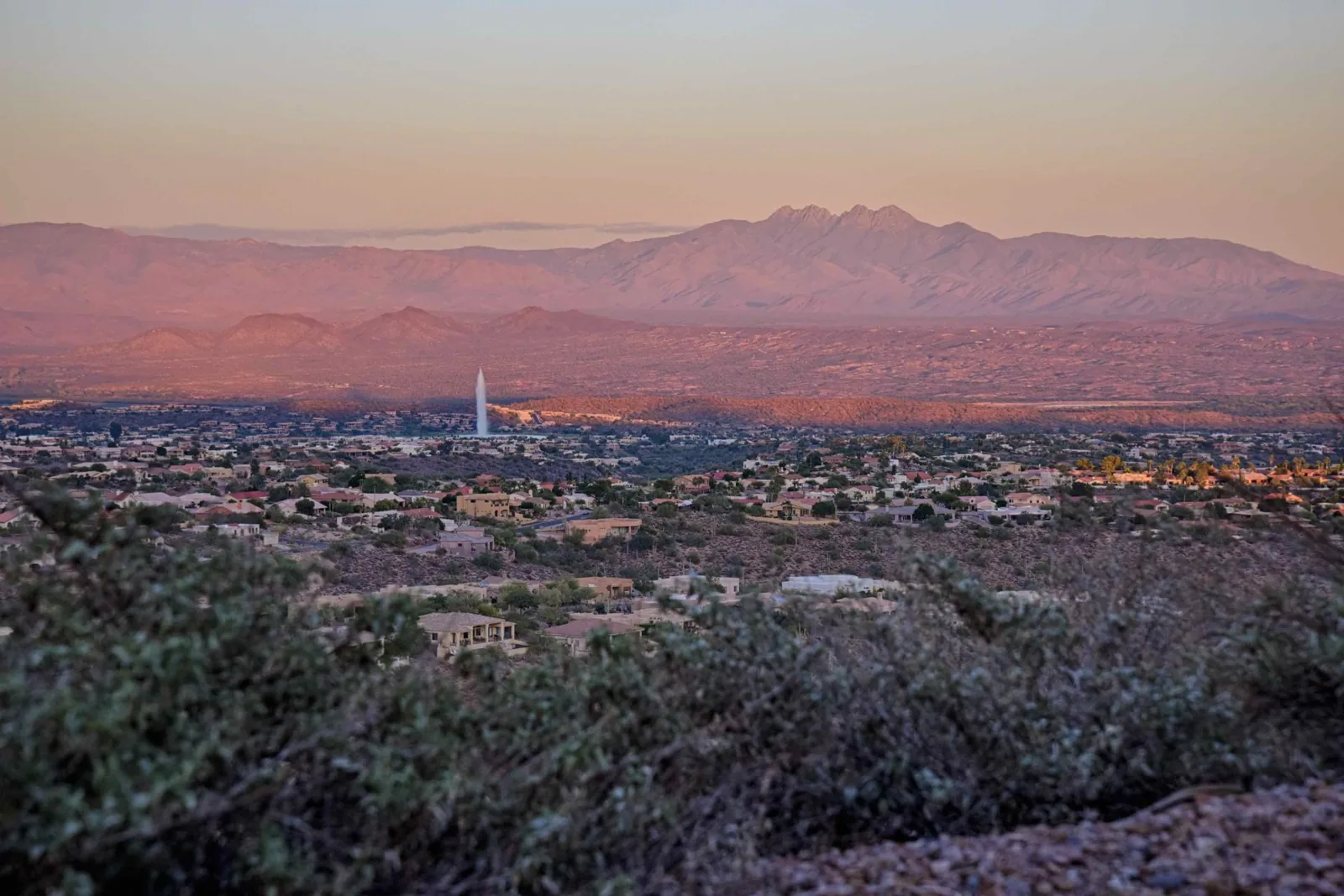
A retail-led town can hide its roof problems for years. Fountain Hills posted about $292 million in 2022 retail sales and about $91 million in health care and social assistance receipts across roughly 20 square miles, and the roofs behind those numbers are likely to include storefront parapets, service buildings and professional suites. Many roofs like these show the same early symptom: a stain that comes and goes with the weather, which owners treat as a nuisance until the insulation is soaked. Fountain Hills sits about 35 miles in a straight line from Peoria, AZ, a long way across the metro. That distance is why we collect the roof record first and arrive with a clear question to answer.
Follow the intermittent stain to its entry point
A stain that appears after one storm and fades in dry weather is a clue, not a closed case, because the opening can be dry and sealed on a sunny day and still admit water when wind pushes rain sideways against a wall. Water may enter at a curb or parapet cap, run along the top of the insulation and surface a long way from the source. We ask for the dates and locations of every stain, then compare them with the roof plan to find the details they share.
On the roof we probe the suspect seams, check flashing heights and look for sealant that has lost its flex. If a stain traces to a single detail, a leak repair may close it and protect the current budget. If several stains trace to different areas, the roof is failing broadly, and the owner needs the numbers on wet insulation before choosing between repair and replacement. We put those numbers in a short written summary with photographs, so the decision rests on what was found and not on what was assumed.
Account for the heat cycle in every seam
Roughly 94 days a year in the Phoenix area reach 100 degrees or higher. That figure describes regional air and not roof surfaces, yet it explains the long, repeated expansion that tests membranes from May through September. Seams, inside corners, pipe boots and edge metal take the strain, and a sealant that flexed in year three may crack by year ten.
For owners weighing a reflective surface, a cool roof installation reduces surface temperature and slows some of that movement, but it does not repair a leak. We confirm the substrate is dry and sound before recommending a reflective system, and we compare a white single-ply membrane with a coating over the existing roof on cost, service life and what each does to the building's warranty file.
Plan for monsoon wind before it moves loose metal
Microbursts and damaging winds ride in ahead of monsoon storms moving toward Phoenix and the low deserts, and flash flooding and hail are also on the Weather Service's list for the metro. Wind finds loose coping, lifted edge metal and unsecured equipment covers first. Once an edge lifts, the wind can get beneath the membrane and peel it back.
We check fastener spacing, joint sealant and the lap of metal over membrane. Perimeter fixes are often modest. Work on wind-damaged roofs that starts at the edge limits what a later storm can do. Drains are cleared the same day, because a roof that holds water during wind-driven rain is carrying extra load at exactly the wrong time.
Keep a hail record that an adjuster can follow
The October 5, 2010 supercells, documented by NWS Phoenix, dropped large hail and caused extensive damage across the metro. That event is the regional benchmark for what a storm can do to commercial roofs, and it is the reason we examine any roof that has not been surveyed since a major storm.
Hail damage hides in cover board bruises, cracked coatings and dented metal. We photograph each area, map it on a roof plan and note whether the pattern is consistent across the roof, which is typical of impact, or confined to certain exposures. Our hail damage repair scope follows from that map, with storm damage and wear separated in writing so a claim is supported by the evidence.
Prepare the roof before any array or new equipment goes up
Owners often add rooftop units or consider solar on a roof that has not been assessed for it. Every attachment adds penetrations and foot traffic, and a roof near the end of its life can fail beneath new equipment. We review remaining service life, drainage and the condition of the deck before an array or unit is placed. A roof with ten more years of service may justify the addition, and one with three may call for replacement first.
When the plan includes solar-ready roofing, we lay out walkways, keep drains clear of racking and flash each mounting point so the roof and the array can be serviced without disturbing one another. That coordination is far cheaper than lifting a new array to replace a membrane beneath it.
Stage the work around store hours and deliveries
Retail tenants trade through a roof project, so we plan around deliveries, peak days and customer entrances. Hoisting and staging happen away from public doors, the open roof area stays small and each section is sealed at the end of the shift. For professional suites, we ask which rooms are most sensitive and when they are in use.
A written schedule shared with every tenant before the first day removes most of the friction. Owners with other holdings in Scottsdale or Paradise Valley can coordinate those buildings in the same plan, and a multi-site roof program ranks each roof across the portfolio against the same condition criteria.
Commercial Roofing Questions
A stain keeps returning after we repainted the ceiling. What does that mean?
It means water is still entering, usually from a detail other than the one nearest the stain. Water travels along the insulation or deck before it appears. We trace the stain back across the roof, test the nearest curbs, seams and flashings and, if needed, survey for moisture so the repair goes where the water enters.
Does a reflective roof fix an older roof that already leaks?
No. A reflective surface changes how much heat the roof absorbs, and it does not close a seam or replace wet insulation. We repair or replace the failing parts first, then apply or install the reflective system over a dry, sound substrate. The order is what makes it last.
What should be checked before solar panels are added to a retail roof?
The remaining service life of the membrane, the condition of the deck, the drainage routes and the location of existing penetrations. If the roof will need replacement within a few years, doing that work before the array saves the cost of removing and resetting it. We write the findings into a short report for the installer.
How can wind damage to edge metal be spotted from the ground?
Look for gaps along the parapet, sections of coping that sit out of line, and debris on the ground beneath the roofline after a storm. Those signs justify a roof visit. Up close, we check fasteners, joints and sealant, and we secure whatever has moved before the next storm arrives.
How do you handle a tenant who needs to stay open during the work?
We schedule by section and move materials outside peak hours. The tenant receives the dates in advance, along with the name of a site contact, and the open area is sealed each evening. If a tenant has a sensitive period, we plan that section around it.