
Commercial Roofing for Insurance Restoration in Peoria, AZ
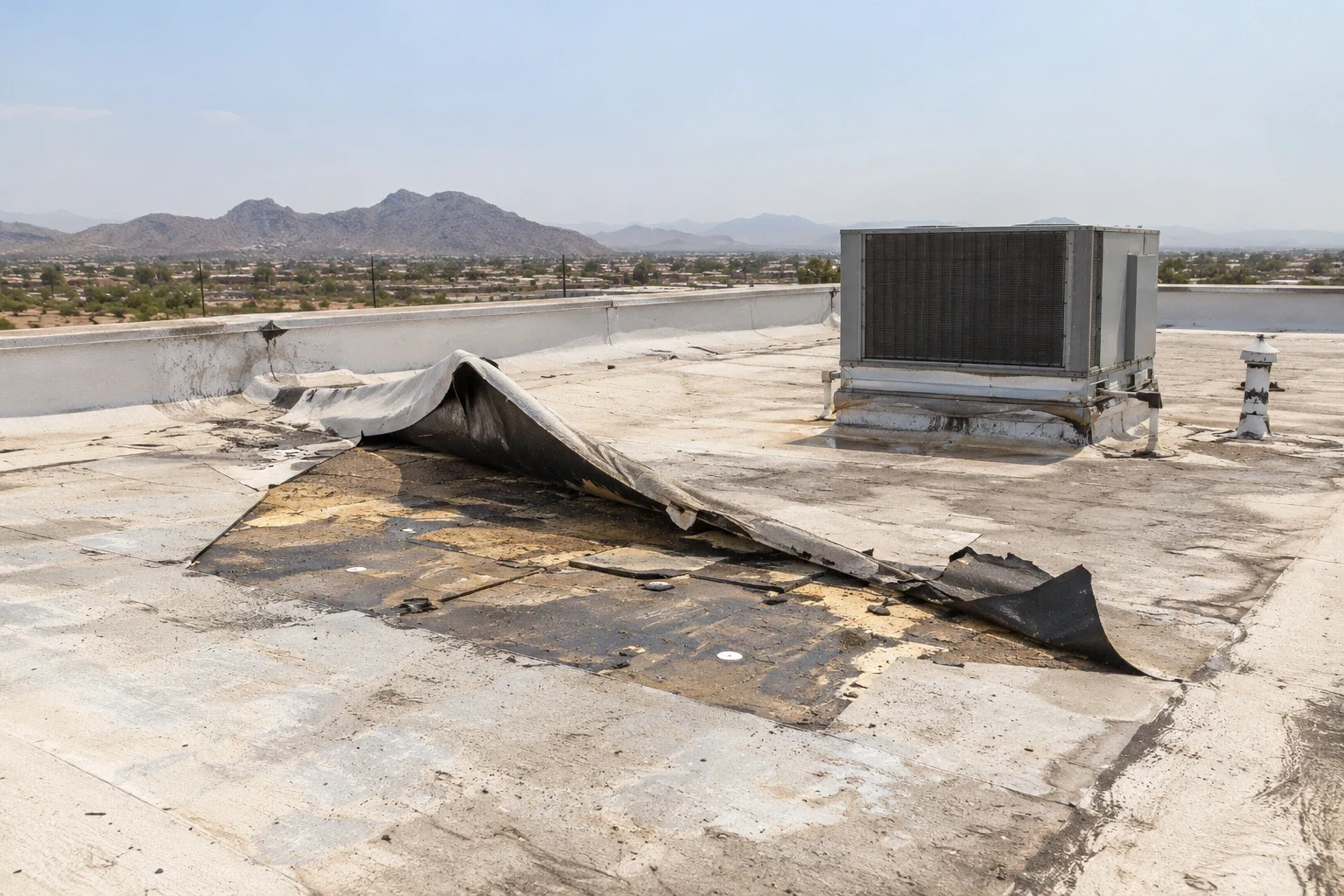
A roof claim gets harder to evaluate when the first record begins after temporary repairs have changed the damaged area. The inspection should identify what is visible, where it sits, and what still needs testing. Phoenix-area monsoon weather can bring wind, hail, and concentrated runoff; long hot periods also work on exposed roof details. We document the roof condition and repair boundary so owners, restoration teams, and adjusters can discuss the same observed facts.
Separate water control from the claim record
Active water entry needs immediate attention, but temporary protection and permanent repair are different line items. We identify the opening or failed detail, protect the interior where needed, and record the condition before changing it. Photographs show the location, surrounding roof area, and the temporary work performed. Before a roof area is altered, document where water appears and what temporary measures are already in place.
After the immediate action, we inspect nearby seams, flashings, curbs, drains, and prior repairs to determine the full scope. A roof claim documentation review can organize field findings and repair records for the owner’s file. We do not decide coverage or promise an insurer outcome; we document the roof condition and the work needed to restore it.
Map damage without overstating the cause
Impact marks, displaced edge metal, open seams, and water entry each need to be tied to a location on the roof. We photograph visible conditions and compare them with earlier inspection records when available. If a ceiling stain appears away from the roof opening, we trace the likely path instead of drawing a repair boundary around the interior mark. Moisture testing can determine whether insulation has been affected beyond what surface photographs show.
An infrared moisture survey can guide confirmation tests when the assembly may hold water below the membrane. We identify the tested area and result, then separate confirmed moisture from locations that still need access. That distinction helps a restoration contractor plan removal and dry-in without treating a thermal image or a weather report as proof of a specific roof failure.
Use Peoria storm history as context, then inspect
Arizona monsoon thunderstorms can bring damaging wind, hail, and flash flooding across the Phoenix metro area. A severe hail outbreak on October 5, 2010, sent supercells across metropolitan Phoenix; large hail from those storms caused extensive damage. Those facts help explain why owners may schedule a roof review after a severe event; the specific claim still depends on inspection findings at the building.
Phoenix-area records include many days with highs of 100 degrees or more. For a claim review, we examine the actual membrane, flashings, perimeter, and drains, then document visible conditions affecting the repair scope. A storm damage roof inspection records visible impact and identifies whether additional testing or temporary protection is needed.
Build a repair scope that can be reviewed
A useful restoration scope states the work area, materials to be removed or repaired, moisture findings, access limits, and the steps needed to return the roof to service. We separate emergency protection, investigation, and permanent work so the owner can see how each cost driver relates to the roof condition. If the damaged area is isolated and surrounding material remains sound, a targeted commercial roof repair may be appropriate. If failures or moisture extend across separate areas, we document the wider boundary and alternatives.
For a larger loss, we identify daily dry-in, equipment coordination, material lead time, and the conditions that could change removal depth. A condition report ties photographs to a roof sketch and records the recommendation. The owner can share that file with the restoration team and review whether the proposed scope matches the observed damage before work begins.
Keep Peoria locations distinct in the record
An older Loop 303 study set out business-park/industrial and community-commercial acreage, while P83 near Loop 101 and Bell Road has a wider planned use mix. For restoration work in either area, adjuster and contractor coordination should use the inspected property’s address, roof plan, and photographs, not a district label as a proxy for damage. A claim file still needs its own address-controlled inspection and roof-area photographs.
A restoration project near the Loop 303 corridor can require a different delivery and access plan than a property near P83. We record the facility’s actual use and roof details from the site visit. Public owners can carry the report into their agency roof record, while the construction team can coordinate sequencing through a general contractor. Each recipient gets the same findings without turning the district name into a claim about a roof.
Close the file with the next inspection trigger
After repairs, the record should show the material installed, the detail restored, and any nearby condition that remains under observation. We include photographs after work, note the date and roof area, and state what should be checked on the next maintenance visit. If the owner plans to defer a larger project, the report gives a trigger that would reopen the decision, such as another leak at the same transition or moisture beyond the original boundary.A useful adjuster package pairs a roof-zone photo log with measured repair limits, temporary-protection dates, and a short list of items still needing tests; keep replacement alternatives separate until scope is established. Record the observed condition before temporary work changes it, then note the date, roof zone, and person who authorized each protective step.
For properties that need recurring follow-up, a maintenance schedule can track repairs and changes after the claim work is complete. The record should be useful whether the next reader is a facilities manager, restoration lead, or owner representative. It states what the crew found and did, not what the reader should infer about coverage. We can also send the final photographs and repair locations to the person responsible for the next inspection so the baseline survives a change in staff or vendor.
Commercial Roofing Questions
What should be documented before temporary roof work begins?
When it is safe, photograph the affected roof area, nearby details, and interior water entry before changing the condition. We then document the temporary protection and the permanent scope separately. If immediate protection cannot wait for a full photo set, we record what was accessible and identify any lost evidence clearly.
Can you determine whether a storm caused the damage?
We can document visible conditions, compare them with prior records, and explain whether the observed pattern is consistent with the roof work required. The cause may need additional evidence, and coverage decisions belong to the policy and insurer. We state what the inspection supports and what remains unresolved.
Does infrared imaging prove insulation is wet?
It identifies areas with temperature patterns that may warrant confirmation. We use core samples, moisture meter readings, or another suitable test to verify the assembly condition. The report maps both the tested locations and any area that remains unconfirmed, keeping the repair boundary tied to evidence.
How should emergency repair costs appear in the restoration scope?
List temporary protection, access, investigation, and permanent repair as separate work. Include photographs and the roof area tied to each item. That lets the owner and restoration team compare the immediate action with the final scope without confusing a tarp or temporary patch with completed roof restoration.
What belongs in a post-repair claim file?
Keep the original condition record, inspection findings, photographs before and after work, repair details, and open follow-up items together. We identify the material and location of completed repairs and schedule a check when the roof needs monitoring. The file should make the next reader’s starting point clear without repeating the claim decision.