
Commercial Roofing in Tempe, AZ
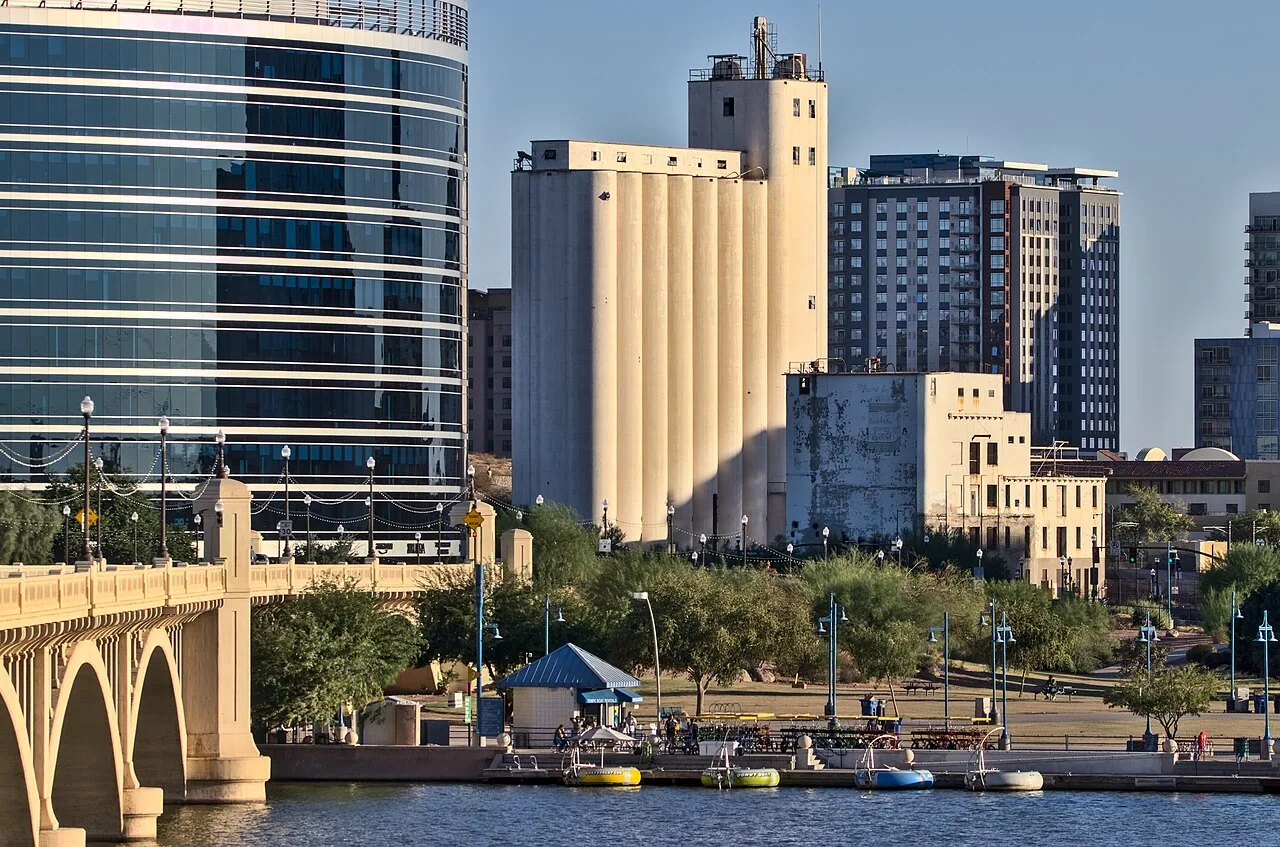
Parapet walls hold more of a roof's story than the membrane in the middle, because that is where flashing, coping and wall movement meet. Tempe covers only about 40 square miles of land, and Census figures show roughly $10.2 billion in 2022 retail sales. When a commercial site is tight, our questions change: where the crane stands, where the debris goes, how the trucks reach the dock. We work from Peoria, AZ, about 35 miles away in a straight line, and we start every Tempe assessment by looking at the walls and edges, then at the space around the building.
Inspect parapet flashing and coping before the field
A wall that rises above the roof forces the membrane to turn up and terminate, and each turn is a chance for water. Through-wall flashing can fail, the termination bar can loosen, and coping joints open as the wall moves. Through a Tempe summer of 100-degree afternoons, that movement happens daily.
We probe the base flashing, check the sealant at every coping joint and look for cracked or stained masonry that signals water behind the cap. A failing wall detail often causes a leak that appears to come from the field. Edge metal and coping repairs are scoped separately from membrane work, so an owner can see what the walls need and what the field needs.
Masonry walls add a further question. Hairline cracks near the cap, efflorescence on the face and spalled mortar all suggest that water has been moving through the wall for some time. We photograph these signs and pass them to the owner, since we can reseal the cap but cannot repair the masonry. Fixing only one of the two leaves the leak path partly open.
Fit hoisting and staging into a tight site
A tight commercial block leaves little room for a crane, a dumpster and a stack of insulation. Before work begins we measure the available space, identify overhead lines, confirm the route for deliveries and agree on hours with neighbors and tenants. Where a lane or sidewalk must close temporarily, the city's permit requirements apply, and we flag that early.
On a site like this, tear-off debris cannot pile up for days. We schedule disposal to match production, protect landscaping and parking surfaces, and keep the work area fenced. For buildings that remain open, occupied building reroofing methods limit dust and noise near entrances. The tighter the site, the more the staging plan shapes the cost, and we show that line in the proposal.
Overhead and underfoot matter too. Power lines near the building edge limit crane positions, and a buried utility under a staging area may rule out heavy loads. We ask for site drawings when they exist and confirm locations on the walk, because a staging plan that ignores them can stop the job in the first week.
Map hidden moisture before pricing a replacement
An older roof can hide wet insulation for years. Water enters at a seam, spreads along the top of the board and shows up inside far from the source. A ceiling stain tells you where the water landed, not where it came in. We use an infrared moisture survey and cores to find the wet area and measure its share of the roof.
That share becomes the pivot for the decision. A contained wet area can be cut out and replaced, with the surrounding roof left to run on. Wet zones in many locations point toward replacement, because patching each one would cost nearly as much as a new roof and leave the rest of the assembly to age. The survey turns the question into a measurement.
Cores are patched the same day, numbered on the plan and photographed, so a later survey can return to the same point and see whether the reading has changed. That repeat measurement is how a slow, stable leak is told apart from one that is spreading, and it keeps the replacement window honest.
Account for retail and service tenants in the scope
The same Census data show about $1.6 billion in 2022 health care and social assistance receipts for Tempe, next to the much larger retail total. We do not infer building types from numbers, but an owner of retail, service or clinic space knows the pressures: tenants who need quiet hours, rooftop units that serve individual suites and leases with their own roof clauses.
We list every unit on the roof, ask which tenant each serves and plan the work so that equipment shutdowns are brief and announced. A commercial roof repair that respects the tenant calendar avoids disputes, and a replacement scope can include new curbs and flashing for any equipment due for change-out. Mechanical contractors working on the roof later should find the details documented.
Lease language deserves a read as well. Some leases assign the roof to the owner, some share the cost and some push repairs to the tenant. A condition report that names each section's age and repair history gives both sides the same basis for the conversation.
Check drains and edges ahead of monsoon wind
Monsoon storms can bring damaging winds and microbursts, according to the National Weather Service, and large hail fell across the Phoenix metro area on October 5, 2010. Parapet buildings catch water at their drains, and a clogged outlet turns a short storm into a pooling problem. Wind finds loose edge metal and lifts it.
A seasonal walk clears drains and scuppers, tests overflow openings, tightens coping and photographs everything. After a storm we repeat the walk and compare. Owners with holdings in Mesa or Chandler can add those roofs to the same seasonal schedule, so one set of dates covers the group.
Commercial Roofing Questions
Why does a parapet roof leak when the membrane looks intact?
Water often enters at the wall, where the membrane terminates under coping or behind a counterflashing. A cracked sealant joint or loose bar lets water run behind the flashing and into the building. The membrane in the field can be fine. We probe each termination and trace stains to the entry point so the repair reaches the true source.
Can a roof be replaced on a site with no room for a crane?
Usually, with planning. Options include hoisting from a different side, using a smaller crane or lift, staging materials on the roof in limited quantities and scheduling deliveries by the hour. We measure the site, check overhead lines and walk the delivery route before we price the work, so the proposal reflects the real constraints.
How much of a roof must be wet before replacement makes more sense than repair?
No fixed share applies to every building, so we set a written threshold after the moisture survey. A small, single area favors cutting out and replacing. Wet zones in several areas, or ones that return after repair, favor replacement planning. The threshold also accounts for remaining service life and the lease calendar.
What can tenants expect during rooftop work on an open building?
Advance notice, defined work hours and protected entrances. Noisy tasks are scheduled for agreed periods, rooftop air intakes are shielded and the open roof area is sealed each evening. If equipment must be shut down, we coordinate the timing with the tenant and the mechanical contractor first.
Do coping and edge metal repairs qualify as maintenance or capital work?
The line sits with the extent of the work and the owner's accounting rules, which we cannot decide for you. Replacing a few loose caps is typically maintenance, while replacing all edge metal during a re-roof is part of the capital project. Our scope separates the two lines so your accounting team can classify each item.