
Commercial Roofing in Gilbert, AZ
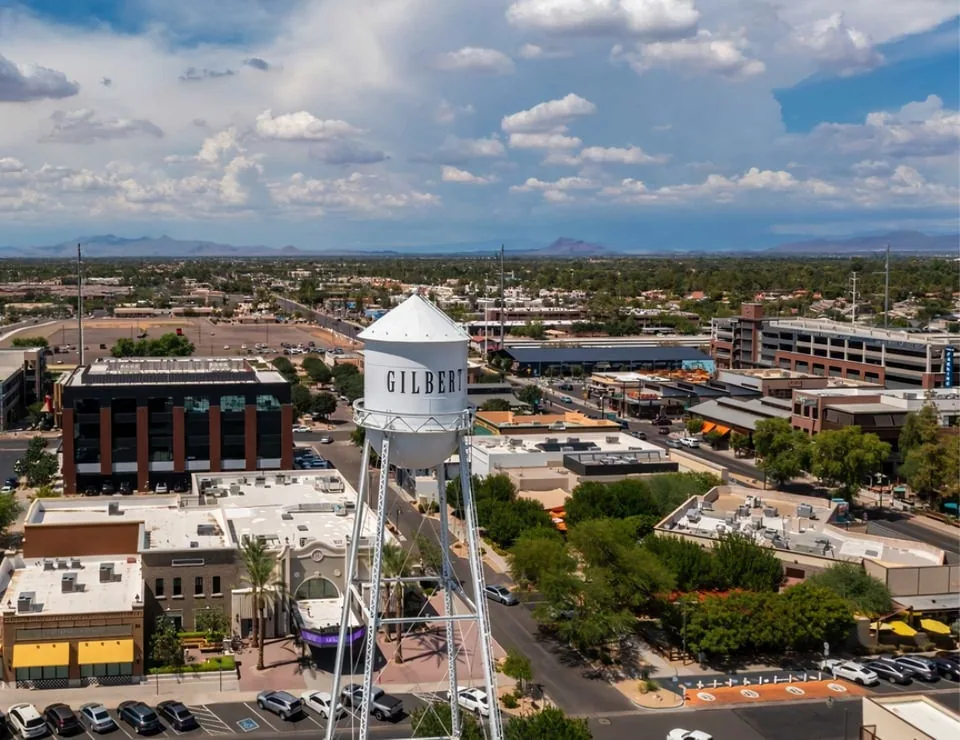
A roof that nobody has looked at for two summers has usually collected the debris, loose sealant and small punctures that turn into next year's emergency. Gilbert spans about 69 square miles of land, and Census figures put its 2022 retail sales near $7.2 billion and its health care and social assistance receipts near $2.2 billion. Owners of retail, office and medical space here can keep roofs healthy through a steady maintenance rhythm rather than waiting for leaks to set the schedule. We reach Gilbert from Peoria, AZ, about 46 miles away in a straight line, and for a trip that long a planned seasonal program does more for the owner than a string of urgent calls.
Set a seasonal maintenance rhythm that fits the climate
The Valley's triple-digit summer is long, and the monsoon follows that heat with wind, hail and sudden rain. A sensible program places a visit before the monsoon and another after it. The first clears debris, tightens loose metal, checks drains and seals small defects. The second looks for damage the storms caused and confirms that water leaves the roof as it should.
A preventive roof maintenance plan records each visit with dated photographs, so a trend becomes visible: a seam that opens a little more each year, a drain that clogs after every storm, a patch that keeps peeling. That evidence tells the owner when to keep repairing and when to start planning a larger project.
Access and safety are part of the visit. We confirm the roof hatch or ladder location, check guardrails near equipment and edges, and note any hazards such as brittle skylights or soft deck areas. These notes go to the property manager the same day, because a hazard on the roof is a liability the owner should know about before the next technician climbs up.
Use drone imagery to scan before anyone walks the roof
A drone roof inspection gives a fast overview of a large or hard-to-reach roof. It shows ponding, staining, displaced equipment covers, debris and visible membrane defects without the cost of a full walk, and it creates a dated image set that can be compared year to year. For an owner with several buildings, it is a quick way to sort which roofs need a closer look.
The drone has limits. It cannot probe a seam or find wet insulation under a dry surface, so the scan points to where a hands-on visit and an infrared survey should go. We combine the two: aerial imagery to spot candidates, then boots on the roof for the details. The report shows which findings came from which method.
The image set also helps in conversations with tenants and lenders. A dated overhead photograph of a clean, draining roof is simple evidence of care, and a photograph of ponding or displaced equipment shows an item the owner is already tracking. Flights are scheduled for clear conditions and low wind, and the file notes the date and time of each pass.
Consider spray foam where the roof shape and schedule suit it
Spray polyurethane foam forms a continuous, insulating layer that adheres to the roof surface and then takes a protective coating. It suits some roofs particularly well, such as those with many penetrations or irregular shapes where sheet membranes need many seams and cuts. The substrate must be dry and clean, and the application depends on wind and temperature conditions at the time.
With spray polyurethane foam roofing, the coating layer is the part that takes the UV and weather exposure, so it needs periodic inspection and recoating at intervals set by the manufacturer. We describe that maintenance up front, because an owner who understands the recoat cycle can budget for it. For a roof that fits, foam can be a sound choice. For one that does not, we recommend another system and explain why.
Turn inspection findings into a capital calendar
Maintenance reports are most valuable when they feed a plan. After each visit we update the estimated remaining life of each roof section and the repairs we expect in the next year or two. The owner sees the pattern: which buildings are stable, which are slipping and which are close to the point where repair stops making sense.
That information supports a roof capital plan with real dates. It lets an owner set aside money for a replacement that is two or three years out, choose the best season for the work and avoid an emergency decision. Owners with other holdings in Mesa or Chandler can fold those roofs into the same calendar.
Timing a replacement around the building's own calendar saves money. A roof project scheduled before a lease renewal, or ahead of a planned sale, avoids a rushed bid. We present the likely cost drivers for each option, including tear-off depth, insulation, drainage changes and access, so the budget conversation starts from the roof's real condition.
Keep emergency response ready between scheduled visits
A maintenance program lowers the odds of a surprise but does not remove them. A tree limb, a failed drain during a cloudburst or a mechanical contractor's dropped tool can open a roof overnight. Emergency crews are available through the night and on holidays, and because the roof is already documented, they arrive knowing what the surface looked like at the last visit.
The first goal is to stop water entering the building. Temporary measures go in, the interior is protected and the damage is photographed. Permanent repair follows after the roof is dry enough to test. Each step is added to the roof file, so the next maintenance visit can check how the temporary measure is holding.
Commercial Roofing Questions
How many maintenance visits does a Gilbert commercial roof need each year?
Two is a practical baseline: one before the monsoon season and one after it. Roofs with known problems, heavy foot traffic or many rooftop units may justify an extra visit. We set the frequency from the condition report and adjust it as the roof's history becomes clearer.
What can a drone survey tell me that a visual check from the ground cannot?
A drone shows the full surface at once, including ponding, displaced equipment covers, debris and visible membrane damage, and it produces a dated record. It does not find moisture inside the assembly. For that we add an infrared survey and cores. Together they give a fuller picture of the roof.
Does preventive maintenance really lengthen the life of a roof?
It helps by removing the causes of early failure: clogged drains, loose flashing, small punctures and unsealed seams. It cannot reverse age. A maintained roof reaches the end of its service life on schedule instead of ahead of it, and the record shows the owner when replacement planning should start.
When does spray foam make more sense than a single-ply membrane?
Foam is attractive on roofs with many penetrations or odd shapes, where a continuous layer avoids the seams a sheet would need. A single-ply membrane may fit better on large, simple roofs. Substrate condition, expected foot traffic and the owner's tolerance for recoating all feed the decision.
What belongs in a roof file that I can hand to a lender or buyer?
A condition report with photographs, a list of repairs with dates, moisture findings, warranty papers and an estimate of remaining service life for each section. Add the maintenance log. That package answers most questions before they are asked and keeps a closing on schedule.