
Senior Living Roofing in Peoria, AZ
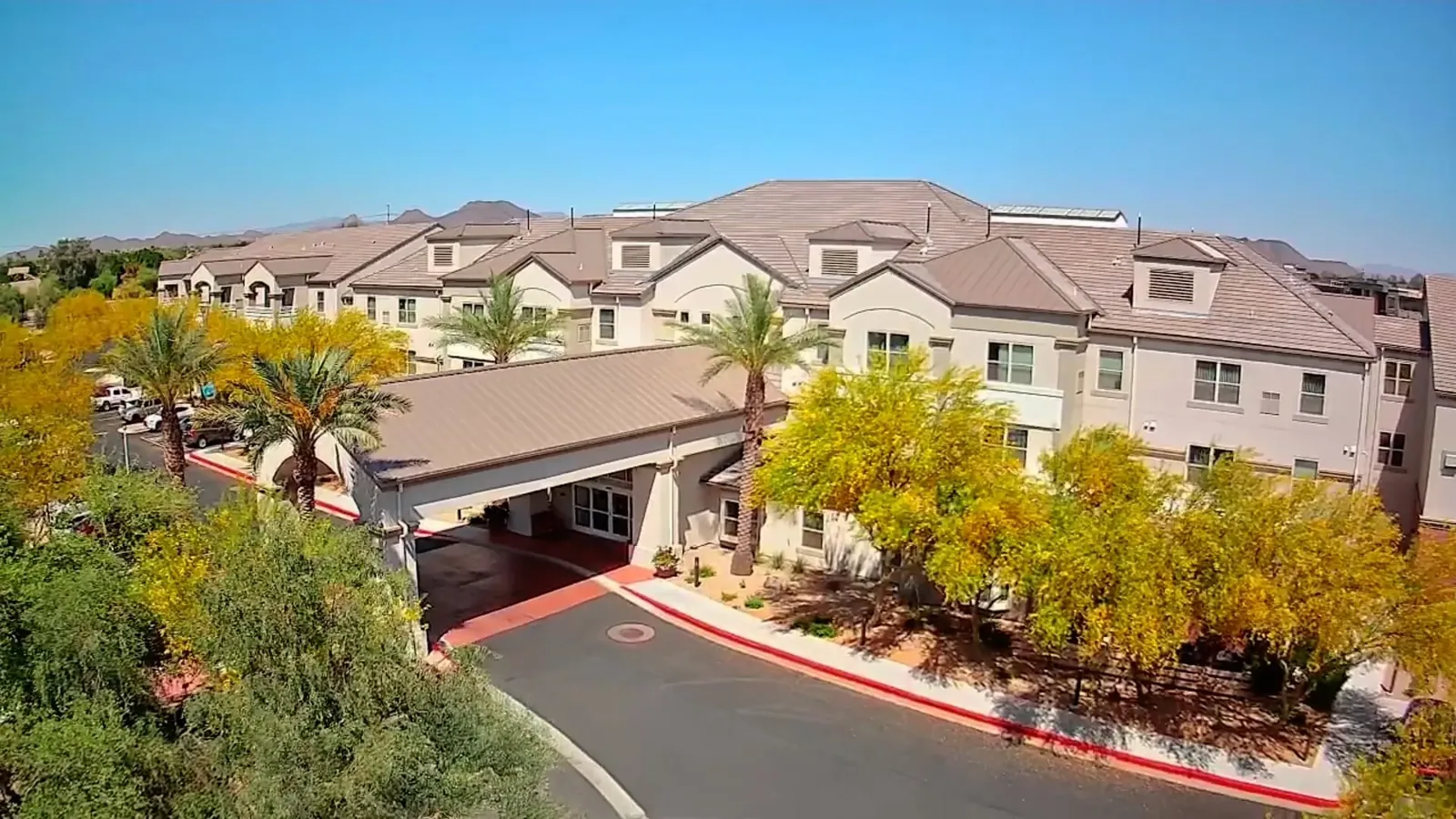
A patched roof over a resident wing can look settled for years while wet insulation spreads across the next several ceiling bays. The stain in one room is rarely the full story, and a quiet interval after a repair is not proof the water path has closed. In Peoria, AZ, long heat cycles and short, hard monsoon storms keep working on seams, curbs and edge metal, so an unresolved detail eventually shows itself. The first questions are narrow: is moisture confined, did the last patch hold, and has water reached the deck? Only then do we draw a repair boundary and discuss whether the owner should defer or act.
Trace the water path before choosing the wing
A leak in a senior living building often appears far from its entry point, because water follows the deck, a duct chase or a wall cavity before it shows on a ceiling. We map each interior stain, then walk the roof to find the seams, drains, curbs and penetrations above it. If the stains do not point to a clear opening, an infrared moisture survey reads the insulation from above and spares the membrane a test cut.
Clinical spaces such as those in a medical office raise the same question. The map matters for scheduling. A leak over a resident room, a dining area, a nurse station or a mechanical space has different consequences, and the order of repair follows that exposure. We record each finding with photographs, so the care and facilities teams see the same picture we see on the roof.
Interior finishes tell their own story. Brown rings, soft drywall, sagging tile and a musty smell all suggest repeated wetting, and repeated wetting means the first leak was not the last. We note which ceilings have been replaced before, because a new tile under an unrepaired roof section only resets the clock on the same failure.
Protect residents before opening the roof
Senior living roofs sit over people who live there around the clock, so noise, dust, odor and interrupted air handling are not minor side effects. We agree on work hours with the administrator, identify wings below the work zone and set protection over entrances and walkways. Tear-off and fastener work are scheduled away from rest periods where the building allows.
Our occupied building reroofing plan also addresses air intakes and exhaust, because adhesive fumes and dust should not reach resident spaces. Each opened roof section is dried in before the crew leaves. Where an interior leak appears during the job, we stop, protect the area and repair the opening before moving on. Staff are told the day's work area in advance.
Delivery and emergency routes get the same planning. The city's development map treats the Loop 101 as a commercial access corridor, and a building near it may share road access with other tenants and deliveries. We keep crane staging, material drops and truck turns clear of the entrance that ambulances and families use.
Read the heat cycle against the cooling plant
Valley summers bring about 94 days a year of 100°F highs or more. Air readings are not roof readings, but they show how hard seams, sealant lines and flashings are worked. Cooling equipment on the roof adds foot traffic, condensate lines and curb clusters, and each one is a place where a detail can open.
We inspect curbs, supports and refrigerant line penetrations as a group. Pipe boots crack, sealant shrinks from metal and walk routes wear a membrane thin. A residential-style roof, like that of an apartment building, can carry many small penetrations, so we check them first and record condition by cluster.
Edge condition deserves its own pass. Perimeter metal moves with every heat cycle, and a loosened joint lets wind-driven rain behind the membrane. Loose perimeter pieces get corrected first, because an edge that keeps moving will pull apart even a well-made seam.
Plan monsoon exposure around edges and drains
NWS monsoon guidance names damaging outflow winds, microbursts, flash flooding and hail as the hazards low-desert storms can bring. A supercell outbreak on October 5, 2010 left large hail and extensive damage around metro Phoenix, according to NWS Phoenix. None of that proves any given roof was struck, but it explains why we check edge metal, coping, scuppers and drains before the summer storm season begins.
Short bursts of rain overload a drain that is partly blocked. We clean and test drains, confirm that overflow scuppers sit at the right height and look for ponding that remains after a storm. After a significant event, we inspect for punctures, displaced metal and torn flashings and photograph only confirmed damage.
Set the repair boundary and the capital window
The findings sort the roof into repair, recover and replacement sections. Isolated defects on dry insulation get repairs. Sound, dry sections may take a recover. Saturated insulation or repeated failures across several transitions point to replacement. Cost follows tear-off depth, insulation, penetration count, crane access and the hours the building allows.
The Peoria market counted 190,985 residents in 2020 and is estimated at 200,881 for 2025, while health-care and social-assistance receipts totaled $1.351 billion in 2022. Those figures describe a busy service sector, not any one roof. For an owner planning a roof capital plan, they are a reminder that demand for care buildings is steady and that deferred roof work should be dated, written and revisited.
The asset record that results lists each roof section, its condition, its repair history and the date we expect to revisit it. An owner reading that record can see which sections hold up the budget and which can wait, and a lender or insurer can read the same page without a site visit.
Commercial Roofing Questions
How should a senior living community schedule a roof replacement around residents?
Phase the work by wing and tell staff the work zone each day. Noisy tear-off belongs in hours the administrator picks, air intakes need protection and each opened section must be dried in before the crew leaves. A written plan lets care teams adjust routines without surprise.
What does a roof inspection need to find before a repair is approved?
It needs to separate an isolated defect from a spreading one. That means interior stain mapping, seam and flashing probes, and a moisture scan where the pattern is unclear. With those findings, the owner can fix one section, watch another and plan a later replacement.
Can a roof leak over a resident room wait for the next budget cycle?
A temporary seal can usually be placed the same day, and it should be, with the interior protected. The permanent repair can follow once the surface is dry. Replacement timing then becomes a capital decision supported by the moisture map and repair history.
Which records should an owner assemble before a roof review?
Gather the repair history, leak locations, any warranty file and the planned capital window. Photos of past stains help. With those items, we can compare the roof's condition against what the building needs and tell the owner what the next inspection must prove.
Does a monsoon storm mean the roof needs replacing?
No. Storms prompt an edge, drain and flashing check, and what turns up is usually a localized repair. Replacement enters the discussion only when wet insulation or failures repeat across several areas. We document what we find so the decision rests on the roof, not the weather report.