
Self-Storage Roofing in Peoria, AZ
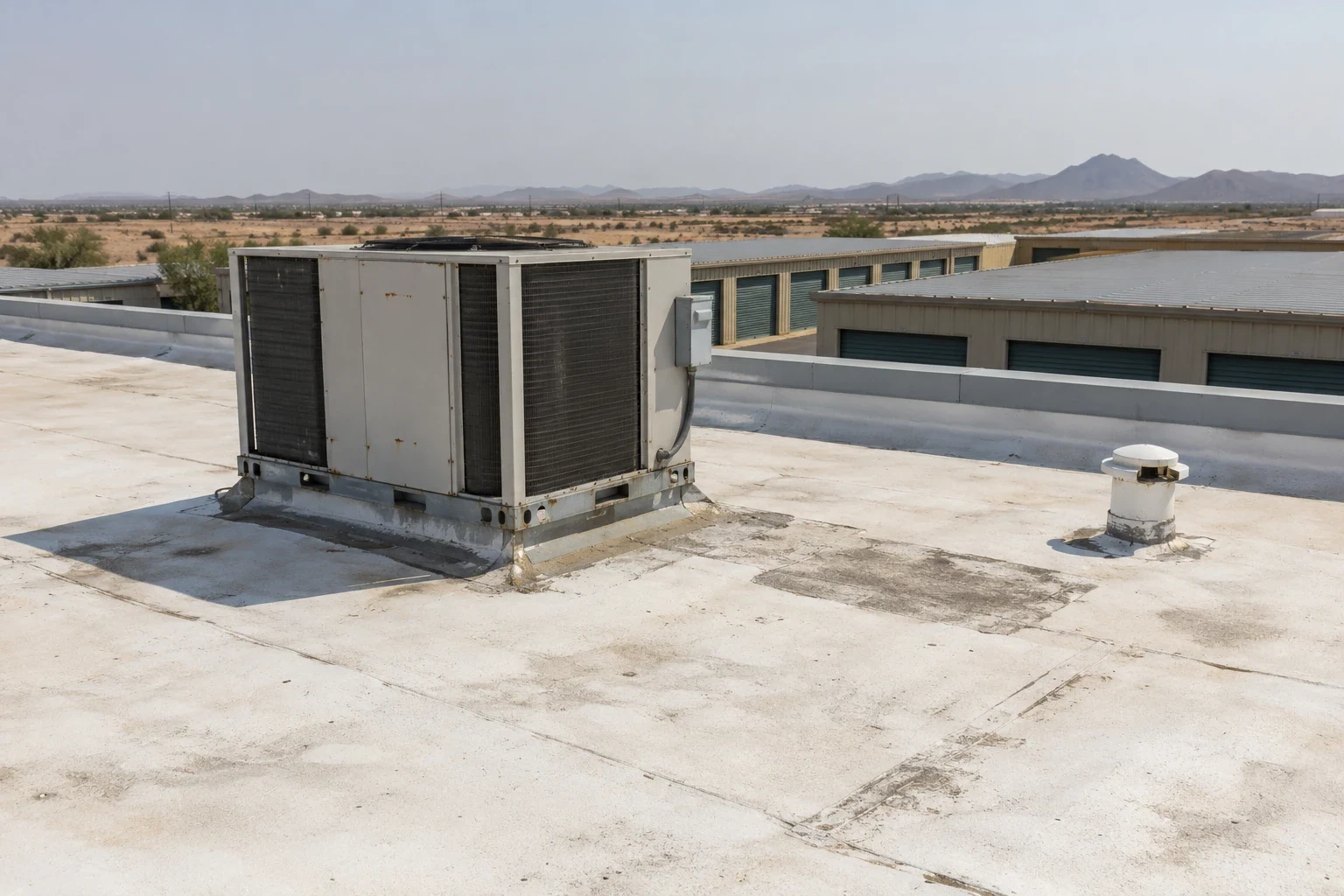
One backed-out fastener on a storage building row rarely looks serious, yet a hundred of them can turn a sound panel into a slow leak over a customer's belongings. The roof on a self-storage property is mostly repetition: the same panel, the same lap, the same fastener pattern, repeated across every building. That repetition makes the failure pattern easy to miss on one roof and expensive to ignore across a campus. In Peoria, AZ, long heat cycles move metal every day and monsoon wind finds loose edges. The first measure is a count: fasteners, laps and seams that have moved, repairs that held and the places water has reached.
Interior conditions guide the first walk. Staff who open units each day often notice damp floors, rust stains or a smell of mildew long before a roof inspection is scheduled, and we ask for those notes.
Count loose fasteners before counting damaged panels
Many storage buildings use metal panels held down by exposed fasteners with sealing washers. Heat cycles expand and contract the panel, and over many summers the washer hardens, the hole elongates and the screw backs out slightly. Water follows the thread into the purlin or the insulation below.
We walk each row and sample fasteners in a pattern, noting spacing, rust, elongated holes and cracked washers. Where the condition is local, replacing fasteners with oversized ones and fresh sealant restores the panel. Where it is widespread, a metal roof retrofit or a restoration coating system may be a better use of the budget. The count, not a guess, sets the line.
Flashing at downspouts and corner trim is checked the same way, since a small gap at a corner can let wind-driven rain into the first unit of a row.
Test laps, ridge caps, and sealants for movement
Panel laps, ridge caps, rake trim and wall transitions open before the field of the roof does. Sealant dries and shrinks in the Arizona sun, and thin edge metal moves with each heat cycle. We press along laps, check for daylight at ridges, inspect trim fasteners and probe sealed joints for hardness.
Moisture often shows up in the buildings' end units first, where a gable edge or a wall transition leaks into a storage space. We trace each interior stain back to its roof detail and mark it. Long Phoenix summers keep the metal moving daily, so end-unit leaks tend to come from the transition detail rather than the panel itself.
Flashing at walls and at any attached office or canopy gets its own check. A dry edge on one building can feed water into a wall cavity on another, and the cause is usually a transition detail rather than a panel.
Separate building rows into a portfolio view
A storage campus is not one roof, and it is not forty identical roofs either. Rows built in different phases can carry different panel gauges and trims. We label each building and each roof plane, then rate them separately, so the owner sees which rows are sound and which need work first.
That multi-site roof program view helps owners who manage several properties. A single format lets one person compare condition and cost across them. Compared with a warehouse roof or a flex industrial building, a storage row has less rooftop equipment and more repetition. A row with isolated fastener repairs gets a line item. A row with failing panels and wet insulation gets a replacement date. Planning that way keeps repair money from being spent on rows that are about to be replaced.
Protect tenant belongings during repairs
A leak over a rented unit is a customer problem as well as a roof problem. Before work starts, we confirm which units sit under the repair zone and ask the manager to notify those customers. We protect door tracks, keep drop areas free of debris and close every opened section before the crew leaves.
Interior evidence helps again. A damp or stained unit ceiling tells us where water entered, and photographs taken before the repair separate old damage from new. We document access routes so tenants can still reach their units, and we avoid placing material on drive aisles used for move-ins. The manager receives a short note each day describing what was done.
Security and access also matter. Cameras, gates and lighting often mount to or near the roof edge, and we note every attachment so work does not disturb a device or leave an open hole beside it.
Reduce monsoon exposure at gutters and downspouts
Monsoon storms in the low deserts can bring damaging winds, microbursts, flash flooding and hail, per NWS guidance. A short burst overloads a gutter that is partly blocked, and water spills over the edge or backs under the panel. We clean gutters and downspouts, check outlet height, inspect edge metal and confirm that water leaves the building rather than pooling at the wall.
After a significant storm, we look for dented panels, torn trim and displaced ridge caps and photograph confirmed damage only. Peoria's planning for a 7,000-acre north corridor along Loop 303 is a planning area, not completed stock, so we plan each property from its own roof.
The closeout record lists each row repaired, the fastener count, the sealant and metal products used and the photographs, giving the manager a document to hand to an insurer or a buyer.
Weigh repair, retrofit, and replacement by row
Each row ends up in one of three groups. Rows with isolated defects get repairs and a review date. Rows with sound panels but aged coatings and fasteners get restoration or retrofit. Rows with corroded panels, wet insulation or repeated failures get replacement planning with a date. Cost follows panel type, access, insulation, trim count and the number of units that need protection.
Putting that decision in writing lets the owner defer or act with a reason. A deferred row carries a recheck note, so a small problem surfaces at the next walk and not through a tenant complaint.
Commercial Roofing Questions
Is a coating worth considering for an aging storage roof?
It can be, when the panels are sound and the fasteners can be reseated and sealed first. A reflective coating then protects the surface and slows heat cycling. If panels are corroded through or the deck is wet, coating only covers the problem, and retrofit or replacement is the better path.
How do you decide between fastener replacement and a retrofit?
Count the loose fasteners and compare the cost of repair per row with the remaining service life. Local loosening favors repair. Widespread loosening, rust and leaks at laps favor a retrofit panel system. We show the count and the cost of each path.
Can work proceed while customers rent and move in?
Work proceeds in most cases, when the plan protects drive aisles, notifies customers below the repair zone and closes each section daily. We coordinate with the manager on move-in peaks and adjust the schedule so access stays open.
What should an owner track across several storage properties?
Track roof age, panel type, repair history, leak locations and the next review date for each building. A common format lets the owner rank buildings by risk and cost and spread capital across years. We deliver that record at closeout.
How do I tell whether storm damage is hail or just wear?
Hail leaves fresh, randomly placed dents and bright marks in the coating, while wear shows as chalking, rust and loose fasteners in patterns tied to the structure. We photograph and map confirmed impacts and leave worn areas in the maintenance column.