
Fitness Center Roofing in Peoria, AZ
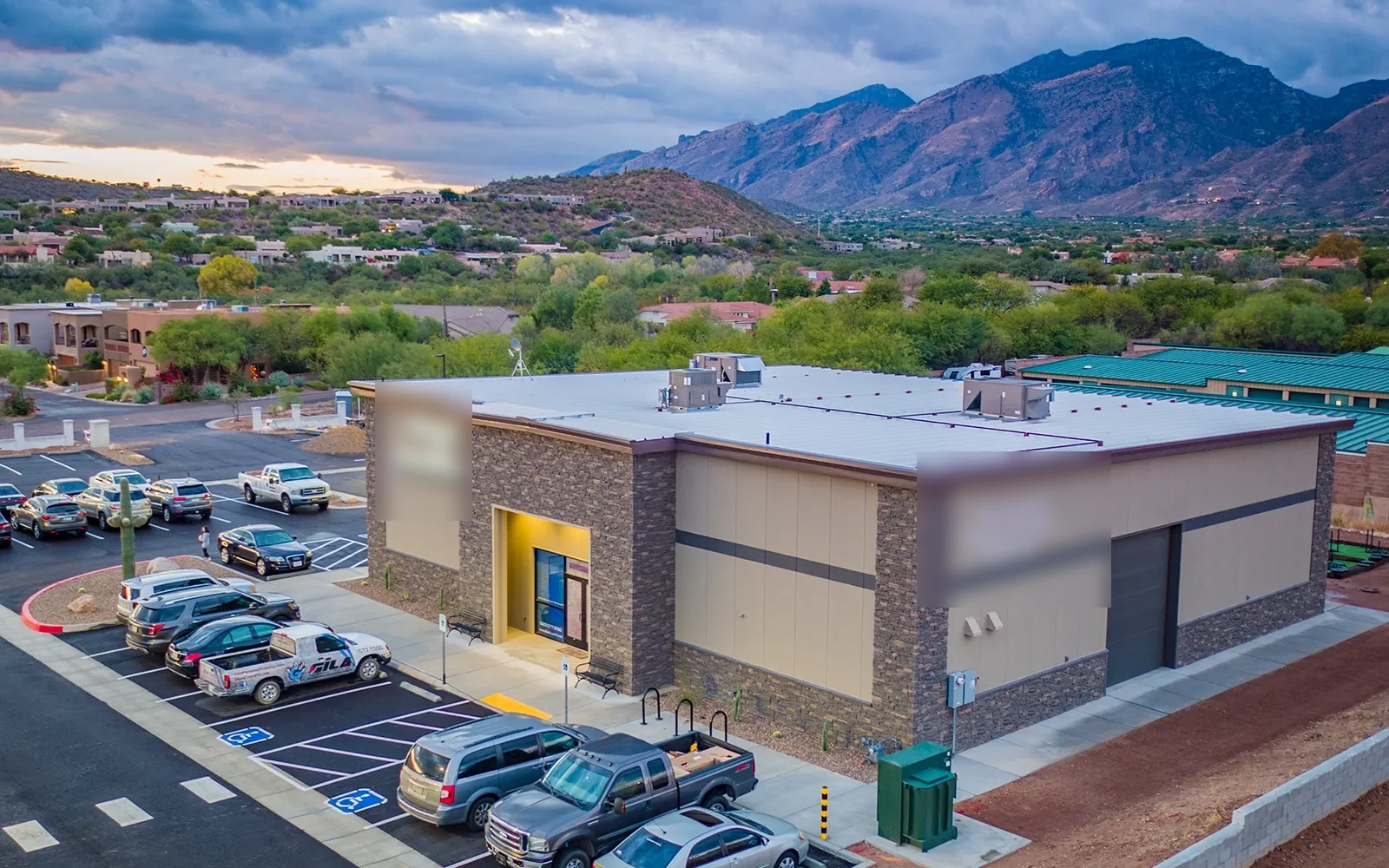
Dripping from a gym ceiling is not always a roof leak, and treating condensation as a leak can send a repair budget to the wrong place. Fitness buildings run humid interiors, heavy mechanical systems and large open volumes, so moisture shows on the ceiling for more than one reason. Peoria heat and monsoon bursts test the roof from outside while the building tests it from inside. The first evidence to gather is whether the moisture follows rain or the cooling cycle, and whether a probe finds wet insulation. From there we set the repair boundary and talk through timing.
Separate condensation from a true roof leak
A true leak follows weather. It appears during or after rain, concentrates under a seam, boot or drain and leaves a stain pattern that repeats. Condensation follows the interior climate. It appears on cool surfaces when humid air meets them, often in the morning or when equipment cycles, and it can drip from ducts, skylights and metal deck without any opening in the roof.
We log when drips occur, compare them with the weather and walk the roof above them. An infrared moisture survey shows wet insulation where a true leak has been active, and a probe confirms. If the roof is dry and the drips follow the cooling cycle, the repair belongs to the mechanical or vapor-control side, and we say so.
Inspect the mechanical load on the roof
A fitness facility can carry large air handlers, dehumidification equipment and exhaust fans, and each one sits on a curb with a flashing, supports and lines. Heat cycles flex those details every day. Sealant shrinks, boots crack and condensate lines wear through membrane where they rest on it.
We inspect every rooftop equipment curb as a cluster, noting flashing condition, fastener integrity, drainage around the base and walk routes. Technicians who service the equipment cross the roof often, so we check for worn paths and recommend walk pads. The cluster record goes into the asset file, so the next service visit starts from a known condition.
The heat load is real in the Valley. Roughly 94 days a year reach 100°F around Phoenix. That is air temperature, not roof temperature, yet cooling equipment runs hardest in those months, and a failing curb found in July is harder to fix than one found in March. Similar equipment loads appear on a big box retail roof and on a hotel roof, so the inspection method carries over.
Exhaust from locker rooms and pool areas can be warm and damp, and the terminations at those fans receive a closer look for staining and deteriorated sealant.
Plan work around class schedules and peak hours
A fitness facility's busiest hours are predictable, and roof work should avoid them. We agree on a schedule with the manager: noisy tear-off during off-peak hours, entrances kept clear, parking and drop-off lanes protected. Work that must happen above a pool, a studio or a locker room is sequenced so the interior is covered and dry at the end of each day.
City planning treats P83 as a roughly 600-acre mixed district by Loop 101 and Bell Road, with commercial, entertainment, hospitality, employment and residential uses. A facility in a mixed district like that may share parking and access with neighbors, so we map crane position and material drops to avoid shared lanes.
Park West sits beside Loop 101 at Northern Avenue as an open-air center of shops and restaurants, a shared setting where deliveries, customers and roof crews overlap.
Check drainage over large clear spans
A fitness building often has a wide, open volume under a roof that sheds water across a long distance. Standing water on such a roof is a warning. Possible causes are slope, a blocked drain or deck deflection, and each needs a separate remedy. We measure depth after rain, trace the path to the outlet and clear, flush and test every drain and scupper.
Monsoon storms can produce damaging winds, microbursts and flash flooding, per NWS. Short bursts of rain overload a partly blocked outlet, so we confirm overflow height before storm season and look at perimeter metal for loose joints. After a significant storm, we document confirmed damage only.
Skylights and clerestory glazing, where the building has them, receive a separate check. Gaskets, curbs and frames shift through each heat cycle, and a failed corner can drip onto equipment or a wet floor.
Weigh membrane options against interior humidity
Interior humidity affects the roof assembly from below. Moist air can move into insulation if the vapor path is not controlled, and a membrane over wet insulation will fail early. When we plan a recover or replacement, we review the assembly: vapor retarder, insulation, cover board and membrane, and we match the system to the building.
A reflective TPO membrane is common on commercial buildings because it reduces heat gain, and a facility with strict cooling costs may value that. The choice still follows the findings. Wet insulation, deck condition and rooftop equipment loads decide whether a coating, a recover or a full replacement fits. Cost follows tear-off depth, insulation, curb count, access and the hours the facility allows.
At closeout we hand over a record of repaired sections, products, moisture readings and photographs. The owner can hand that file to a landlord, a lender or a buyer, and the next inspection starts from a known condition instead of a guess.
Defer or act: write the threshold down
The findings sort each roof section. Isolated defects over dry insulation are repaired and given a recheck date. A sound surface with aged sealants may take a restoration coating. Wet insulation in several areas, or defects that come back after repair, call for replacement planning. Cost follows tear-off depth, insulation, curb count, crane access and the hours the facility allows.
Writing the threshold down protects the budget. A deferred section is dated and annotated, so the next inspection either confirms a dry roof or schedules the work.
Commercial Roofing Questions
How can I tell whether a ceiling drip is condensation or a roof leak?
Compare the timing. Rain-driven leaks return in the same spot, but condensation tracks the cooling cycle and humid mornings. We log drips, walk the roof and use a moisture scan. If the insulation is dry, the fix is on the mechanical or vapor side.
What should a gym owner prepare before a roof inspection?
Gather the repair history, the equipment list, photographs of past stains and the busy-hour schedule. With those items we can plan access, check the right curbs first and keep the inspection away from peak classes.
Does roof work have to close a pool or studio below?
Not always. Work can be sequenced so the area below is covered and dry each day, and noisy steps happen during off-peak hours. For a pool, we also protect the water surface from debris. We confirm the plan with the manager in writing.
Why do rooftop units cause so many leaks?
Each unit adds curbs, flashings, lines and foot traffic, and heat cycles flex them daily. Sealant shrinks and boots crack. We inspect every curb cluster, repair failing details and add walk pads where technicians travel.
How do I compare a coating with a replacement for a fitness building?
Check insulation moisture first. If insulation is dry and the membrane is sound, a coating can extend service life and reduce heat. If insulation is wet in several areas, replacement is the stronger value. We show the readings and cost of each path.