
Duro-Last Roofing Systems in Peoria, AZ
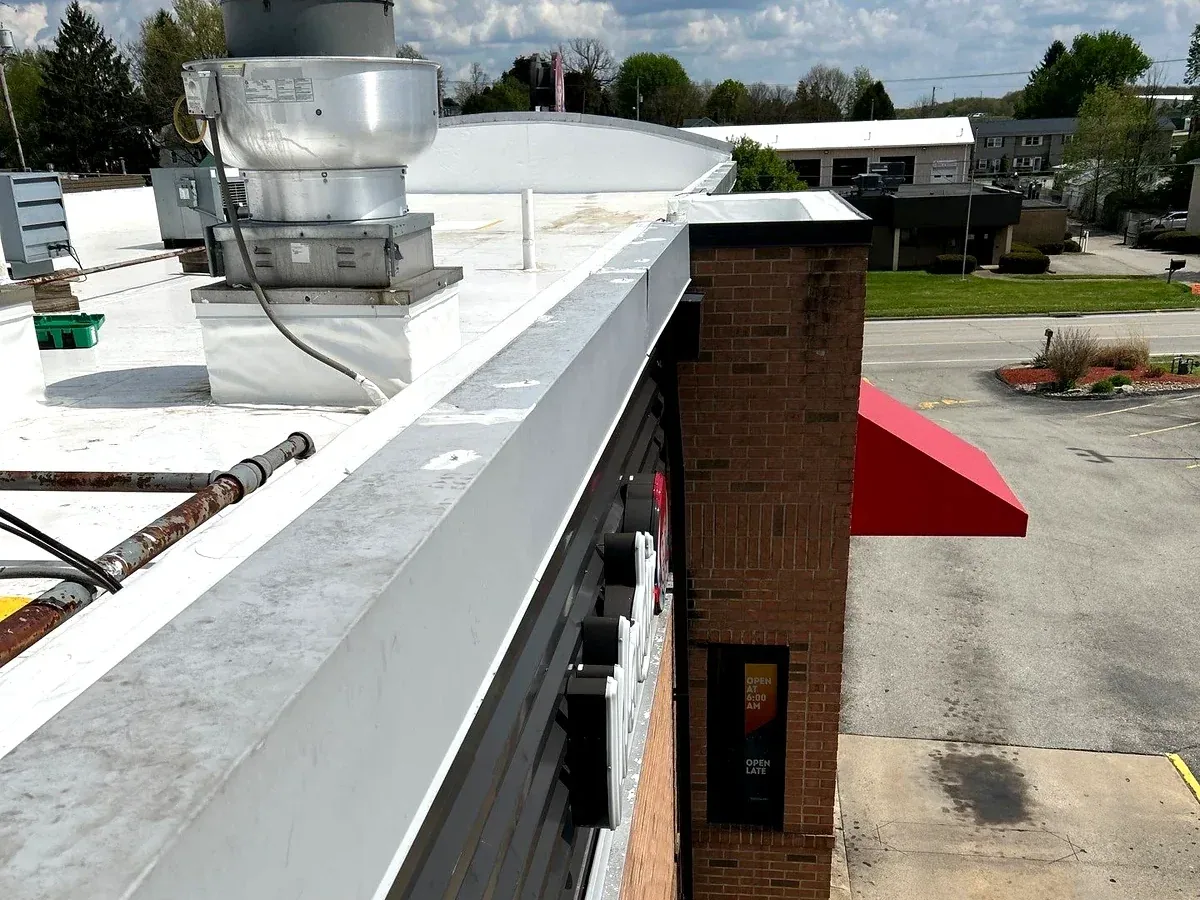
A prefabricated roof moves most of its seams from the field to the factory, and that changes where the weak points sit. Duro-Last supplies reinforced PVC membrane cut and welded into panels sized to a measured roof, with many of the flashings made as formed accessories. The panels arrive ready to be joined on site. What remains are the field seams between panels, the perimeter terminations, and the places where a field-cut detail replaced a factory-made one. In Peoria, AZ, heat and monsoon wind test exactly those points, and we service Duro-Last roofs by going to them first.
Walking a prefabricated roof is a matter of reading the panel pattern, the weld lines, and the formed details in sequence, then comparing each with the leak map. The result is a short list of likely entry points, ranked by the evidence on the roof.
Follow the panel layout across the roof
Each prefabricated panel is measured to the roof, so the pattern of panel edges forms a map of where field seams were made. We use that map to sequence a roof walk: panel-to-panel welds, edge terminations, boot and curb flashings, and the places where a later trade cut into the membrane. Original drawings, if they exist, show how panels were laid out and where the panels meet.
Field seams are welded on site with hot air. Like any welded PVC roofing seam, they depend on clean surfaces and consistent heat, and they are probed on accessible laps. A factory weld is typically consistent, so a leak usually points to a field seam, a termination, or a penetration, and we begin the search there.
Measurement quality shows up later. A panel cut for dimensions taken years ago may sit slightly tight or slack where the building has settled or where parapet heights were revised. Tight panels pull at terminations, and slack panels wrinkle and collect water. We note both conditions, since either one changes how a repair should be secured.
Inspect the formed flashings and the places they stop
Prefabricated flashings fit the dimensions that were measured at the time of installation. When equipment is moved, added, or replaced, the fit can change. A curb that was resized, a pipe that was added, or a unit that was replaced with a different footprint may require a field-made detail that does not match the original.
We check curbs, pipe boots, corners, and parapet transitions, and note which details are original and which were altered. Where later work cut into the membrane, we examine the welds around the cut and the sealant joints. Changes by other trades are common sources of leaks, and the rooftop equipment curbs and supports on a roof often hold the best clues.
Coordination with other trades closes the loop. When a mechanical or electrical contractor needs a roof penetration, a short written request that names the location, the flashing method, and the person who will weld it prevents the cut-first approach that creates leaks. We provide a one-page rooftop work rule that property managers can attach to vendor agreements.
Test the perimeter against monsoon wind
Monsoon storms bring damaging wind and microbursts to the low deserts, per the National Weather Service, and hail is possible. Perimeter terminations and edge metal take the first load, so we check fasteners, metal laps, and sealants along the edge, and we look for membrane pulling or fluttering near corners.
If the perimeter is loose, the repair belongs at the edge before any field patch is placed. The edge metal and coping detail should hold the membrane flat against the wall or curb, and a roof that has been working at the edge shows wear lines and loosened fasteners. We photograph those items and record their locations for future visits.
Drainage ties into the same inspection. PVC that sits in standing water for days can show surface staining and weld stress, and clogged scuppers let water rise to the edge detail. We clear drains and scuppers and measure how quickly water leaves the roof after rain.
Fit repairs to heat and rooftop use
By Phoenix records, roughly 94 days a year reach 100 degrees or more, an air reading and not a membrane temperature. PVC softens and moves in heat, so crews schedule welded repairs for mornings when the sheet is workable and the welds can be tested before the day heats up. Heavy rooftop use adds wear, and walkway pads at service routes protect the membrane from direct foot traffic.
Roofs along the Loop 303 employment corridor, which the city plan studied across roughly 18,300 acres, serve buildings whose equipment needs regular service. Where technicians visit the roof often, pads and clear access routes reduce damage. A flex industrial roof with several tenants benefits from a written rooftop access rule that routes service staff along protected paths.
Decide on repair, restoration, or a new system
A Duro-Last roof with sound field seams, intact flashings, and dry insulation can stay in service with targeted repairs and a maintenance plan. A roof with failing field seams across many panels, or saturated insulation in several areas, calls for replacement planning. We document each finding with photographs and a sketch that shows panel edges and details.
Owners weighing alternatives can compare a prefabricated approach with field-assembled PVC such as Sika Sarnafil or with the TPO systems from Versico. The comparison turns on roof geometry, equipment loads, schedule, and what the owner expects to change on the roof over time.
Phasing is practical on occupied buildings. A section-by-section approach lets the owner keep operations running while the roof is replaced in stages, with each completed area dried in before the next is opened. Material choice, drain locations, and equipment shutdowns all go into the schedule before work starts.
Commercial Roofing Questions
Why does a leak on a prefabricated roof usually start at a field seam or detail?
Factory welds are made under controlled conditions, while field seams and altered details are made on the roof in whatever weather and surface condition exist that day. Penetrations added after installation are another source. We start with field seams and altered details, then move to the rest of the roof if the cause is not found.
Can a new rooftop unit be added without harming the roof?
Yes, if the curb is flashed correctly and the work is recorded. The membrane must be cut and welded to the curb with compatible materials, and the warranty terms may require notice. We coordinate with the mechanical contractor on curb location and flashing, so the work does not leave a gap in the record.
How do you handle hail damage on a PVC roof?
We inspect for punctures, bruises, soft insulation, and cracked flashing, then document locations with photographs. The October 2010 supercells dropped large hail across the Phoenix metro area and caused extensive damage, which is why post-hail walks check insulation as well as the surface. Findings are written up for an insurer when a claim is likely.
Does a prefabricated roof need less maintenance than a field-assembled one?
It still needs drain cleaning, seam checks, and a review after storms. Fewer field seams reduce one category of risk, but terminations, penetrations, and rooftop traffic remain. Scheduled visits keep small items from becoming leaks.
What records help when a Duro-Last roof changes owners?
The measurement drawings, panel layout, warranty documents, repair log, and photographs. The panel layout is especially useful, since it tells a new owner where field seams sit. We help assemble the file during a pre-closing review.