Commercial Roofing for Retail and Restaurant Chains in Peoria, AZ
A roof leak above a dining area can interrupt service even when the roof damage is limited to one curb. The first job is to trace the water path and identify the repair boundary, then schedule the work around customers, deliveries, and kitchen equipment. In Peoria, AZ, heat cycles affect exposed transitions, while monsoon storms can bring wind, hail, and sudden rain. We inspect each location on its own terms and keep the chain-wide priority list tied to building-level findings.
Rank locations by condition and consequence
A chain should not rely on a single roof age field to set priorities. One store may have a contained flashing issue; another may show repeat leaks or moisture in separate areas. We inspect seams, drains, edge metal, rooftop units, kitchen exhaust, and past repairs, then document the evidence for each site. The resulting list shows which locations need immediate control, which can be repaired, and which need a replacement window.
For an isolated failure, a focused roof repair can limit disruption while preserving a later capital decision. When the assembly shows wider moisture or recurring seam failures, we explain why the scope changes. A roof asset record keeps photographs, repair history, and review triggers together so the next facilities manager can see why a location was ranked as it was.
Keep customer access in the work sequence
Retail entrances, loading areas, parking routes, and restaurant service hours affect how a crew can stage and reach the roof. We confirm which doors or areas must stay open, when deliveries arrive, and whether rooftop equipment can be shut down. The work sequence identifies staging, lift locations, noise-producing tasks, and temporary interior protection. Store staff receive the affected area and timing early enough to coordinate signs and customer movement.
For a larger project, a phased reroof on an occupied store can keep the active work zone limited when roof condition and weather allow it. Restaurant exhaust curbs and grease-related maintenance requirements need to be coordinated with the operator. We plan tie-ins and end-of-day dry-in with the site contact, then document any concealed condition that changes the schedule or the building area affected.
Inspect around exhaust and rooftop equipment
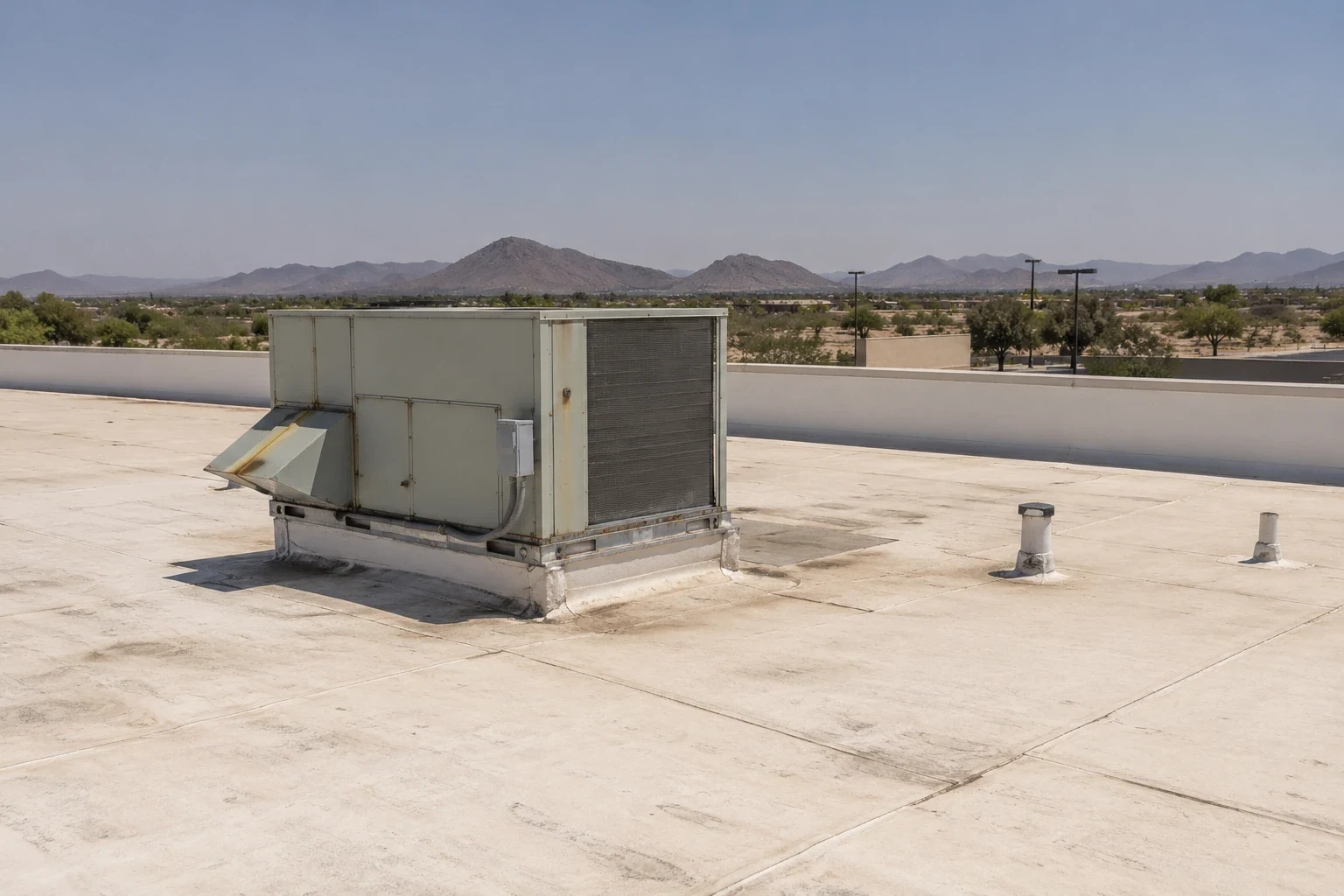
Kitchen exhaust, HVAC units, conduits, signs, and later-added equipment create penetrations that need sound flashing. We check the curb, membrane transition, fasteners, sealant, and drainage around each detail. Water can move away from the curb before it reaches a dining room or stock area, so the interior stain does not set the repair limit. If moisture may extend under the surface, an infrared moisture survey can help identify locations for confirmation.
A survey is not a substitute for opening or testing the assembly where findings require it. We use confirmed moisture and visible conditions to determine whether insulation remains functional or must be removed. During a leak, store staff can note where water appears, protect stock or equipment, and report whether it continues after the area is dried. The follow-up report states what was protected, what was repaired, and which detail needs another check.
Record the roof before and after storm season
Prolonged summer heat puts exposed store-roof transitions and sealants on the inspection list. We photograph seams, flashings, and metal edges by location so a later visit can compare changes at that store rather than infer condition from regional weather.
Ahead of storm season, we check the openings and edges most likely to affect a store: drains, overflow routes, perimeter metal, and equipment curbs. After wind, hail, or heavy runoff, a review compares current photos with that location’s previous roof record. After an event, a storm damage roof review can document visible change against the prior record. Our maintenance program keeps recurring items on the calendar instead of waiting for a customer complaint to surface.
Use Peoria’s retail districts as operating context
Peoria recorded $4.909 billion in 2022 retail sales. P83 covers about 600 acres near Loop 101 and Bell Road, with commercial, hospitality, employment, entertainment, and residential uses in the planned mix. Park West is an open-air cluster of shops and restaurants along Loop 101 and Northern Avenue, where customer circulation and delivery timing can shape a work window. These facts describe different commercial settings, not the roof condition of any store within them.
A chain location near P83 may have different customer access and tenant coordination needs from a restaurant in Park West. We inspect the particular building, confirm the operating hours, and plan around its actual equipment and roof layout. A store manager or facilities lead can then use the findings without assuming that every Peoria location shares the same membrane, repair history, or replacement horizon.
Coordinate one capital plan across many operators
Chain-wide planning works when each property has a comparable record and a distinct scope. We rank roofs by observed condition and consequence, then state the timing range and the trigger that would move it. A roof with dry insulation and a limited defect may remain on a repair track; one with repeated failures across multiple areas may need a funded replacement. We identify access, material, equipment, and removal factors that affect cost and schedule.
For hotels or mixed retail and lodging portfolios, hospitality roof planning can be coordinated with the same building record. The property team can keep service calls, tenant notices, and warranty documents in a management file that follows each location. Once a budget window is approved, a roof repair or replacement can be scheduled around the store calendar without treating customer operations as an afterthought. We also record who approves access, which tenants receive notice, and what weather condition would pause the work. That gives regional facilities staff a practical handoff from capital approval to the first day on the roof.
Commercial Roofing Questions
Can you schedule work before a store opens or after closing?
We can plan those windows when roof access, crew safety, material delivery, weather, and daily dry-in allow it. The site contact helps confirm customer routes, kitchen hours, and equipment restrictions. We state which tasks can happen in a quiet window and which need a longer access period so the store can coordinate staff and notices.
How do you compare roof condition across a chain?
Use consistent inspection categories, then keep each building’s photos and findings separate. We record system type where known, seam and edge condition, drainage, penetrations, repair history, and moisture results. A portfolio ranking shows priority, while the underlying record explains the action for each location.
What should happen when a restaurant reports water near an exhaust hood?
We inspect the roof curb and nearby membrane, then follow the possible water path rather than assuming the hood is the only source. The work plan coordinates any exhaust shutdown with the operator. If water is active, we control exposure first and return with a permanent repair scope based on the roof findings.
When should a chain consider coating instead of replacing a roof?
Only after checking the existing substrate, adhesion, moisture, and system condition. A coating can be a candidate when the assembly is suitable and the defects can be repaired before application. Wet insulation or widespread failure needs a different scope, and the owner should see that evidence before committing to restoration.
How can we keep customers informed during a reroof?
The schedule identifies affected entrances, parking or loading areas, delivery timing, and any temporary interior protection. We coordinate with the store contact before the work area changes and provide a clear notice for the next phase. The site team controls customer communication, while our crew maintains the agreed barriers and access limits.