
Commercial Roofing in Tolleson, AZ
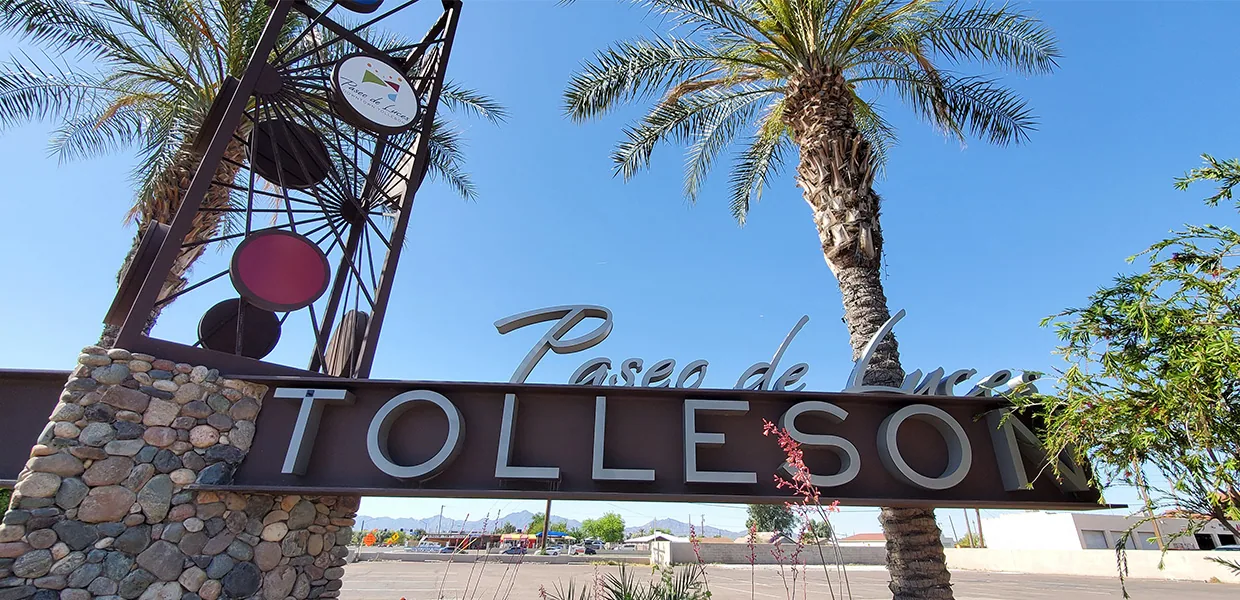
Tolleson records more than $1.15 billion in 2022 retail sales and about $338 million in transportation and warehousing receipts, and it does that on just under six square miles of land. Dense commercial activity on a small footprint means the roofs over it carry a lot of rooftop equipment, a lot of dock and loading edges, and very little slack when something leaks. Tolleson sits about 23 miles in a straight line from Peoria, AZ, and the roofs worth examining first are the ones that protect inventory and refrigerated or temperature-sensitive space. We start there, with the roof history in hand, and rank every finding by what the water would reach before we talk about replacement.
Trace the water path over stored goods
Where a building stores product, the cost of a leak is measured under the roof, not on it. Water that enters at a seam can travel along the insulation and drip over racking a long way from the entry point. We ask where inventory sits, which bays hold the most sensitive stock, and which roof sections are directly above them. That order, and not the order of the roof plan, sets our first survey priorities.
The same approach applies to a warehouse roof and to a distribution center. We read the seam pattern, probe the flashings at dock walls and look at the penetration clusters for refrigeration and ventilation. If a roof has failed in more than one separate place, the written report says so, because the owner needs that fact before choosing between repair and replacement.
Check the roof behind the storefront and the dock
Retail receipts of that scale suggest a lot of customer-facing space, and the roofs above it have two jobs: they must keep water out and they must not interrupt trading. The weak points are the parapet caps, the scupper boxes and the equipment curbs over back-of-house rooms. Water finds the lowest interior path, so a stain in a stockroom may start at a curb three bays away.
We walk the roof with the tenant's leak notes and compare them with what the membrane shows. When the leaks cluster at one detail, a targeted repair may close the matter and protect the current budget. When they are scattered, the roof is aging as a system, and the owner is better served by a written replacement horizon than by another round of patches.
Measure what the heat cycle has done to seams
The Phoenix area logs roughly 94 days a year with highs of 100 degrees or more. That describes the air and not the roof surface, yet the daily cycle behind it is real: membranes expand in the afternoon and contract overnight, and the stress gathers at seams, inside corners and edge metal. After many summers a sealant that once flexed begins to crack, and a weld that once held can start to peel.
On a first walk we press on seam edges, look for membrane shrinkage at walls and check that termination bars are tight. A heat and UV damage repair is a small job when caught at the sealant stage and a larger one once water has reached the insulation. The comparison that matters is between the cost of fixing the detail now and the cost of fixing the insulation later, and we put both in writing.
Clear low points before the monsoon turns them into ponds
Monsoon season in Arizona can send flash floods, hail and strong winds through the Phoenix metro, according to the Weather Service. A short burst of rain can sit on a flat roof for hours when a drain is partly blocked, and standing water loads the deck and works on every seam beneath it. We chart the drainage route from each low spot to its outlet and clear whatever is slowing it.
Where a roof holds water chronically, the repair may be a new drain body, a tapered insulation correction or an added scupper, and we describe the choices in the report. A ponding water repair that ignores the cause will recur, so the fix has to address why the water stopped moving. Wind-driven rain also tests wall flashings, so those are checked on the same visit.
Rank the roofs by capital window, not by age alone
An owner with several buildings needs a ranking that can be defended. We build one from the roof history: original specification where it exists, repair invoices, warranty papers and survey findings. Each section gets an estimate of its remaining service life and a note on what would shorten it.
The record lets an owner set a planned replacement beside several more years of patching and see what each path costs in money and disruption. The same record feeds a roof capital plan, and owners with buildings spread across Avondale, Phoenix and Glendale can have them ranked together. Lease dates, tenant improvements and equipment replacements all enter the schedule, since a roof opened for a new rooftop unit is cheaper to improve at the same time.
Document hail after the supercell record
Large hail from the October 5, 2010 supercells did extensive damage across the metro, and NWS Phoenix has the record. Any roof that predates a significant storm, or has not been surveyed since, deserves a look for impact marks in the cover board, cracks in aged coatings and dents in metal flashing. Many of these defects do not leak right away.
If damage turns up, we photograph it, mark each location on a roof plan and separate storm damage from wear in writing. That record supports an insurer's review without asking the owner to argue about causes. Where a claim is in play, our claim documentation keeps the photographs, measurements and repair scope in one file.
Commercial Roofing Questions
Why do we need to know where inventory sits before a roof survey?
Because it changes the order of the work. A leak over empty floor is an inconvenience, and the same leak over stored product is a loss. We rank roof sections by what lies beneath them, then survey the highest-risk sections first, so the owner learns about the most expensive exposures within the first visit.
A roof leaks in several places. Is replacement the only answer?
Not automatically. If the leaks trace to a few details such as curbs or a failed flashing run, repairs can hold for years. If wet insulation appears in separate areas, or the seams are opening across several sections, replacement planning is the better use of money. Moisture mapping and core samples tell us which of the two cases we are.
What can be done on an occupied building while stock moves in and out?
Nearly everything, with sequencing. We work by roof section, keep the open area small and seal it at the end of each day. Hoisting is staged away from active dock doors, and temporary protection goes over sensitive stock before any membrane is removed above it.
How should hail damage be handled if the roof has not leaked?
Document it anyway. Impact damage can sit in the cover board or coating for months before water finds it. We photograph and map the marks, note their direction and spacing, and keep that record on file so a later claim is supported by evidence gathered when the damage was fresh.
Does a roof coating work on an older warehouse membrane?
It can, when the substrate is dry and well bonded and the seams are sound. We confirm both before recommending it. Where wet insulation is widespread, a coating hides the problem and costs the owner twice, so we recommend replacement planning instead and explain the evidence behind that call.