Auto Dealership Roofing in Peoria, AZ
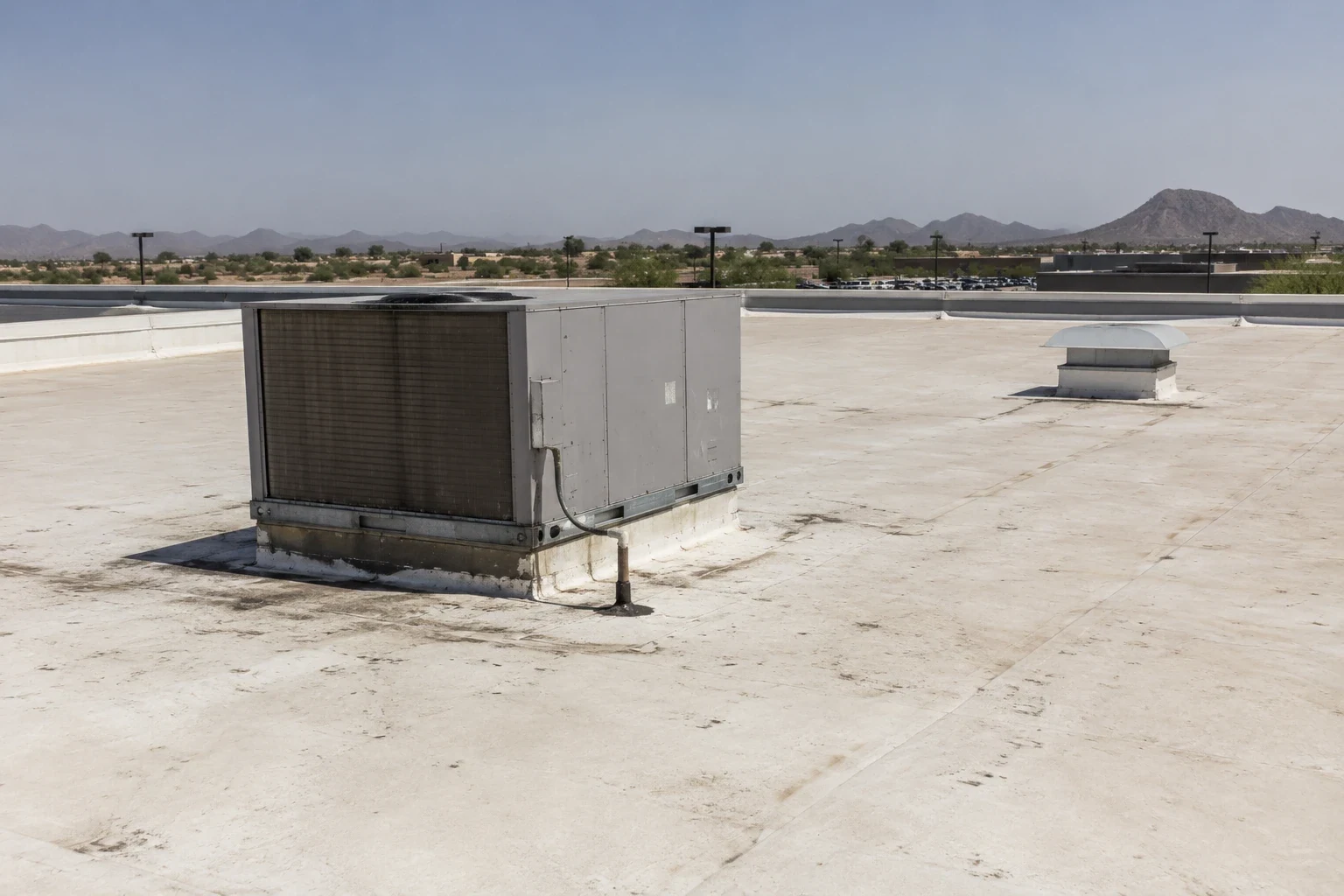
A drip over a showroom floor costs more than a drip over a stockroom, because the customer sees it before anyone on staff does. A dealership roof is really several roofs: a showroom, a service area, a parts room, an office wing and often a canopy or a covered delivery bay. Each one has its own membrane or metal, its own drains and its own rooftop equipment. Peoria heat and monsoon weather work on every one. The first questions are which section leaks, whether past repairs held and whether water has reached insulation. Then we draw the repair boundary and discuss timing.
Inspect the showroom roof and the service bays separately
A showroom roof may be a low-slope field with a parapet and a few units. A service-bay roof carries exhaust fans, heavy equipment, makeup air and often a different system altogether. A leak in either looks different and is repaired differently, so we walk and rate each section on its own.
We check seams, flashings, drains and curb clusters, then probe wet areas and read the interior stain pattern from below. Where stains and openings do not match, an infrared moisture survey maps the wet insulation and leaves the roof uncut. The resulting map helps the dealer decide whether the showroom needs a repair this season and whether the service wing can wait.
Interior finishes in a showroom are expensive to replace and visible to every visitor, so we also note ceiling history. Stained tile that has been replaced before points to a recurring entry point, and a recurring entry point deserves a permanent fix rather than another patch.
Trace leaks that reach the sales floor
Sales-floor leaks usually travel along the deck or a ceiling cavity before they appear. A stain near a light fixture may come from a seam a dozen feet away. We follow the interior evidence upward, inspect each flashing, boot and drain in that area and confirm the source with a probe or a water test where the building allows.
Quick fixes can backfire here. A patch placed on the wrong spot lets water travel to a new location and a new ceiling tile. We prefer to find the true entry, make a temporary seal if water is active and leave the permanent repair for a dry, clean surface. The emergency roof repair record separates those two steps so the dealer knows what is temporary.
Drains and scuppers get checked in the same visit. A backed-up drain over a service wing can send water sideways into a wall, and the leak shows up in a customer waiting area. We clean, flush and test each outlet and report any settled bowls.
Protect vehicles, customers, and staff during the work
A dealership cannot close its doors for a roof. We plan work zones away from showroom entrances, test drive routes and customer parking, and we cover or move vehicles near the work as the dealer directs. Debris leaves in covered containers, and material drops happen on the side with the least traffic.
Peoria's development map treats Loop 101 and the US-60/Grand Avenue area as separate commercial access corridors, and a dealership on either one has its own street frontage to manage. We keep crane staging and truck turns clear of customer entrances. Noisy tear-off is scheduled for the hours the dealer chooses, and every opened section is closed before the crew leaves.
Signage and lighting poles mounted near the roof edge are noted as well, so that crews work around them without disturbing the wiring or the mounting hardware.
Check canopies and edge metal after hail
Large hail from supercells did extensive damage across metro Phoenix in October 2010, and monsoon storms add microburst winds to the hail risk. That history explains why dealers care about canopies and roofs, though it does not show that a given building was struck.
After a storm, our hail damage roof repair visit looks for bruised membrane, punctured sheets, dented metal and displaced coping and photographs only confirmed damage. That record supports an insurance claim and keeps unaffected sections out of it. If the roof is clean, the report says so, which is useful when a carrier asks.
Read the heat cycle on rooftop equipment and curbs
The Phoenix area logs roughly 94 days a year of 100°F or more. Air temperature is not roof temperature, yet it sets the pace of the heat cycle on each curb and seam. Showrooms use a lot of glass and cooling equipment, and the units on the roof create curb clusters, refrigerant lines and condensate drains.
We inspect each curb flashing, boot and sealant line, check that condensate discharges into a drain instead of onto the membrane and look at walk routes for wear. Similar details appear on a big box retail roof, though the equipment mix differs. We record each cluster by location so the next inspection starts from a known condition.
Defer or act: set the capital window in writing
Findings sort the roof. Isolated defects over dry insulation earn repairs and a dated recheck. Sound sections with tired surfaces can accept a restoration coating. Wet insulation in several areas or repeated failures point to replacement. Cost follows tear-off depth, insulation, penetration count, access and the hours the dealership allows.
Peoria recorded $4.909 billion in 2022 retail sales, which describes a large commercial sector, not any one roof. Park West, beside Loop 101 at Northern Avenue, is an open-air retail and dining center with multiple businesses, a reminder of how mixed retail roofs are. A dealership group with several lots can use the same condition format on each, as an owner of shopping center roofs would, and rank them by risk. The written record lets the owner defer or act with a reason.
The closeout record lists the sections repaired, products used, moisture readings and photographs, giving the dealer a single file for the insurer, the lender or a future buyer.
Commercial Roofing Questions
What is the first step when a showroom ceiling starts to stain?
Protect the floor and photograph the stain, then book a roof walk. We trace the water path, place a temporary seal if water is active and map moisture. The lasting repair waits for a dry surface, and the record keeps the two steps apart.
Can a dealership stay open during a re-roof?
Operations can continue when the plan separates the work zone from entrances, schedules noisy steps for chosen hours and closes each section daily. We coordinate with the sales and service managers on test drive routes, deliveries and customer parking.
How should a dealer document hail damage for insurance?
Use dated photographs of confirmed impacts, with a roof map showing locations and a note on which sections are clean. We separate storm damage from wear. The adjuster then reads a specific description rather than a general statement.
Does a metal canopy need a separate inspection from the main roof?
Canopies need their own inspection, because they carry their own fasteners, edge metal and drainage. They can also take wind uplift differently from a low-slope roof. We check attachment, panel condition and downspouts on the canopy and record them alongside the main sections.
How do I choose between repair and replacement for a dealership roof?
Use the moisture map and the repair history. If wet insulation is confined and earlier repairs held, repair and monitor. If wetness appears in several areas or returns, plan replacement with a date. Include the service wing and showroom as separate line items.